There are some illnesses that people can see immediately. A cast on a leg. A fever. A visible injury. Migraines rarely work that way.
From the outside, someone may simply look tired, distracted, or withdrawn. Inside, they may be trying to get through pounding pain, nausea, visual disturbances, and a strange feeling that ordinary sounds have suddenly become too loud and light has become too bright.
People living with migraine know this experience well. You cancel plans at the last minute. You leave work early. You sit quietly in a dark room because opening your eyes feels difficult. Family members often ask, “Is the headache still there?” because they care. But migraine can be difficult to understand unless you have lived through it yourself.
June, observed as Migraine & Headache Awareness Month, creates space for a different conversation, not only about pain. The focus is on the person who experiences that pain every week, every month, and sometimes every few days. Some have been taking painkillers for years and now find themselves asking another question. Can there be another way to manage it? Can life stop revolving around the next attack?
Migraine in India
Nearly one in five Indians may experience migraines. The number is surprisingly high. Yet many people continue without a diagnosis for years. Part of the reason is that migraine is often dismissed. People hear comments such as “You are stressed.” “Sleep more.” “Everyone gets headaches.” “Take another tablet and rest.”
But migraine changes much more than a few hours of the day. Patients often describe planning life around uncertainty. Missing birthdays. Cancelling travel. Worrying before important meetings because they fear an attack may start unexpectedly. Families also have their burdens. Watching someone repeatedly struggle while feeling unable to help can be emotionally difficult.

What is a Migraine? Types and Classification
For people living with migraine, the pain is rarely just about the head. It can begin as a normal day and slowly start changing the way everything feels. Work becomes harder to focus on. Bright lights suddenly feel uncomfortable. Small sounds start feeling sharper than usual. Some people notice a strange heaviness, tiredness, or irritation even before the pain becomes intense.
Migraines are considered a neurological condition involving changes in brain activity and pain pathways. The headache itself is only one part of the experience. For many people, it affects far more than a few hours of pain and can quietly spill over into sleep, energy, mood, concentration, and day-to-day functioning. Common symptoms may include:
- A throbbing or pulsating pain that can become difficult to ignore once it starts building
- Pain often affects one side of the head, although some people experience it on both sides
- Nausea and, at times, vomiting
- Light suddenly feels harsher than usual. People often find themselves lowering screen brightness, pulling curtains shut, or wanting a darker room
- Sounds that normally fade into the background are beginning to feel overwhelming
- Unusual tiredness, even after resting
- Mental fog or that frustrating feeling of reading the same sentence twice because concentration keeps slipping
- A sense of heaviness or stiffness around the neck
- Dizziness or temporary visual changes
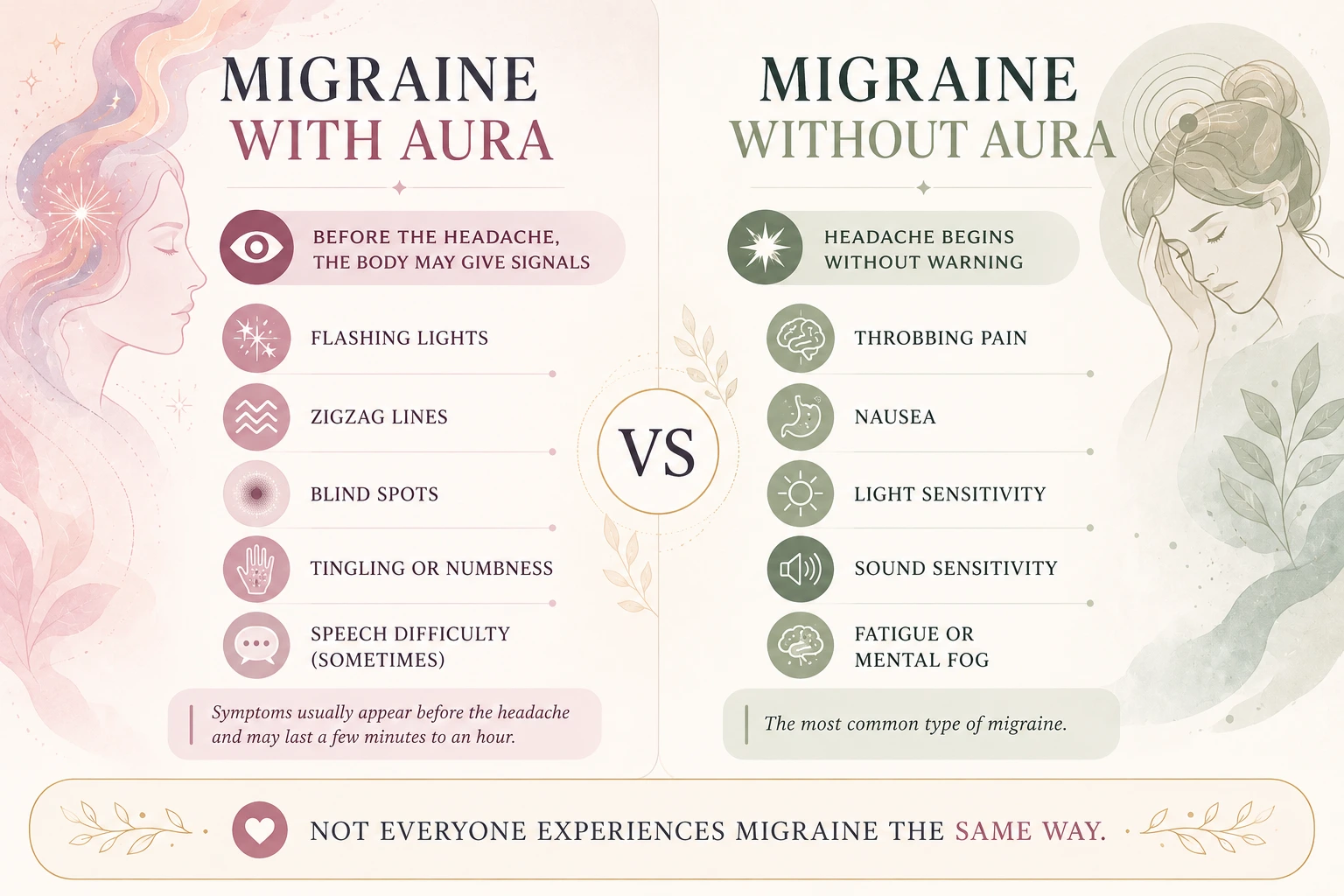
The two major types of migraine include:
- Flashing lights or zigzag patterns in vision
- Blind spots or blurred vision
- Tingling sensations in the face or hands
- Temporary numbness
- Difficulty speaking clearly in some cases
Migraine Triggers
- Skipping meals
- Long fasting periods
- Excess tea or coffee
- Very spicy foods
- Processed or fermented foods
- Inadequate hydration
- Late-night screen use.
- Irregular sleeping hours.
- Long working days.
- Persistent emotional stress.
- Hormone fluctuations in women during menstruation, pregnancy, or perimenopause
- Sudden change in temperature or humidity
- Bright light or strong odour
Ayurveda Understanding: Ardhavabhedaka
Within Ayurveda, migraine is commonly correlated with Ardhavabhedaka (splitting pain affecting half of the head). Classical texts describe pain involving areas such as the temples, forehead, eyebrows, eyes, and ears. The description feels remarkably familiar even today.
In Ayurveda, migraine is often understood through changes based on the involvement of the three Doshas—Vata, Pitta, and Kapha—with attention given to why symptoms may return repeatedly rather than looking only at the pain itself. This forms the basis of understanding migraine in Ayurveda and migraine Ayurveda approaches. Questions often include: How is digestion? How regular is sleep? Has stress become constant? Are there patterns that repeatedly appear before attacks?
At Apollo AyurVAID, migraine care follows a Precision Ayurveda approach because no two people experience migraine in the same way. Understanding symptom patterns, triggers, sleep, digestion, and overall health often becomes an important part of planning care.
Ayurveda Approach to Migraine Management
People searching for migraine treatment in Ayurveda are often seeking alternatives because they want to understand whether relief can go beyond symptom control. An important thing to understand is that Ayurvedic medicine for migraine headaches is not based on one standard approach for everyone. Care may consider several factors:
- Symptom patterns
- Digestive health
- Sleep quality
- Stress
- Frequency of attacks
- Individual constitution or Prakriti (body constitution)
Ayurveda treatment approaches are generally discussed under two broader principles.
Shodhana, or purification-based therapies, aims at addressing accumulated imbalances through procedures that may be recommended based on individual assessment. Therapies such as Nasya and other Panchakarma approaches may form part of this process when considered appropriate.
Shamana, or pacifying, approaches focus on helping restore balance through supportive measures that can include diet, lifestyle modifications, stress management practices, and individualised care.
Migraines rarely follow one fixed pattern. What triggers symptoms in one person may look very different in another. Because of these differences, management often goes beyond the headache itself and may include attention to sleep, digestion, stress patterns, lifestyle habits, and overall health. The Precision Ayurveda approach at Apollo AyurVAID prioritises understanding symptom patterns and overall health before planning care.
Shirodhara for Migraine
Migraine care often goes beyond managing pain during an active episode. For many people, repeated attacks can gradually link with disturbed sleep, mental fatigue, stress, and a feeling of constantly anticipating the next episode. This is one reason management approaches often look beyond the headache itself. Shirodhara is a therapy traditionally used in broader care for head and mind conditions. The procedure involves the gentle and continuous pouring of warm medicated liquid over the forehead. Rather than being viewed as a standalone intervention, it is generally considered within an overall treatment plan based on individual symptoms and health patterns. Migraine management often involves considering the broader context, because for many people the experience extends beyond pain alone.
Nasya Therapy for Migraine
Nasya (administration of medicated preparations through the nasal route) is considered an important therapy in Ayurveda management of conditions affecting the head region. Nasya can reduce:
- Headache frequency
- Pain severity
- Associated nausea
- Sensitivity to light
Treatment plans often combine Nasya with broader dietary and lifestyle recommendations.
Diet, Sleep and Stress Protocol for Migraine Prevention
People often look for one clear reason behind migraines and one solution that will stop them from returning. In reality, migraine prevention is usually more gradual than that. Daily habits, routines, and patterns can sometimes play a bigger role than people expect.
Regular meals can matter more than many people realise. Long gaps without eating and not drinking enough water throughout the day may trigger symptoms in some people. Sometimes it can be as ordinary as skipping lunch because work became busy and realising later that a headache has slowly started building in the background.
Food patterns can also look very different from one person to another. Some people notice episodes after processed foods, excess caffeine, alcohol, chocolates, or very spicy and oily meals. Others may eat the same things and never notice any connection at all. The body can sometimes be oddly specific that way.
Sleep is another factor people often overlook. A single late night may not feel important. But several nights of sleeping late, changing sleep timings, or waking up fatigued can quietly add up over time.
Digestive health may also play a role. Many people notice that headaches seem to appear more often during periods of bloating, acidity, constipation, or general digestive discomfort. A balanced diet with adequate fibre, fruits, vegetables, and whole foods supports overall well-being.
Stress can be more difficult to recognise because it does not always arrive dramatically. Sometimes it builds quietly. A few difficult weeks at work. Constant rushing. Too many things are happening at once. Feeling mentally switched on all day, only to realise later how exhausted you actually are. Practices such as yoga, breathing exercises, movement, and making space for mental rest may help support overall balance and well-being.
Living Beyond the Next Migraine
For many people, the hardest part of migraine is not only the pain itself. It is the unpredictability. The constant feeling of planning around something that does not always give a warning.
Understanding triggers, recognising patterns, and seeking appropriate care can help people feel more in control of something that often feels unpredictable. The goal is not only to reduce headache days. It is helping life feel less organised around the next attack.
And if you are supporting someone living with migraine, remember something important too. The person sitting quietly in a dark room is not stepping away from life. Very often, they are simply waiting for the world to feel normal again.
Medical disclaimer: Migraines require proper diagnosis. Ayurveda therapies should always be undertaken under qualified medical supervision, especially for individuals already taking prescription medications or experiencing severe or changing symptoms.
References