The first signs of the monsoon aren’t always dark clouds or the smell of rain. For many people living with arthritis, it’s the knee that feels unusually stiff while getting out of bed. A shoulder that has behaved well for months suddenly protests while reaching for a shelf. Fingers seem reluctant to close around a coffee mug. Doctors hear these stories every year.
Some patients even say they can tell it’s about to rain before checking the weather forecast. While that may sound exaggerated, the seasonal pattern is remarkably common. Monsoon joint pain is one of the most frequent complaints seen during the rainy months, particularly among people with arthritis, ageing joints and old injuries. The rain itself isn’t damaging your joints overnight. What changes is the environment around you and the way your body responds to it. The encouraging part is that seasonal flare-ups are not simply something to endure. Understanding why they happen allows you to prepare for them before they begin.

Why Does Damp, Cold Weather Aggravate Joint Pain?
The monsoon is more than a change in weather. In Ayurveda, it marks a distinct seasonal shift that influences digestion, circulation and joint health. During Varsha Ritu, digestive strength, or Agni, naturally becomes weaker. As digestion slows, the body is thought to become more susceptible to the aggravation of Vata, the dosha responsible for movement, flexibility and the healthy functioning of joints.
This is why many people who have lived comfortably through summer begin to notice stiffness once the rains set in. Joints affected by osteoarthritis, inflammatory arthritis or an old injury are often the first to respond. The knees feel heavier after sitting, fingers take longer to loosen in the morning and movements that usually feel effortless begin to demand more attention.
Interestingly, modern medicine makes a similar observation, although it explains the process differently. There is no single weather factor that has been proven to trigger arthritis symptoms in everyone. Instead, a combination of cooler temperatures, higher humidity, changes in atmospheric pressure and reduced physical activity appears to influence how pain is experienced. These seasonal changes do not create arthritis, but they can make an already sensitive joint more symptomatic.
In Ayurveda practice, seasonal joint pain is not managed with a single remedy. The physician first looks at the person’s overall health, including digestion, sleep, bowel habits and the pattern of joint symptoms. Treatment is then tailored to correct aggravated Vata through diet, internal medicines and therapies that improve joint mobility and tissue nourishment.It is also an opportunity to recognise early warning signs and intervene before stiffness begins to limit everyday movement.
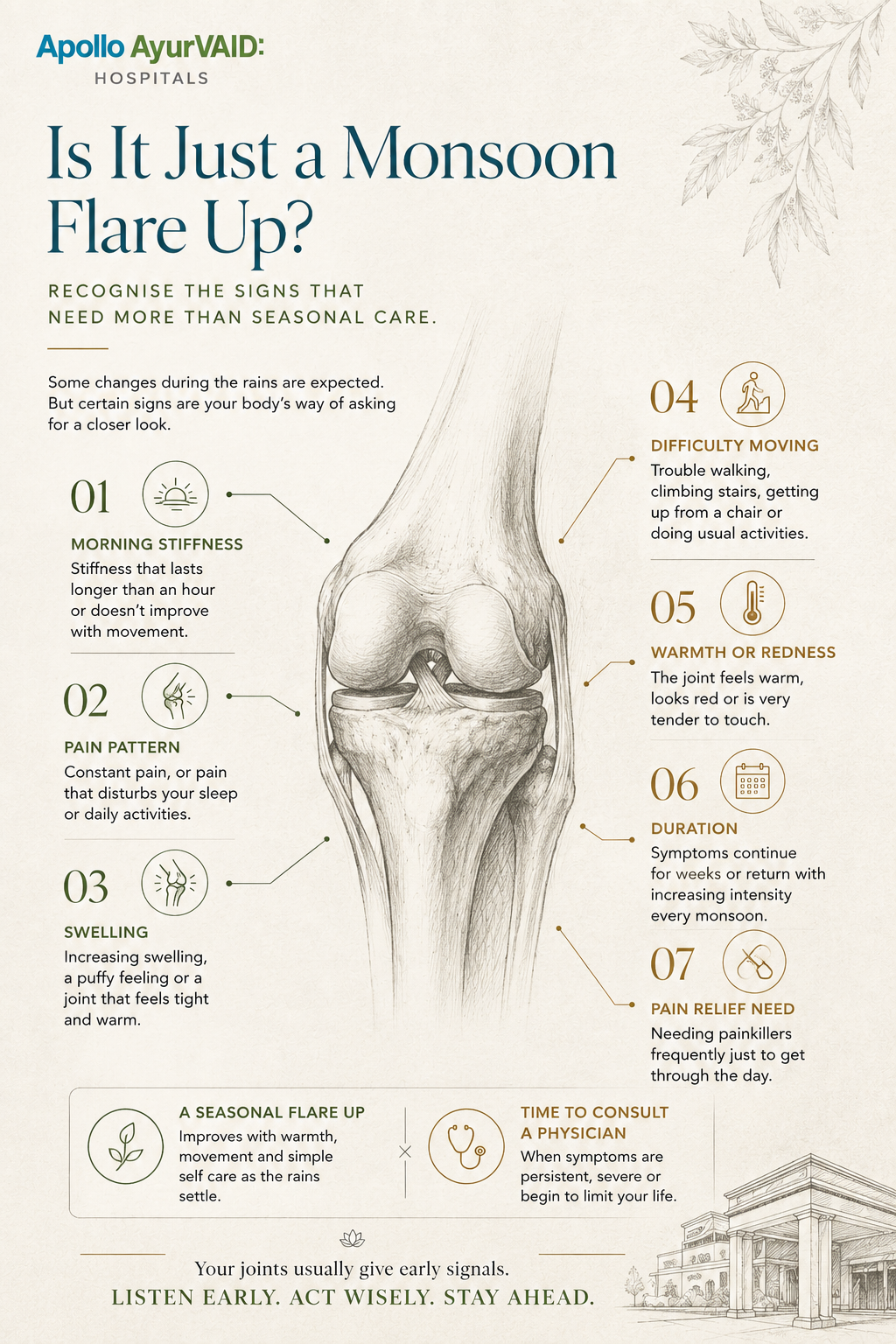
Who Is Most Likely to Experience Monsoon Joint Pain?
Not every joint reacts to the monsoon in the same way. The joints that usually complain are the ones that have been carrying a burden for years. People most likely to experience an arthritis flare up rainy season include:
- Individuals with osteoarthritis affecting the knees, hips or hands
- People living with rheumatoid arthritis
- Adults with previous fractures, ligament injuries or sports injuries
- Older adults with age-related cartilage wear
- People who spend long hours sitting or have reduced physical activity
- Individuals who are overweight, placing greater stress on weight-bearing joints
Previous injuries are often the first to react. A ligament tear that healed years ago or a surgically repaired knee may remain completely comfortable for months, only to become stiff once the weather changes. That doesn’t necessarily mean fresh damage has occurred. In many cases, the surrounding muscles and soft tissues simply become less forgiving during the rainy season, making an old problem feel new again. Age makes the picture more complex. Muscle strength gradually declines over time. Joint lubrication reduces. Recovery from everyday strain becomes slower. That is why many older adults feel that every monsoon becomes slightly harder than the previous one. Ignoring recurring seasonal symptoms isn’t always wise. A joint that hurts every rainy season deserves proper evaluation rather than repeated painkillers.
Practical Seasonal Management Tips
The best time to manage monsoon joint pain is before it becomes severe enough to limit everyday life. Small changes, consistently followed, often make more difference than people expect. A few practical habits can help:
- Keep joints warm and dry whenever possible.
- Avoid sitting continuously for long periods.
- Continue gentle stretching even if outdoor exercise isn’t possible.
- Wear supportive footwear instead of walking barefoot on cold floors.
- Change damp clothes promptly.
- Maintain regular sleep, since poor sleep often increases pain perception.
One mistake clinicians frequently notice is complete inactivity. People stop walking because the knee hurts. A week later, the knee hurts even more because it hasn’t moved. Movement remains one of the most effective ways to reduce stiffness, provided it is appropriate for the individual’s condition. Sometimes ten minutes of gentle mobility exercises indoors are more valuable than waiting for perfect weather.
Diet Adjustments for Monsoon Joint Health
The rainy season changes more than the weather. It changes digestion too. Many people naturally crave fried snacks and heavy meals during monsoon evenings. Comfortable in the moment, perhaps. Less comfortable for the joints over time. Ayurveda recommends lighter, freshly prepared meals during this season because digestive capacity tends to be lower. Simple dietary changes can support joint health:
- Choose warm, freshly cooked meals over refrigerated leftovers.
- Include soups, dals and lightly cooked vegetables.
- Use spices like ginger, turmeric, cumin and black pepper in moderation to support digestion.
- Drink adequate water even if you don’t feel particularly thirsty.
- Reduce excess fried, processed and very cold foods during prolonged rainy spells.
From the perspective of joint pain rainy season Ayurveda treatment, food is not prescribed simply to fill the stomach. It is chosen according to what the body can digest efficiently during a particular season.
Warm Oil Application and Daily Self-Massage
There is a reason many traditional households instinctively reach for warm oil during the monsoon. Gentle self-massage, known in Ayurveda as Abhyanga, is more than a comforting ritual. When performed regularly with an appropriate medicated oil, it helps improve circulation, eases muscle tightness and keeps joints supple during a season when stiffness tends to increase. The emphasis is on gentle application, not vigorous massage. People with acutely swollen, red or very painful joints should avoid self-treatment until they have been assessed by a physician, as some conditions require a different approach.
For those with chronic osteoarthritis or age-related stiffness, a few minutes of warm oil application before a bath often becomes one of the simplest habits for getting through the rainy months more comfortably.
When to Consider In-Clinic Treatment Before the Season Worsens
Seasonal joint pain that returns year after year is worth discussing with a physician, even if it settles once the weather changes. A careful assessment helps determine whether the symptoms are due to osteoarthritis, inflammatory arthritis, an old injury or another condition altogether. Although these problems may feel similar, they are managed very differently.
At Apollo AyurVAID Hospitals, patients undergo a detailed clinical evaluation that combines modern diagnostics with Ayurveda assessment. Depending on the diagnosis, treatment may include physician-supervised Ayurveda medicines, external therapies, therapeutic oil applications, dietary guidance and structured rehabilitation aimed at improving mobility rather than simply masking pain. Equally important, patients learn how to prepare for the next season instead of reacting after symptoms have already flared.
Conclusion
Every monsoon tells a story about your joints. For some, it’s an occasional twinge that disappears after a few days. For others, it’s the same knee, shoulder or wrist asking for attention year after year. Those recurring aches are easy to dismiss as “just the weather,” but they often reveal joints that need better care—not merely better pain relief.
Seasonal discomfort doesn’t always signal worsening arthritis, but it shouldn’t be ignored either. With timely assessment, appropriate treatment and simple changes to daily habits, many people find they can move through the rainy season with far less stiffness and interruption. The rain may arrive every year. A predictable arthritis flare up rainy season doesn’t have to.