Introduction
The arrival of the monsoon brings welcome relief from the summer heat, but it also marks the beginning of a season when lingering cough, nasal congestion and throat irritation become common complaints. Many people recover from a cold or viral infection, only to find that their breathing still does not feel quite as comfortable as it did before. Because these symptoms are usually mild, they are often ignored. Daily routines continue while thecough persists, the nose feels blocked on and off, or the throat remains irritated. It is only when these problems last for weeks that many people begin looking for ways to improve their respiratory health.
Monsoon lung care is more than managing seasonal coughs and colds. It also focuses on protecting respiratory health as the body adapts to seasonal changes. Depending on the cause of symptoms, care may include medicines, breathing exercises for monsoon, healthy lifestyle measures and Ayurveda respiratory care for the rainy season under the guidance of a qualified physician. Pranayama for lungs is commonly included as part of recovery once an acute illness has settled. Gentle breathing practices, together with seasonal Ayurveda recommendations, may complement medical care and support lung health during the monsoon.

Why Your Lungs Struggle More During the Rainy Season
Many people notice subtle changes in their breathing as summer gives way to the monsoon. A blocked nose on waking, a lingering cough after a recent cold, or a feeling that breathing is not as effortless as it was a few weeks earlier are common complaints during this time. These symptoms are usually mild at the start. A blocked nose may be worse in the morning and improve later in the day. A cough that seemed to have settled may return, particularly at night. Because the symptoms fluctuate, many people assume they are simply taking longer to recover from a recent viral illness.
The change from the dry summer months to the humid monsoon affects the upper airways in several ways. Nasal congestion often lasts longer; the throat may remain irritated, and mucus may not clear as easily as it normally does. As a result, some people continue to experience a cough or a feeling of heaviness even after the infection itself has resolved. Persistent symptoms do not necessarily mean that a new infection has developed. However, medical assessment is appropriate if the cough or congestion continues to worsen, does not improve over time, or is associated with fever, breathlessness or chest pain.
Ayurveda describes the change from one season to the next as Ritusandhi. It recognises that the body may take time to adjust to a new climate. During this period, some people remain well, while others notice recurrent respiratory symptoms, seasonal allergies or digestive complaints. Traditional Ayurveda practice therefore advises closer attention to food, sleep and daily routine until the body has adapted to the seasonal change.
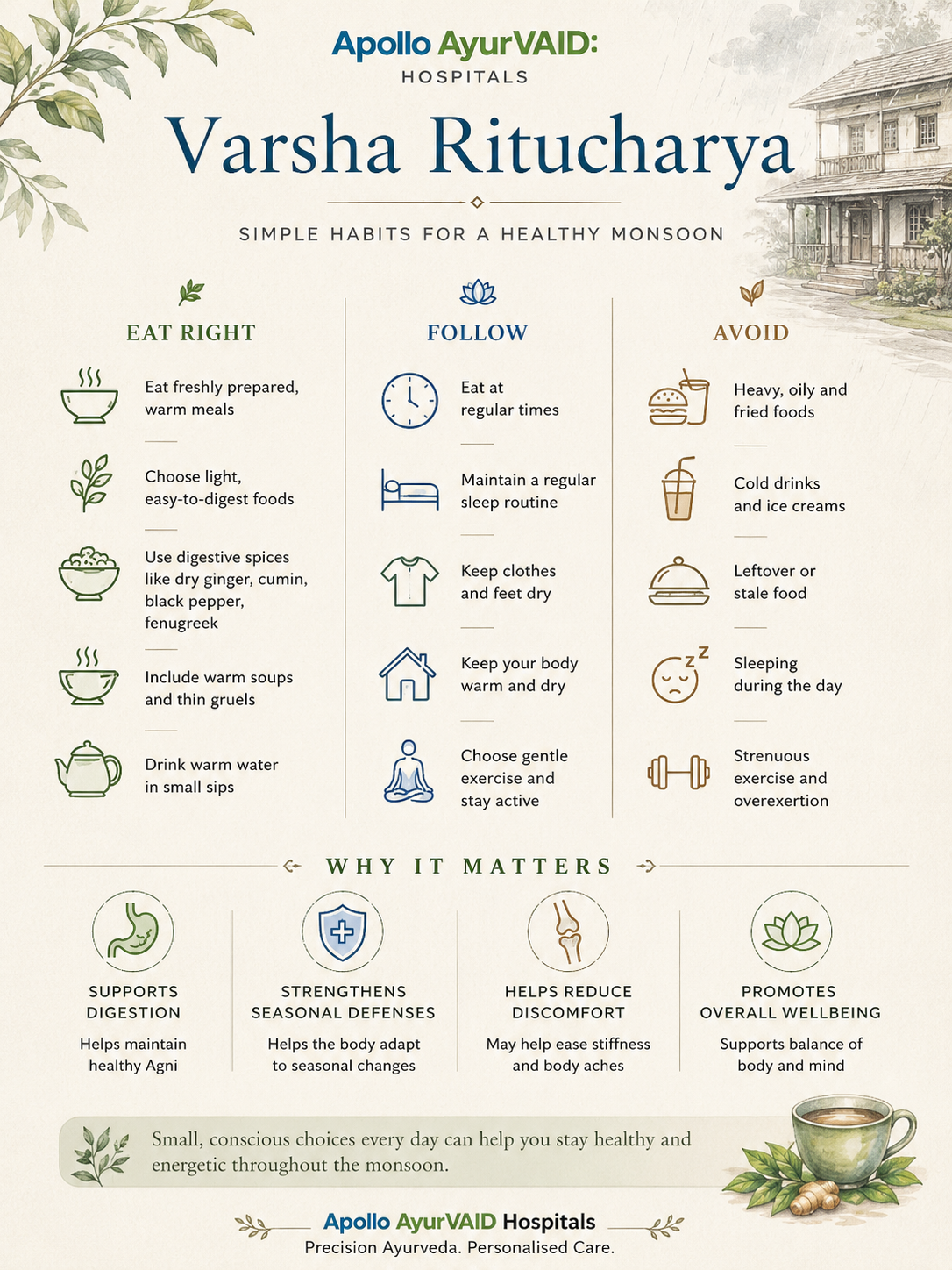
After the monsoon is established, Varsha Ritucharya outlines seasonal measures for the rainy months. These include eating freshly prepared food, maintaining regular meal and sleep timings, avoiding prolonged exposure to damp surroundings and supporting digestion with simple, balanced meals. This seasonal approach continues to guide lung health Ayurveda, where preventive care is adapted to the climate as much as to the individual.
What Changes in the Lungs During the Monsoon
The lungs themselves do not suddenly become weaker during the rainy season. Instead, the environment changes the conditions in which they function. People with asthma, allergic rhinitis or recurrent sinusitis often notice that familiar symptoms return more easily. Humid weather can make these symptoms more noticeable by affecting the normal clearance of airway secretions. Living in damp indoor spaces for several days at a stretch can make respiratory symptoms more noticeable, particularly in people with allergies. Nasal blockage may last longer, an occasional cough may become more frequent, and some individuals report a feeling of chest tightness despite having no signs of an active infection.
When the nose remains blocked, breathing often changes without people realising it. They may begin breathing through the mouth more often or take quicker, shallower breaths simply because it feels easier. Over time, this can add to the sensation that breathing is less comfortable, even though lung function itself may be unchanged.
At this stage, breathing exercises and monsoon programmes are often introduced as supportive care. Their purpose is not to treat infection or replace medicines, but to encourage comfortable breathing, improve respiratory mechanics and support recovery once acute illness has settled.
Pranayama Techniques for Respiratory Strength
Breathing practices are most useful when introduced at the right time. They are generally recommended after active fever, significant breathlessness or acute infection has improved. During an active respiratory illness, forceful breathing exercises may worsen irritation rather than relieve it.
The choice of practice also matters. A person recovering from a seasonal viral infection may benefit from slow, controlled breathing, while someone with uncontrolled asthma or severe nasal blockage may require medical assessment before beginning any breathing routine. When used appropriately, pranayama is not intended to increase lung capacity overnight. Its value lies in improving breathing efficiency, encouraging a slower respiratory rhythm and helping the body return to a more relaxed pattern of breathing.
Anulom Vilom (Alternate Nostril Breathing)
Among the various breathing practices, Anulom Vilom is often the easiest to begin with. It is usually the first breathing practice considered for people recovering from mild seasonal respiratory discomfort. The technique involves slow, unhurried breathing through alternate nostrils without force or breath-holding. The emphasis is on maintaining a comfortable rhythm rather than achieving a particular depth of breathing.
Many people find that the nose feels less blocked after a few minutes of practice and that breathing becomes more relaxed. While these changes are subtle, slowing the breath may reduce unnecessary respiratory effort and encourage a steadier breathing pattern. Because it is gentle and generally well tolerated, pranayama for lungs often begins with Anulom Vilom once acute symptoms have settled.
Kapalabhati: Benefits and Precautions
Kapalabhati is often grouped with breathing practices, but it differs significantly from slower forms of pranayama. It involves a series of short, forceful exhalations while inhalation occurs passively. The practice is more vigorous and demands greater effort from the respiratory muscles. Some people experience a temporary feeling of nasal clearance after practising Kapalabhati, especially when congestion is mild. That immediate sensation, however, should not be mistaken for improvement in the underlying condition. During the monsoon, the airways are often more sensitive because of recent viral infections, allergies or fluctuating humidity. In these situations, forceful exhalation may aggravate irritation instead of relieving it. Individuals with uncontrolledasthma, active sinus infection, persistent cough, recent respiratory illness or poorly controlledhypertension should avoid practising Kapalabhati without medical guidance.
For this reason, it is not routinely recommended as the first breathing practice during the rainy season. The choice of pranayama should always reflect the individual’s respiratory status rather than follow a standard sequence.
Bhramari Pranayama
Among the commonly practised breathing techniques, Bhramari Pranayama is often better suited to the respiratory sensitivity seen during the monsoon. The practice combines a slow inhalation with a prolonged exhalation while producing a gentle humming sound. The emphasis is on a relaxed, unforced breath rather than intensity.
Research over the past several years has drawn attention to its physiological effects. Clinical studies have reported improvements in certain measures of lung function, heart rate variability and autonomic balance following regular practice over several weeks. Participants have also shown modest reductions in resting heart rate and improvements in sleep quality, both of which may indirectly support respiratory wellbeing. These effects develop gradually and depend on regular practice. They should not be viewed as an immediate remedy for cough or congestion.
Within Ayurveda respiratory care for the rainy season, Bhramari is often preferred because it encourages slow, comfortable breathing without creating unnecessary strain on the chest or upper airway. It is particularly useful during recovery, when symptoms have settled, but breathing still feels less comfortable than usual.
Nasya as a Preventive Monsoon Practice
Every breath enters through the nose before reaching the lungs. During the monsoon, the nasal passages are continuously exposed to humid air, suspended allergens and environmental irritants. Even in people without chronic respiratory disease, this may lead to recurrent nasal irritation or congestion. Ayurveda gives particular importance to protecting the nasal passages during seasonal change. As part of Varsha Ritucharya, physician-guided preventive measures are introduced to help the body adapt to the rainy season rather than respond only after symptoms appear.
Nasya may be considered for people who experience recurrent nasal blockage, allergic rhinitis or repeated upper respiratory discomfort during the monsoon. It involves the use of medicated oil through the nasal passages, but it is not intended as a quick remedy for congestion or an alternative to treatment when an infection is present. Whether Nasya is appropriate depends on the person’s symptoms and the stage of illness. When combined with appropriate breathing exercises, monsoon routines and seasonal lifestyle measures, Nasya forms part of lung health Ayurveda, where the focus remains on maintaining respiratory stability through the changing season.
When Breathing Practices Are Not Enough
A lingering cough during the rainy season is not always harmless. While many symptoms reflect seasonal changes or allergies, some indicate infection or more significant respiratory disease. Persistent fever, cough with coloured sputum, chest pain, wheezing that progressively worsens, breathlessness at rest or symptoms that continue to intensify over several days require medical evaluation. These are not situations in which breathing exercises alone are appropriate.
At Apollo AyurVAID Hospitals, the first step is to distinguish seasonal respiratory discomfort from conditions such as bacterial infection, asthma exacerbation or pneumonia that require specific treatment. Clinical history, physical examination and investigations are used wherever necessary before deciding on the most appropriate management plan. Once serious illness has been addressed or excluded, supportive Ayurveda measures may be introduced according to individual needs. Depending on the clinical situation, this may includeseasonal dietary advice, physician-guided Nasya, selected breathing practices and other Panchakarama interventions that complement conventional respiratory care. The objective is not simply symptom relief, but improving recovery while reducing the likelihood of recurrent seasonal discomfort.
Closing Observation
The monsoon does not affect every respiratory system in the same way. Some people move through the season without difficulty, while others experience symptoms that seem minor at first but persist for weeks. Often, the difference lies less in the weather itself than in how the body adapts to it. That is where seasonal care becomes valuable. Paying attention to early respiratory changes, maintaining appropriate daily routines and choosing the right supportive practices at the right time may prevent minor discomfort from becoming a prolonged problem. In both modern respiratory medicine and Ayurveda, the principle is remarkably similar: timely attention to seasonal changes is often more effective than waiting for symptoms to become established.