Introduction
Every year, as Karkidakam arrives in Kerala, interest in seasonal Ayurveda therapies begins to rise. Some people come looking for relief from long-standing joint pain that tends to worsen during the rains. Others simply want to follow a tradition they have seen in their families for years. It is also common for people living outside Kerala to plan a visit during this time after hearing that the monsoon is considered ideal for certain Ayurveda treatments.
If you are considering a Karkidaka Chikitsa program for the first time, it is natural to wonder what actually happens during treatment. Is it the same as Panchakarma? How many days does it take? Does everyone receive the same therapies?
The answer is no. Karkidaka Chikitsa is not a fixed treatment package. It is a physician-planned seasonal program that is adapted to the individual’s health, constitution, digestive capacity, medical condition, and treatment goals. Understanding what to expect before you begin helps you prepare better and enables both the physician and the patient to work towards the same therapeutic goals.

Why Is Karkidaka Considered Important in Ayurveda?
Ayurveda recognises that changes in seasons can disrupt the balance of doshas, thereby affecting your overall health. Karkidakam, which is the period of monsoon, is traditionally looked upon as the ideal period for healing treatments and recuperation from various chronic health issues. The humid and cooler climatic conditions of Karkidakam induce people to lead a slow-paced and regulated life, which helps them to adapt to the therapies and regimens. The therapies in Karkidaka Chikitsa are very commonly performed in the month of Karkidakam, although the very fact is that a treatment in Ayurveda is never planned merely according to the calendar. The physician first determines whether it is appropriate for the individual before recommending a treatment plan.
Who Is Karkidaka Chikitsa Suited For?
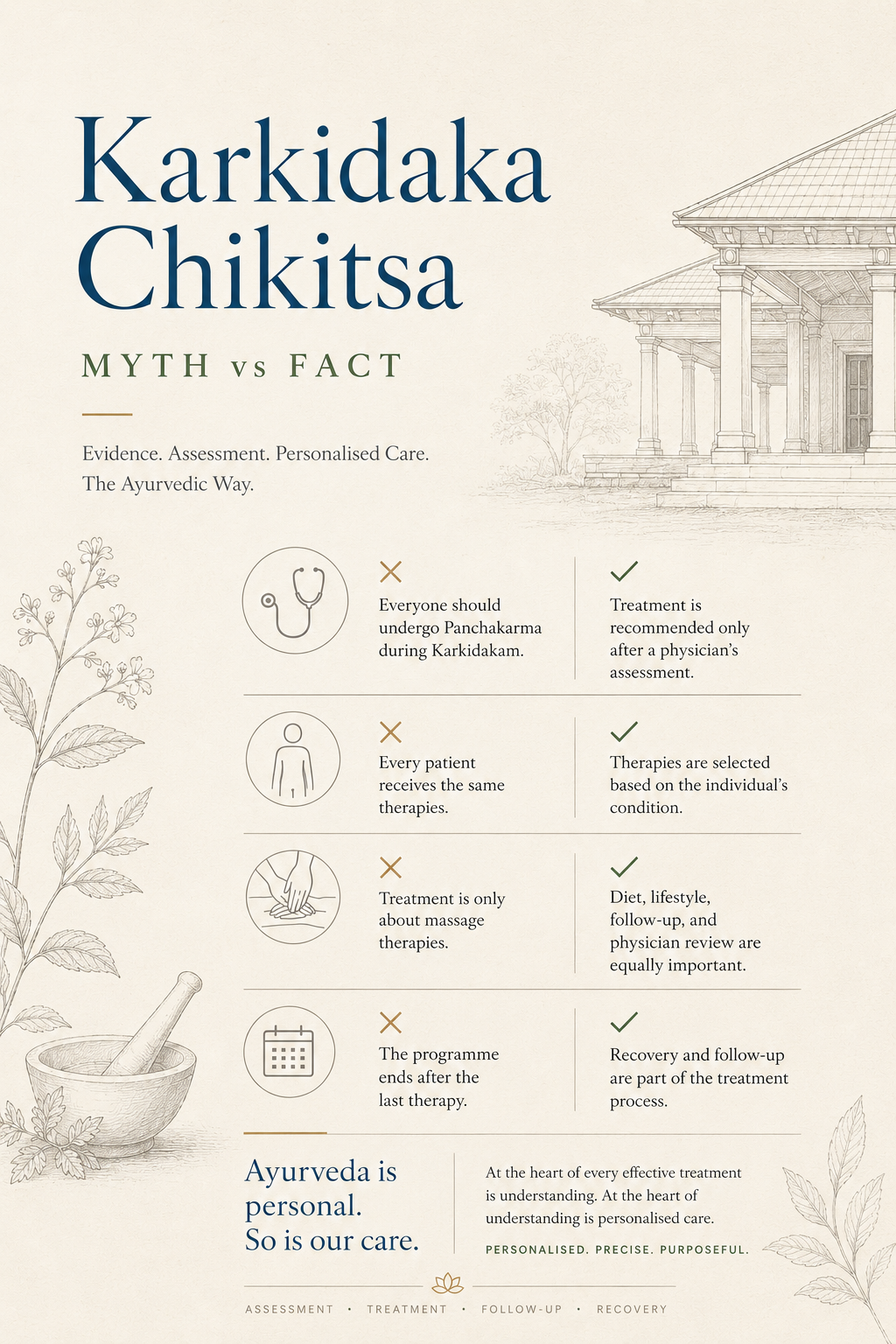
One of the common misconceptions is that everyone should undergo Panchakarma during Karkidakam. Classical Ayurveda does not recommend a single approach for everyone. A seasonal program may be suitable for people who:
- experience recurrent joint or muscle stiffness during the monsoon
- live with osteoarthritis, cervical or lumbar spondylosis, or other chronic musculoskeletal disorders
- have long-standing digestive complaints that tend to fluctuate with the seasons
- are recovering from physical or mental fatigue
- wish to follow physician-guided seasonal rejuvenation as part of preventive healthcare
Some individuals may only need dietary modifications and simple supportive therapies. Others may require a more structured Panchakarma monsoon treatment program based on their diagnosis and overall health.
On the other hand, not everyone is an immediate candidate for Panchakarma. Pregnancy, acute infections, uncontrolled medical conditions, or poor digestive capacity may require treatment plans to be modified or postponed. This is one reason an initial medical consultation is always the first step.
Your First Visit: Assessment Comes Before Treatment
Many people expect therapy to begin as soon as they arrive. In reality, the first consultation is often the most important part of the entire program. The physician not only looks into the present complaints but also at the whole individual. It is very common for the physician to inquire about the diet and digestion, the function of the bowels, sleep and energy, past medical and surgical history and current medicines and remedies that were tried previously. One is also evaluated based on the overall constitution of the body (
Prakriti) and the dosha imbalance that is present currently.
At times, the physician may need to conduct further investigations using laboratory tests, depending on the nature of the disease. After such a thorough evaluation, several questions can be answered, for instance:
- Is Panchakarma appropriate?
- Which therapies are likely to be beneficial?
- How long should treatment continue?
- Are dietary changes required before therapy begins?
Only after these questions have been addressed is the treatment plan finalised. The physician discusses the expected duration during the initial consultation, so patients have a clearer idea of what to expect before treatment begins. Depending on the treatment plan and duration, many patients can receive their therapies on an outpatient basis, while others may be advised to stay for a few days if more intensive procedures are planned.
What Does a Typical Programme Look Like?
No two programmes are exactly alike, but most follow a logical sequence rather than starting with intensive procedures on the first day. For many patients, treatment begins with therapies that help the body prepare for Panchakarma, where appropriate. These commonly include Snehana (oleation) and Swedana (therapeutic sweating), both of which have traditionally been regarded as especially useful during the monsoon season.
Depending on the individual’s condition, selected Panchakarma procedures may then be introduced over the following days. Throughout the program, the physician reviews progress and adjusts treatment as needed, rather than following a fixed schedule.
Food also becomes part of treatment. Meals are generally planned to be light, warm, and easy to digest, while heavy or difficult-to-digest foods are usually avoided. Rest, sleep, and daily routine receive attention alongside the therapies themselves.
Procedures Commonly Included
The exact combination varies from person to person, but a Karkidaka Chikitsa program may include one or more of the following.
Abhyanga
A therapeutic oil massage is performed using medicated oils, selected according to the individual’s condition.
Swedana
Controlled therapeutic sweating that usually follows Abhyanga and helps prepare the body for further treatment.
Pizhichil
Pizhichil combines the continuous pouring of warm medicated oil with gentle massage techniques. It is commonly recommended for selected musculoskeletal and neurological conditions.
Njavarakizhi
Bundles prepared using cooked Njavara (shashtika) rice are applied with medicated milk or herbal decoctions. This traditional Kerala therapy is widely recognised for its role in strengthening and nourishing the tissues.
Depending on clinical assessment, therapies such as Basti or other Panchakarma procedures may be advised. Not every patient undergoes every procedure, and the choice always depends on the physician’s evaluation rather than the season alone.
Diet During Karkidaka Chikitsa
People sometimes expect the focus to be entirely on therapies. In practice, physicians pay equal attention to meals. There is little value in planning treatment carefully if the food served during those days works against it. That is why the menu is often also customised. Freshly cooked meals, simple preparations and familiar seasonal ingredients usually replace heavier foods until the program is completed.
Traditional preparations such as Marunnu Kanji or Karkidaka Kanji, usually prepared using Njavara rice and regionally available medicinal herbs, continue to be an important part of Kerala’s seasonal food culture. The exact ingredients often vary between households, reflecting local traditions rather than a single standard recipe.
What to Expect After Treatment
Many people assume that the program ends after the last therapy session. In practice, follow-up is an important part of treatment. The physician may recommend continuing certain medicines, modifying the diet for a period, or gradually returning to normal activities rather than making sudden changes.
Patients receiving treatment for chronic disorders often require ongoing review because seasonal Panchakarma is usually one component of a broader long-term treatment plan rather than a standalone intervention.
Conclusion
References