When the southwest monsoon arrives in Kerala, everyday life begins to change in quiet ways. Meals become lighter. Marunnu kanji, a traditional medicinal porridge, returns to the kitchen. Medicinal herbs find their way back into everyday cooking. Around the same time, Ayurveda clinics begin seeing more people seeking seasonal Panchakarma rejuvenation.
For many families, these changes are simply part of Karkidakam, the last month of the Malayalam calendar, usually falling between mid-July and mid-August. The month is also known as Ramayana Masam, and in many homes the Ramayana is read every day throughout this period. Food, spiritual practices, and everyday routines come together during these weeks in a way that is deeply woven into Kerala’s culture.
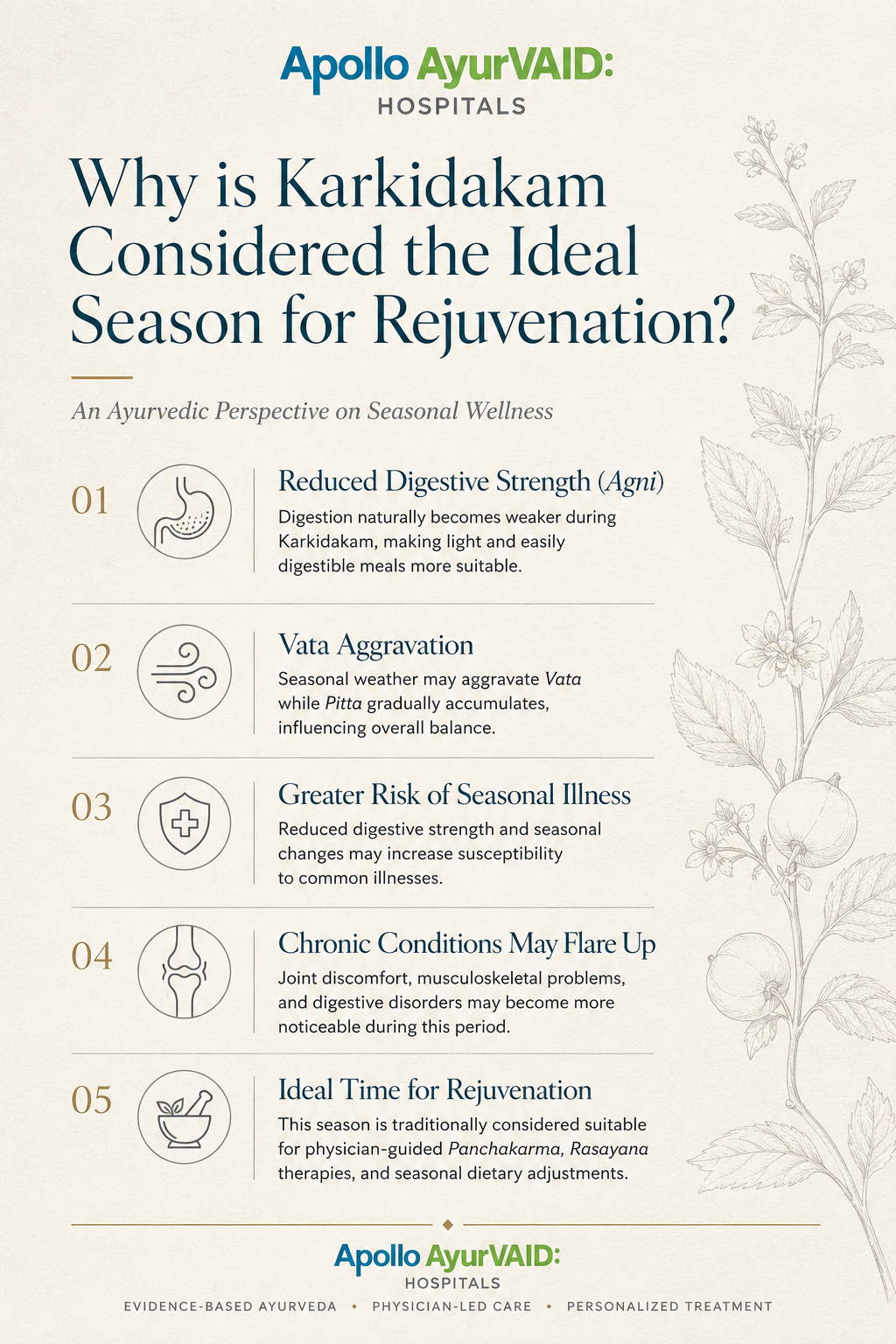
The monsoon has long been regarded as a season that calls for a different way of living. Meals become simpler, familiar home remedies return, and many people pay closer attention to their health. Ayurveda reflects this seasonal rhythm. The rainy months, known as Varsha Ritu, are traditionally considered a time when digestion is not at its strongest. People who already have joint pain or digestive complaints often find that these problems are more noticeable during this period.
This is also when Karkidaka Chikitsa is traditionally practised. The aim is to support the body through the monsoon with food, daily routines, and treatments suited to the season.

What Is Karkidakam Masam and Why Is It So Important in Ayurveda?
The seasons play an important role in Ayurveda. The body is not thought to function in the same way throughout the year, so food, daily habits, and treatments are adjusted as the seasons change. This seasonal way of living is called Ritucharya.
Karkidakam falls during Varsha Ritu, the monsoon season. Ayurveda explains that the physiological changes seen during this period do not begin with the rains themselves. They are part of a seasonal progression. During Greeshma Ritu (summer), prolonged heat gradually causes Vata dosha to accumulate (Sanchaya). The body may tolerate this stage without obvious symptoms. Once the rains begin, the accumulated Vata entersPrakopa, or aggravation. At the same time,Pitta begins to accumulate, whileAgni, the digestive and metabolic fire, becomes comparatively weak due to the cold, damp environment. This combination influences how the body responds to food, activity and disease. It is not unusual for people to notice the following:
- stiffness after waking up
- worsening knee or back pain
- sluggish digestion
- bloating or constipation
- reduced appetite
- increased fatigue
- recurrent respiratory allergies
- sinus congestion
- flare-ups of chronic skin disorders
In Ayurveda, these are viewed as seasonal changes that call for adjustments in food, daily routine, and, when needed, treatment. This is the thinking behind Karkidaka Chikitsa, the seasonal regimen traditionally followed during Karkidakam.
Kerala’s geography probably played an important role in shaping these traditions. Long periods of rainfall, abundant medicinal flora and a well-established Ayurveda heritage encouraged seasonal healthcare practices to become part of everyday life rather than remaining confined to treatment centres. Food naturally became one of the first interventions. Families shifted towards freshly prepared, warm meals that were easier to digest. Heavy, oily and stale foods were generally reduced during this period. Digestive spices such as dry ginger, cumin, black pepper and fenugreek became regular ingredients in seasonal cooking—not merely to enhance flavour, but because Ayurveda recognises them for their Deepana (enhancing digestive fire) and Pachana (supporting metabolism) properties.
Why Kerala Tradition Considers This the Ideal Panchakarma Season
Panchakarma is often described as a detoxification programme. The classical understanding is more nuanced. Panchakarma is a carefully planned, highly customised therapeutic process intended to restore physiological balance after assessing the individual’s constitution, strength, digestive capacity and disease status. It is not a standard package, nor is every person advised to undergo all five procedures. The timing of Karkidaka chikitsa reflects this clinical thinking.
During Varsha Ritu, the cool and humid climate is traditionally believed to make the body more receptive to oleation (Snehana) and sudation (Swedana), both of which are commonly used before the principal Panchakarma procedures. These preparatory measures, combined with seasonal dietary regulation, help create favourable conditions for treatment that generate better outcomes.
Equally important is the physician’s assessment. A young individual seeking preventive seasonal care may require only supportive therapies and dietary guidance. A person living with osteoarthritis, cervical spondylosis, inflammatory joint disease or neurological disorders may need a structured Panchakarma programme extending over several days or weeks.
This distinction is important because Karkidaka chikitsa has never been intended as a “one-size-fits-all” monsoon ritual. Classical Ayurveda has always emphasised that therapies should be selected based on the individual rather than the season alone.
What a Typical Karkidaka Chikitsa Programme Involves
Although programmes vary, certain elements are commonly seen in physician-supervised Kerala monsoon Ayurveda treatment.
Treatment usually begins with a detailed consultation rather than therapy itself. Along with understanding the presenting complaints, the physician evaluates constitutional type (Prakriti ), currentdosha imbalance, digestive capacity, bowel habits, sleep, medical history and ongoing medications. The treatment plan may then combine:
- External therapies such as Abhyanga, Swedana, Pizhichil or Njavarakizhi
- Selected Panchakarma procedures where clinically appropriate
- Ayurveda medicines
- Seasonal dietary recommendations
- Lifestyle guidance that complements treatment
Among Kerala’s best-known seasonal preparations is Karkidaka Kanji, also called Marunnu Kanji or Oushadha Kanji. It occupies a unique place because Ayurveda regards it as both nourishment and medicine.
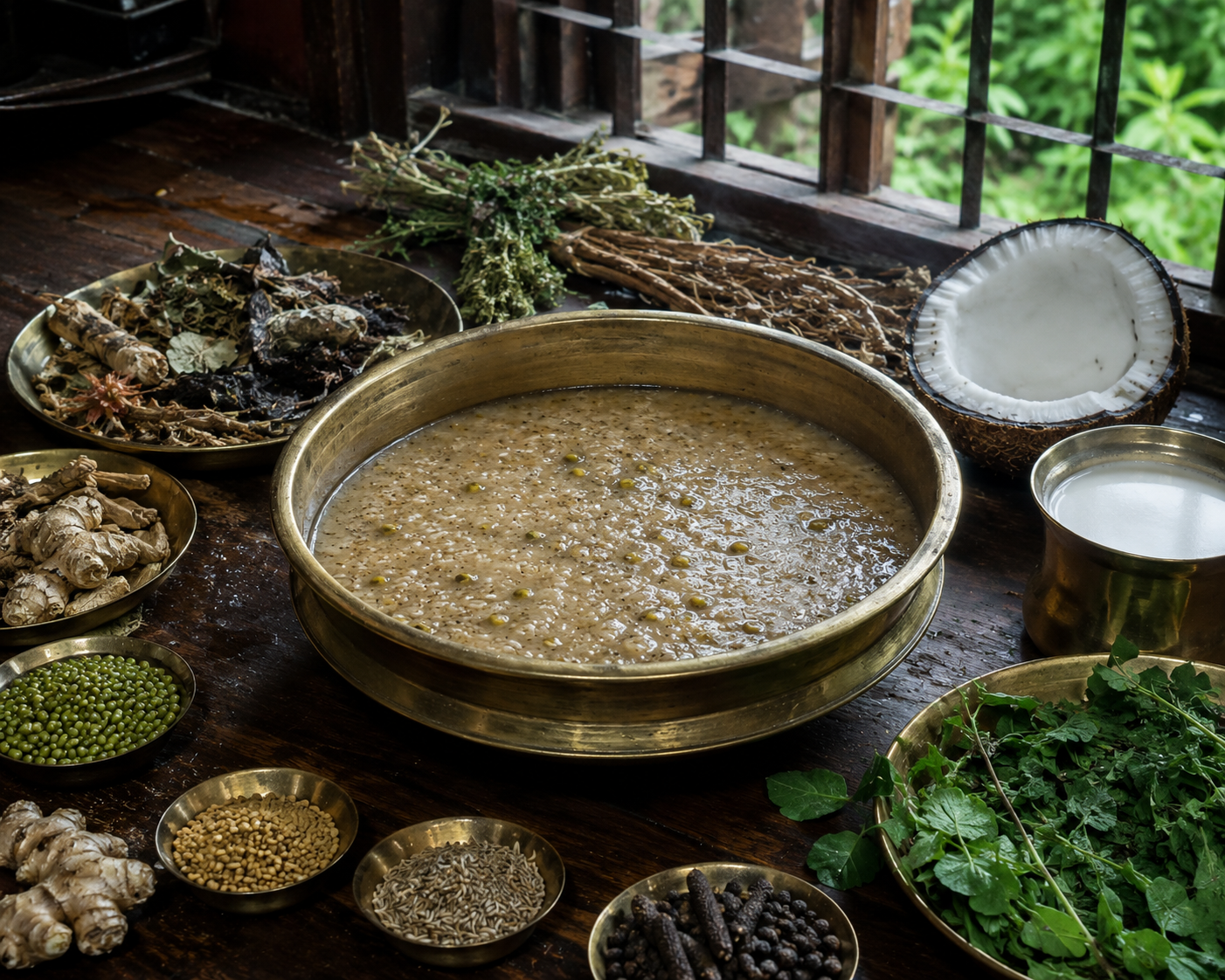
Its foundation is traditionally Njavara rice, a medicinal rice variety indigenous to Kerala. Depending on regional practice, the preparation may include Dashapushpam, Dashamoola, Bala (Sida cordifolia), green gram, cumin, fenugreek, dry ginger, long pepper, black pepper, garden cress and coconut milk. Some households prepare it for seven consecutive days, while others continue the practice throughout Karkidakam masam.
There is no single authentic recipe. Local availability of medicinal plants has always influenced the formulation, and this diversity remains one of the strengths of Kerala’s living Ayurveda tradition.
Another seasonal preparation found in many homes is Pathila Thoran, prepared using medicinal leafy vegetables available during the monsoon. Together, these foods reflect an Ayurveda principle that seasonal nutrition should actively support the body’s changing physiological needs.
Apollo AyurVAID's Karkidakam Programme at Our Kerala Centres
At Apollo AyurVAID, seasonal Ayurveda care is delivered through the framework of Precision Ayurveda. It combines classical Ayurveda principles with structured clinical decision-making. Instead of recommending identical monsoon therapies for every individual, treatment is planned after evaluating the patient’s diagnosis, disease stage, constitutional profile, digestive capacity, laboratory findings where relevant and therapeutic goals.
This enables physicians to determine:
- whether Panchakarma is appropriate
- which procedures are likely to provide benefit
- the safest sequence of therapies
- dietary modifications required during treatment
- appropriate follow-up
- after the programme is completed
For patients living with chronic joint disorders, metabolic diseases, digestive conditions, neurological illnesses or recurrent musculoskeletal pain, this structured approach helps integrate the seasonal wisdom of Karkidaka chikitsa into a broader long-term treatment plan.
The traditions associated with Karkidakam masam have endured because they recognise something modern medicine also acknowledges—the body responds differently as the environment changes. Ayurveda’s response to that seasonal shift is neither a quick cleanse nor a temporary wellness trend. It is a thoughtful, physician-guided approach that combines food, therapies, medicines and lifestyle practices to help individuals navigate the monsoon with greater resilience while respecting Kerala’s rich healing heritage.
References