Introduction
Every year on September 21, World Alzheimer’s Day reminds us that behind every diagnosis is a person, a family, and an emotional journey.
Watching a parent, spouse, or loved one experience memory loss can be difficult. Families often ask what they can do to support memory, independence, emotional well-being, and day-to-day comfort.
Alzheimer’s disease is the most common form of dementia. For families, care is not only about managing memory changes but also about maintaining dignity, familiar routines, safety and quality of life.
A structured Ayurveda approach to Alzheimer’s care can be considered supportive alongside appropriate medical and neurological management.

Understanding Alzheimer’s Through Ayurveda
Ayurveda does not describe Alzheimer’s disease using the same terminology as modern neurology. However, concepts such as Jarajanya Smritibhramsha, Smriti Bhramsha and Smriti Vibhrama help us understand aspects of age-related cognitive decline.
These concepts relate broadly to changes in remembering, understanding, retaining, and recalling information.
According to Ayurveda, Jara (ageing) is a period during which the Vata dosha tends to become increasingly dominant. An irregular lifestyle, constant stress, insufficient rest and poor digestive capacity can exacerbate the imbalance.
The Importance of Tridosha
In terms of cognition, Ayurveda perceives the interplay of the three Doshas.
Vata Dosha, especially Prana Vata, is responsible for sensory perception, mental processes and neurology.
In Alzheimer’s Ayurveda approaches, these principles are considered along with digestion, sleep, emotional health, daily routine and functional abilities.
What Ayurveda Can Realistically Do
An Alzheimer’s diagnosis calls for honest communication and realistic expectations.
It is important to state clearly that Alzheimer’s disease Ayurvedic treatment cannot be presented as a cure. Ayurveda should therefore be viewed as a supportive approach rather than a replacement for necessary medical care.
An organised Ayurveda for Alzheimer’s progression programme could include:
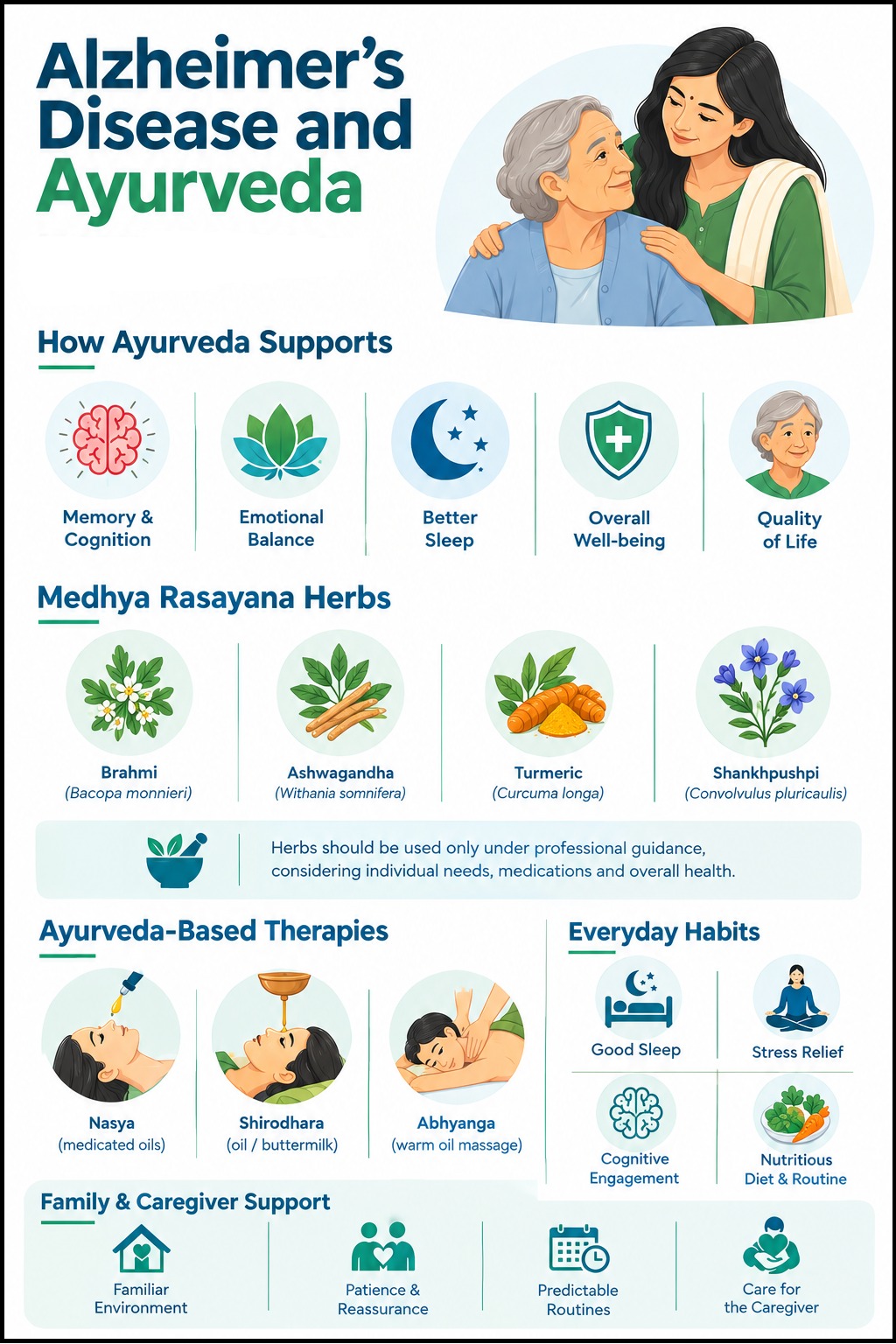
- Helping cognitive and functional abilities: Certain Medhya Rasayana approaches could be explored to help retain cognitive functions.
- Enhancing the quality of life: Sleep problems, restlessness, anxiety, irritability and other related issues could be handled as part of personalised care.
- Supporting daily functions: A proper diet, exercise, a routine and emotional support could help maintain independence for longer.
Where age-related issues related to memory and cognition affect a person, dementia Ayurvedic treatment could be considered based on individual needs.
Medhya Rasayana Herbs for Cognition
There are certain herbs that have been traditionally used to aid cognition and memory.
1. Brahmi (Bacopa monnieri)
It is traditionally considered a memory supporting plant. Its bioactive bacosides enhance protein production and facilitate repair of nerve cells. It aids in cognitive signal communication, thus halting the degradation of acetylcholine, an essential neurotransmitter involved in learning and remembering. It is an effective antioxidant that eliminates free radicals and protects the neurons from toxins and neuronal death.
2. Ashwagandha (Withania somnifera)
It is an adaptogenic plant that reduces inflammation of brain tissues by suppressing harmful chemicals and swelling. It promotes brain cell repair and branching of brain nerves and formation of neural pathways. This serves to protect important brain connections from amyloid plaque formation that could destroy them.
3. Shankhapushpi (Convolvulus pluricaulis)
Shankhapushpi is well known as a top nervine tonic and a calming anxiolytic. It controls stress hormones like cortisol and adrenaline and increases the efficiency of protein synthesis in the brain. It helps to relieve the restlessness, insomnia and nervous tension often seen in cognitive decline.
The search term Brahmi Ashwagandha Alzheimer’s reflects growing interest in these herbs for cognitive support. However, herbs should not be combined or self-administered without considering the person’s age, medications, digestion, and overall health.
The aim of Alzheimer’s care Ayurveda is not simply to prescribe herbs for memory but to create an individualised plan around the person’s wider needs.
Ayurveda-Based Therapies
Where appropriate, internal medicines may be combined with gentle external therapies.
- Nasya: Selected medicated oils or preparations are administered through the nasal passages. In Ayurveda, the nose is described as an important route associated with the head—Nasa Hi Shirso Dwaram.
- Shirodhara & Takradhara: Oil/buttermilk is typically applied gently through the body for the purpose of relaxing and calming one’s mind.
- Abhyanga: Warm oil massage therapy may help with relaxation, mobility, blood circulation, and sleep.
Both of these methods need to be tailored according to the individual’s age, health condition, mobility, and tolerance.
Everyday Habits Matter
Medicines and therapies are only one part of Alzheimer’s care in Ayurveda.
- Sleep: Maintain consistent sleep and wake times and a calming bedtime routine.
- Stress reduction: Gentle yoga, appropriately guided breathing practices, meditation, or relaxation techniques may support emotional well-being.
- Cognitive engagement: Familiar music, family photographs, reading, simple puzzles, gardening, and meaningful conversation can provide gentle mental stimulation. Activities should feel enjoyable rather than frustrating.
Helping the Family and the Caregiver
Caregiving for an Alzheimer’s patient is loving, but at the same time it can also be exhausting.
A good care regimen has to take into account not only the needs of the patient but also those of the caregiver.
- Provide a familiar atmosphere: Maintain a tidy and well-lit home without any superfluous objects. Safe pathways and visual cues can be helpful.
- Be patient: Correcting the patient frequently after he or she forgets about names or some event will only serve to increase confusion. Gentle reassurance and redirection can help preserve dignity.
- Maintain predictable routines: Regular timings for meals, bathing, medication, sleep, and daily activities can provide a sense of security.
- Care for the caregiver: Rest, breaks, social connection, and asking for help are essential for sustainable caregiving.
A Compassionate Approach to Alzheimer’s Care
Alzheimer’s disease affects much more than memory. It can influence communication, relationships, confidence, routines, and independence, and the family feels the effects throughout.
A responsible Alzheimer’s disease Ayurvedic treatment approach should focus on what can realistically be supported: comfort, function, sleep, nutrition, emotional well-being, and quality of life. Ayurveda complements appropriate medical and neurological care, providing individualised treatment and realistic expectations at every stage.