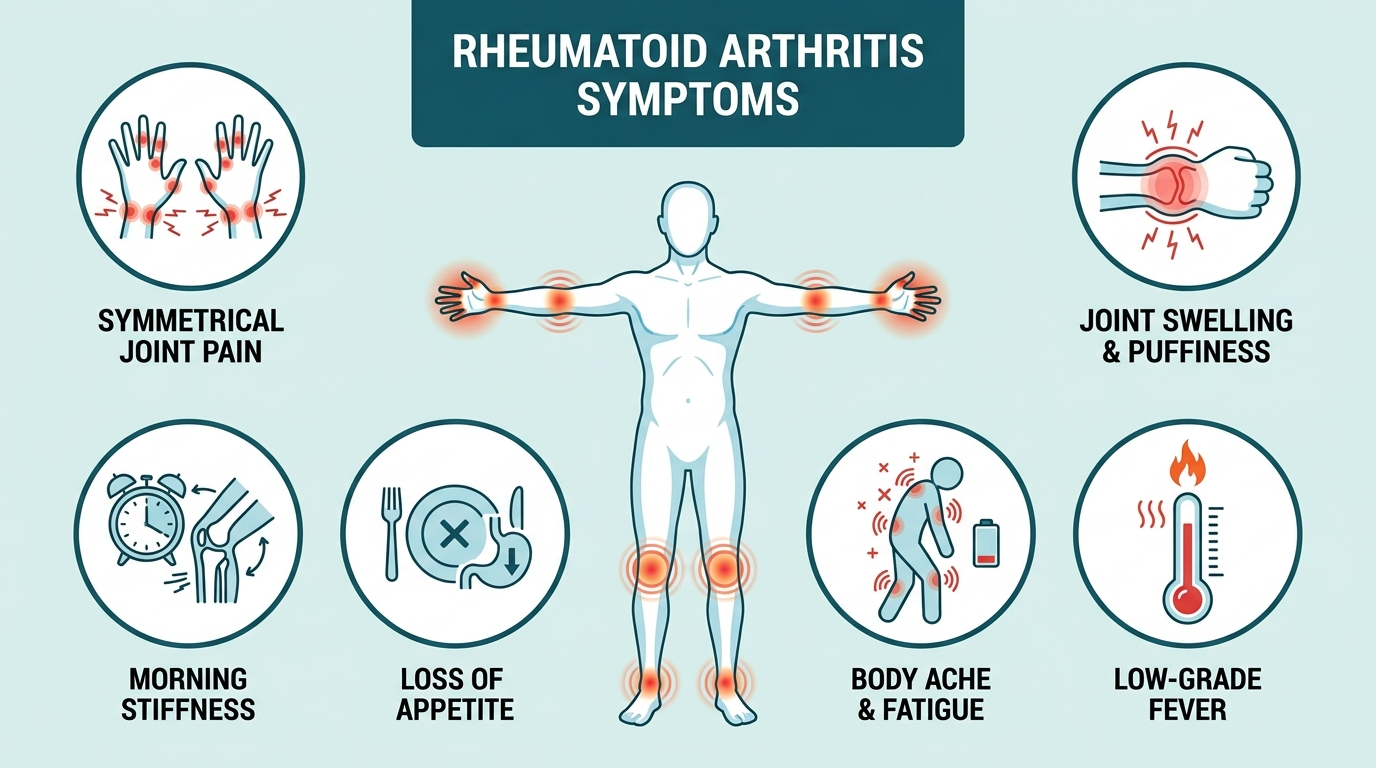
In Ayurveda, Rheumatoid Arthritis is recognised as Amavata (Ama=metabolic toxins, Vata=vitiated Dosha). It is a long-term autoimmune disease that causes the immune system to mistakenly attack healthy cells in the body, leading to inflammation or painful swelling in the affected joints. It produces symmetrical joint pain (Sandhiruk), persistent morning stiffness (Stabdhata) and puffiness or swelling around the joints.
Rheumatoid Arthritis in Ayurveda is attributed to Mandagni (weak digestive fire) which generates Ama carried by vitiated Vata to the seats of Kapha, such as the synovial joints. Improper food choices (Viruddhara), lack of physical exercise, genetic or environmental triggers perturb the metabolic fire to produce toxic residue that settles in the joint spaces. Amavata can occur in any joint, but it normally occurs symmetrically, involving the small joints of the hands and wrists, as well as larger joints such as the knees.
Apollo AyurVAID adopts an integrated, individual and protocol-driven approach (Precision Ayurveda) that addresses the metabolic root causes of Amavata rather than just suppressing terminal inflammatory symptoms. A complete health assessment by a multidisciplinary team of expert Ayurveda physicians is carried out to develop a personalised protocol consisting of classical Ayurveda medications, biopurificatory Panchakarma therapies (such as Virechana and Vasti), targeted functional rehabilitation and individualised diet and lifestyle modifications. Amavata (in Ayurveda) the treatment is to prevent the progress of the disease (Samprapti Vighatana), try to regain the lost functionalities, and reduce the systemic inflammation that accelerates the healing process. This integrative and multi-disciplinary approach can often avoid invasive surgical interventions and a lifetime of dependence on heavy medications.
Ayurveda helps most of the patients but may be limited to symptomatic management in the following cases.

Modern medicine considers Rheumatoid Arthritis (RA) to be a chronic, systemic, autoimmune, non-suppurative inflammatory disorder in which the immune system inappropriately attacks the synovium (joint lining). Symmetrical joint pain and swelling with persistent morning stiffness. Eventual destruction of cartilage and bone. RA typically involves the small joints of hands and wrists but may involve larger joints and even other organ systems such as the lung, heart and eyes. Risk factors: Complex interaction of genetic susceptibility (eg HLA-DR markers), environmental triggers such as smoking and hormonal factors.
Current therapeutic strategies for RA are directed toward symptom relief and strong immunosuppression to halt inflammation. These are:
As RA progresses, the limitations of traditional therapy are often revealed, as these drugs are typically required for long-term use and have the potential for significant toxicity, including gastrointestinal discomfort and hepatic, renal or bone marrow suppression. While effective for immediate suppression, cessation is often associated with rapid disease flares.
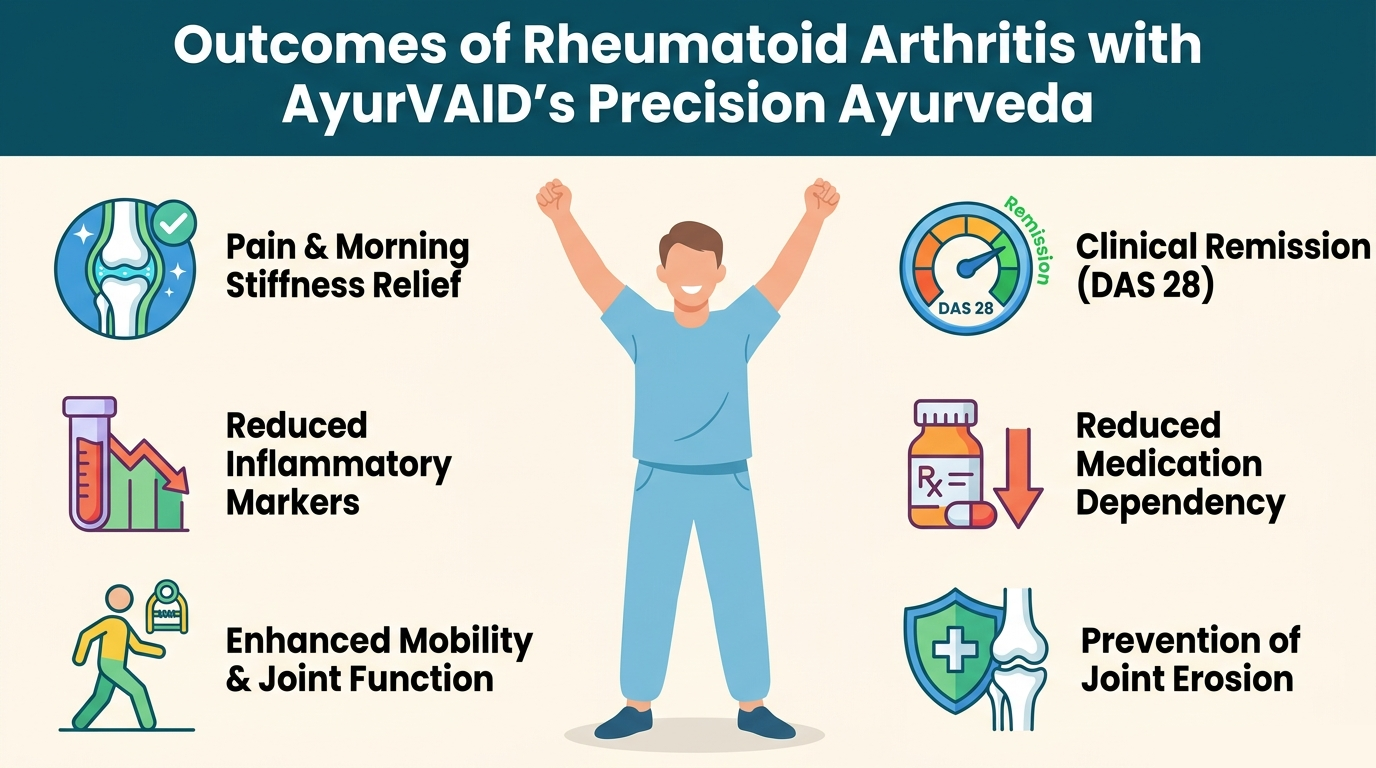
While conventional medicine provides quick control of inflammation, Rheumatoid Arthritis treatment in Ayurveda is a holistic method that is structurally restorative, attacking the disease at its metabolic root. When patients combine conventional diagnostics with Precision Ayurveda, they can enjoy the following unique benefits, in addition to significant pain and stiffness relief and reduced joint swelling:
In Ayurveda, Rheumatoid Arthritis (Amavata) develops through complex physiological processes that are essentially triggered by Mandagni (impaired digestive fire), leading to the formation and accumulation of Ama (metabolic toxins). This sticky toxin is circulated by vitiated Vata and Kapha doshas and finally gets settled in the synovial joints (Sandhis) to cause a systemic inflammatory response. The causative factors (Nidanas) for this imbalance are different for each person and are classified as follows:-
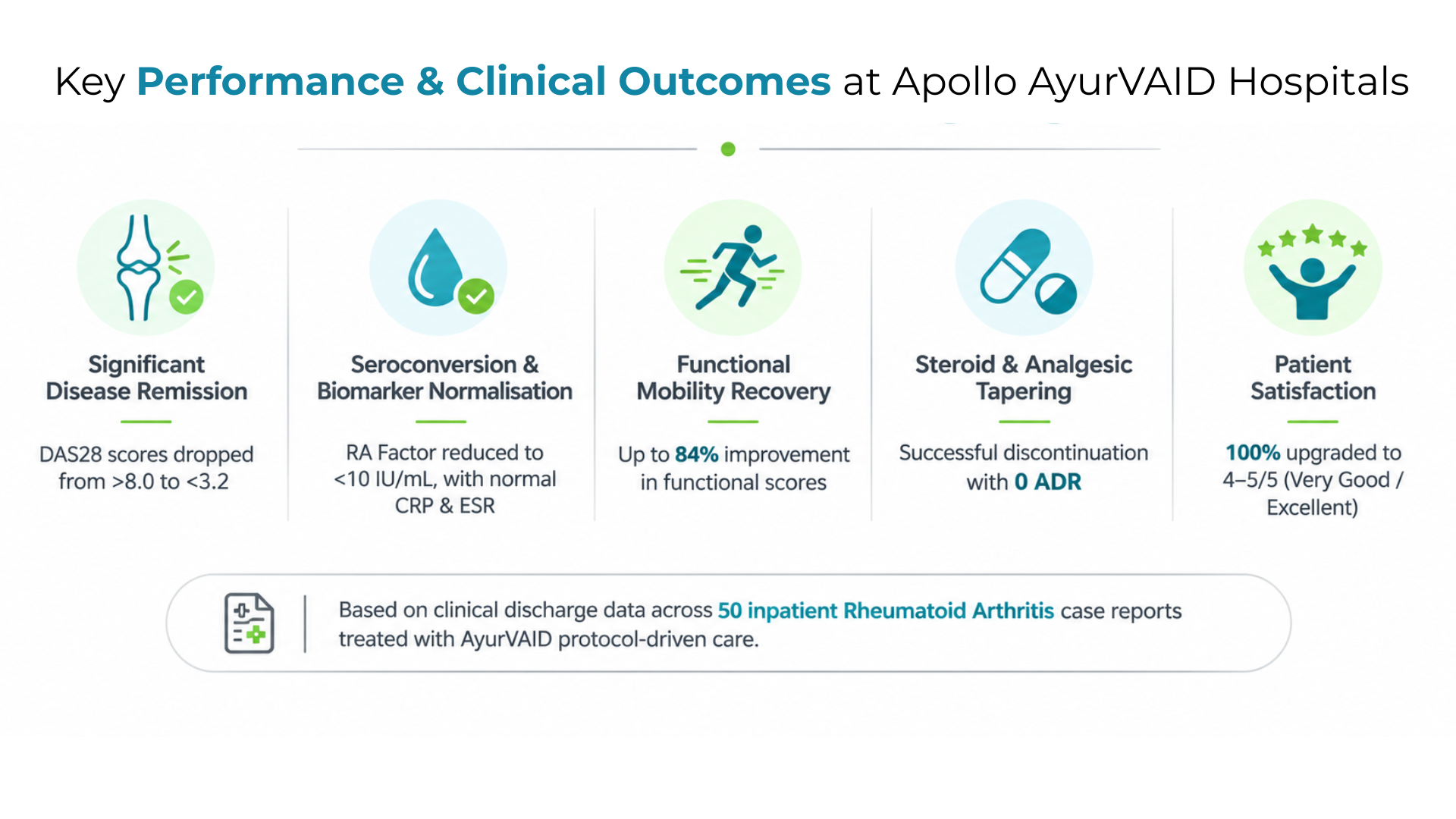
*PROM (Patient-Reported Outcome Measures): Baseline pain scores (VAS 8–10/10) reduced to 0–2/10 at discharge across 50 inpatient Rheumatoid Arthritis case reports treated with AyurVAID protocol-driven care.


Severe pain in the joints, often described as a "scorpion's sting."

Swelling and puffiness symmetrically around the major and minor joints.

Stiffness in the morning for more than 1 hour.

Generalised body ache (Angamarda), loss of appetite (Aruchi), low grade fever, lethargy and excessive thirst.
The pathogenesis (Samprapti) of Rheumatoid Arthritis (Amavata) is a systematic process which is characterised by metabolic disturbances that lead to a systemic autoimmune response localised in the joints. The evolution of Amavata is a sequence of physiological failures, as in the progression of other arthritic conditions:
Amavata, a systemic metabolic-immunological disorder, usually follows a course of two distinct clinical stages:

1. Whole-Person Health Assessment: Expert physicians perform a comprehensive examination through Ashta Sthana (8-fold) and Dasha Vidha (10-factor) assessments, supplemented by modern blood tests (CRP, ESR) and imaging.
2. Disease Tree: Development of a personalised mapping of the patient’s symptoms to specific causative factors, dosha imbalances, and metabolic disturbances.
3. Personalised Protocol-Based Care Plan: A customised protocol-based regimen of classical medicines, therapies and functional rehabilitation based on the patient’s disease stage (Naveena, Pravrudha or Jeerna).
4. Disease Monitoring and Outcomes Tracking: The effectiveness of treatment is measured using internationally accepted objective scales, mainly the DAS 28 (Disease Activity Score), to reduce high disease activity and achieve clinical remission. We also use the Visual Analogue Scale (VAS) for pain, the WOMAC or KOOS for joint function and accurate Range of Motion (ROM) degree measurements to provide clear evidence-based improvements in a patient’s activities of daily living.
The Apollo AyurVAID protocol-based (Precision Ayurveda) approach to Rheumatoid Arthritis (Amavata) aims at correcting the metabolic root cause, suppressing systemic inflammation, preventing joint erosion and restoring functional independence. A permanent cure is most achievable in the early stages (Naveena Avastha), but even in chronic cases with structural changes, our structured protocols provide long-term remission and significant quality-of-life improvements.
Ayurveda has a foolproof stage-wise treatment for Amavata which kindles the digestive fire (Agni), removes the metabolic toxins (Ama) and modulates the immune response.
Indication: Ama Pachana (digestion of toxins) and Deepana (kindling digestive fire) are the main indications. This preparatory phase diminishes acute symptoms like “scorpion-sting” pain, symmetrical swelling and morning stiffness by lowering systemic inflammatory markers like CRP and ESR.
Period: 7 to 10 days (Inpatient).
Treatment Protocol:
Internal Medicine: Prescriptions to stimulate appetite and cleanse the gut-joint axis of toxins.
External Therapies: Ruksha Swedana (dry fomentation) to liquefy Ama without increasing inflammation. Modalities are Valuka sweda (sand bolus), Dhanyamla Dhara (fermented liquid pour) and Ruksha Churna Pinda Sweda (dry powder massage).
The Panchakarma Therapy
For Sthoola (Overweight/Obese) Patients:
For Krisha (Lean) or Chronic Patients:
Follow Up Phase: Diet & External Treatments
NOTE: Duration of treatment and specific choice of medicine vary greatly depending upon whether the RA is Seropositive/Seronegative, duration of symptoms and the overall digestive strength (Agni) of the patient.
AyurVAID follows a systematic and protocol-based approach to facilitate effective treatment and sustainable recovery from Rheumatoid Arthritis (Amavata).
The following are taken to make sure of effective treatment and progress in baseline values:
Key Performance Highlights1
In a double-blind randomised pilot study, patients receiving whole-system Ayurveda care achieved a 100% ACR20 response. The clinical data show a marked reduction in disease activity. Many patients have marked reductions in DAS 28 scores from high activity (eg, 8.09) to low activity or remission (eg, 2.82) with standard treatment protocols. Patients achieve substantial functional gains by discharge from intensive inpatient care, such as an average increase in grip strength of 35% and a 35% reduction in walking time (e.g., for a distance of 25 feet). Precision Ayurveda has been successful in arresting the progress of the disease and preventing erosion of the joints. It has also helped patients escape from invasive surgery.

Case 1: A 60-year-old female patient with a 5-year history of Rheumatoid Arthritis symptoms
Case Summary:
The patient presented with a five-year history of excruciating pain in the interphalangeal joints, right knee, and both ankles, associated with significant swelling and morning stiffness. She also reported a two-year history of burning sensations in her hands and legs. Initial assessment revealed a high pain score of 10/10 on the Visual Analogue Scale (VAS), a positive McMurray’s test for the knee, and restricted mobility. Laboratory investigations confirmed highly active disease with an RA Factor >120 IU/ml and a reactive C-Reactive Protein (CRP) of 1.80 mg/dl. The patient underwent a 19-day intensive Ayurvedic treatment plan (April 25 to May 14, 2018), which included specialised therapies such as Valuka Sweda (sand bolus), Dhanyamla Dhara, Virechana (purgation), and Yoga Vasti (medicated enemas) alongside internal herbo-mineral medications. Post-treatment, the patient achieved near-complete resolution of symptoms, with knee and wrist pain scores dropping to 0/10. Her WOMAC score improved from 54 to 09, and her RA Factor significantly reduced from >120 IU/ml to 16 IU/ml, reflecting a marked improvement in functional independence and systemic health.
Case 2: A 28-year-old female patient with Rheumatoid Arthritis and obesity for over 1 year
Case Summary:
The patient presented with a one-year history of severe pain and stiffness in multiple joints, including the shoulders, wrists, interphalangeal joints, lower back, knees, and ankles. Her condition was further complicated by PCOS and a gradual increase in body weight, which severely restricted her activities of daily living and overall quality of life. Initial assessment revealed a VAS pain score of 10/10 for multiple joints and a DAS 28 score of 8.09, indicating high disease activity. She also presented with Grade III tenderness in the lower back and restricted range of motion in the neck and spine. The patient underwent a 26-day personalised Ayurvedic treatment programme (August 7 to September 2, 2023) involving Churna Pinda Sweda, Virechana, Snehapana (internal oleation), and Vasti. Post-treatment, the patient experienced a dramatic reduction in pain, with her VAS score for multiple joint pain dropping to 0/10. Her DAS 28 score decreased to 2.82, shifting her from high disease activity to clinical remission. Additionally, she achieved a 9 kg weight reduction, regained full pain-free range of motion in her knees and back, and reported a complete resolution of morning stiffness.

My pain has reduced by 50% after just 10 days of treatment! I am glad I chose Apollo AyurVAID for my treatment.”
Mr. R, Age- 62
“After suffering from severe Rheumatoid Arthritis pain and previous treatments that weren't helping, coming to Apollo AyurVAID was a turning point. The doctors listened very patiently, understood my case, and created a clear action plan without false promises. The entire team—from physicians and caregivers to canteen staff tailoring my diet—worked seamlessly together. During my 16-day stay, I saw a remarkable recovery with a major reduction in swelling and inflammation. I wish and pray that any RA patient suffering from pain visits Apollo AyurVAID.” Ms. P, 35 years
“Seeking a natural approach to avoid steroids, I flew all the way from Hyderabad to Bangalore to try Apollo AyurVAID. Within 3 to 4 days, I started feeling lighter in my legs, and after 21 days of treatment, 60% of my pain was reduced and my blood test values improved by 70%. The doctors and staff are exceptionally caring and attentive, keeping the focus entirely on patient recovery. It has been a tremendous experience, and I am able to function properly again.”
Mr. V, 40 years
As we work hard to improve our services, your feedback is important to us. Please take a moment to help us serve you better.
The information provided in this blog is for general informational purposes only and is not intended as a substitute for professional medical advice, diagnosis, or treatment. Always seek the advice of your physician, Ayurvedic practitioner, or other qualified healthcare provider with any questions you may have regarding a medical condition or treatment.
Subscribe to our hospital newsletter for the latest health tips, updates on services, patient stories, and community events. Sign up today and stay informed!






Popular Searches: DiseasesTreatmentsDoctorsHospitalsWhole person careRefer a patientInsurance