Why Piles Develop During Pregnancy
Pregnancy changes digestion in ways most women aren’t warned about. Hormones slow the movement of the gut. The growing uterus increases pressure on the pelvic region. Activity levels often reduce, especially for women with long working hours. All of this affects bowel movement.
In Ayurveda, constipation during pregnancy is called Garbhini Vibandha. It occurs when Apana Vata, the force responsible for elimination, is obstructed / hampered to some extent. When the growing fetus exerts pressure on the rectum, it obstructs the natural downward flow of Apana Vayu, forcing it to move upwards or stay blocked, which causes venous engorgement and swelling. Stools become dry, hard, and difficult to pass. Repeated straining then leads to piles.
Modern medicine describes the same process using different words: reduced gut motility, pressure on veins, and strain during defecation. The cause is shared, even if the language differs.
The Effect of Piles in Pregnancy: What Women Actually Experience
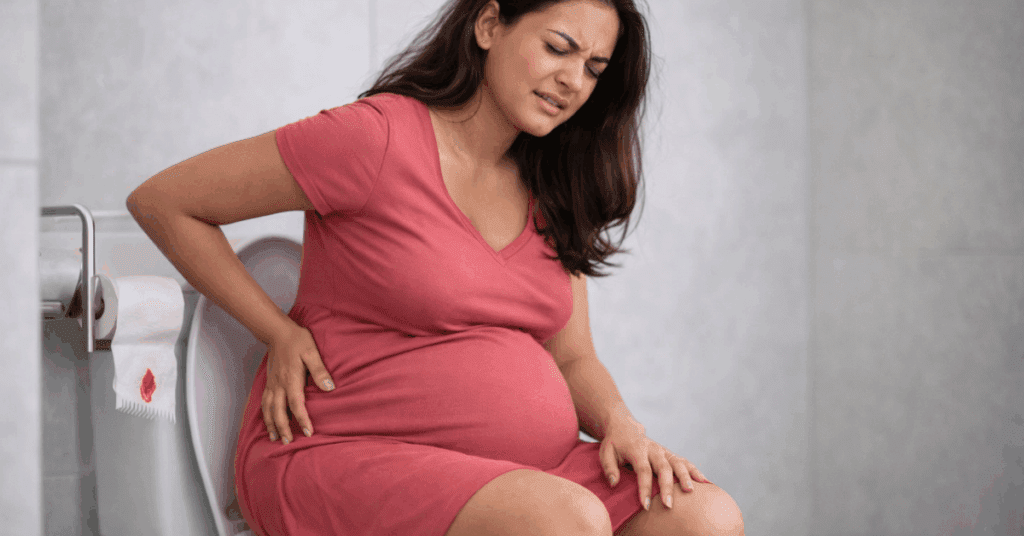
The effect of piles in pregnancy goes beyond physical symptoms. Yes, there may be pain, itching, or bleeding. But there is also fear, especially the first time blood is noticed.
Many women begin to delay bowel movements because they anticipate discomfort. This worsens constipation, creating a cycle that is difficult to break. Sitting through meetings, travelling to work, or sleeping comfortably can become challenging.
One expectant mother told us, “I was more stressed about using the toilet than about labour.” That sentence stays with us because it reflects how deeply this issue can affect daily life.
How to Cure Piles During Pregnancy: A Gentle, Step-by-Step Approach
Step 1: Correct Constipation at the Root
Piles do not heal if constipation continues. This is the most important step and also the most overlooked. In Ayurveda, this means correcting Agni, your digestive strength and restoring the natural downward movement of Apana Vata. During consultation, we look at everyday bowel habits rather than just symptoms. How often stools pass, whether they feel hard or incomplete, and if there is strain involved, all give us useful clues.
We also review appetite, meal timings, and fluid intake. Many women realise only then that long gaps between meals or low water intake have been quietly contributing to the problem. Sleep and stress are discussed briefly as well, since both influence digestion during pregnancy.
Based on this, small and practical changes are advised. Warm, freshly prepared meals are preferred over dry or packaged foods. Natural fats such as ghee are added in moderate amounts to support easier stool passage. Fruits like ripe bananas or chikku are suggested for gentle bowel regulation. Lukewarm water is encouraged throughout the day instead of cold fluids.
These are not restrictive diet plans. They are simple digestive supports that reduce strain during bowel movements, which is essential for piles.
Step 2: Reduce Strain and Promote Local Healing
Piles often worsen when repeated straining continues. This usually happens when there is fear or urgency around passing stools. Patients are advised to respond to natural urges promptly, avoid prolonged sitting in the toilet, and minimise pushing. Warm sitz baths may be recommended to reduce local discomfort and swelling. When practiced consistently, these measures support gradual healing and prevent it from worsening during pregnancy.
Step 3: Ayurvedic Medicine for Pregnancy
The use of Ayurvedic medicine for pregnancy requires caution. Not every herbal formulation is suitable for this phase, even if it is “natural”. The medicines are:
- Chosen only after physician assessment
- Mild and pregnancy-protective
- Aimed at softening stools
The goal is support, not strong purgation. Self-medication or internet remedies often worsen symptoms and delay recovery.
Home Remedies for Piles
Some home measures, when used correctly, can offer real comfort and support healing.
- Soaked Raisins
Soak a small handful overnight and consume them in the morning. They help soften stools naturally and support bowel movement without irritation. - Cow’s Ghee with Warm Milk
One teaspoon at bedtime helps lubricate the intestines and reduce strain, which is essential for recovery. - Warm Sitz Bath
Sitting in warm water for 10–15 minutes can reduce pain and swelling and is considered safe during pregnancy.
Used consistently, these form a gentle Ayurvedic remedy for piles that works alongside medical care.
A Common Clinical Scenario
A working professional in her second trimester came to us with worsening piles. She had begun avoiding bowel movements due to pain. Constipation worsened. Anxiety followed.
We did not rush treatment. We corrected her diet, adjusted daily habits, prescribed pregnancy-safe Ayurveda support, and monitored her progress closely.
Within two weeks, bowel movements became easier. Pain reduced. By the time she approached delivery, piles were no longer dominating her thoughts. This is what personalised, physician-led care looks like.

What Makes AyurVAID’s Approach Different
At Apollo AyurVAID, pregnancy care is never generic.
- Treatment is physician-led
- Ayurveda is practised in an evidence-based, clinical framework
- Each patient receives an individualised assessment
- Care is integrated with diagnostics and modern oversight when required
We don’t treat symptoms alone. We treat the person carrying the pregnancy.
When You Should Seek Help
Please consult a physician if:
- Bleeding is persistent
- Pain increases despite home care
- Constipation does not improve
- Laxatives are being used regularly
Early intervention is always gentler than delayed care.
Conclusion
Piles during pregnancy are common, but suffering silently should not be. Understanding the effect of piles in pregnancy, addressing constipation early, and choosing safe, physician-guided care can significantly improve comfort and confidence during this phase. If you’re struggling with piles or constipation during pregnancy, you don’t have to manage it alone. Speak to an Apollo AyurVAID physician for a personalised, pregnancy-safe assessment that respects both your comfort and your baby’s well-being. Pregnancy is already transformative. With the right support, it doesn’t need to be distressing.
References