Introduction
For many people undergoing chemotherapy, the emotional burden begins long before the first infusion. One of the most distressing parts of treatment is not always the cancer itself but the fear of what comes with it — especially nausea and vomiting during cancer treatment. This can affect appetite, hydration, strength, sleep, and overall quality of life.
While modern anti-nausea medicines remain an important part of care, many patients still experience breakthrough symptoms. Ayurveda can offer comforting, gentle support for nausea from chemotherapy through diet, herbs, and mindful eating.
Why Chemotherapy Can Cause Nausea
The medicines used in Chemotherapy are considered ‘Teekshna aushadha’ in Ayurveda—potent substances aimed at destroying harmful cells. Yet, this powerful stuff can upset the body’s natural balance too. Its qualities are often considered Ushna (hot), Teekshna (sharp), and Ruksha (dry). These properties may be necessary in the context of cancer care, but they can also aggravate Pitta Dosha, disturb Rakta Dhatu, and Agni, the digestive fire.
When Agni becomes disturbed, undigested metabolic residue (Ama) may accumulate. The body then responds by attempting to expel what it perceives as harmful. This upward movement may contribute to nausea and vomiting during cancer treatment.
From this perspective, the body is trying to protect itself, but in a way that is exhausting and disruptive for the patient.

Understanding CINV: Acute, Delayed, and Anticipatory
CINV Ayurvedic treatment must begin with an understanding of the different patterns of Chemotherapy-Induced Nausea and Vomiting.
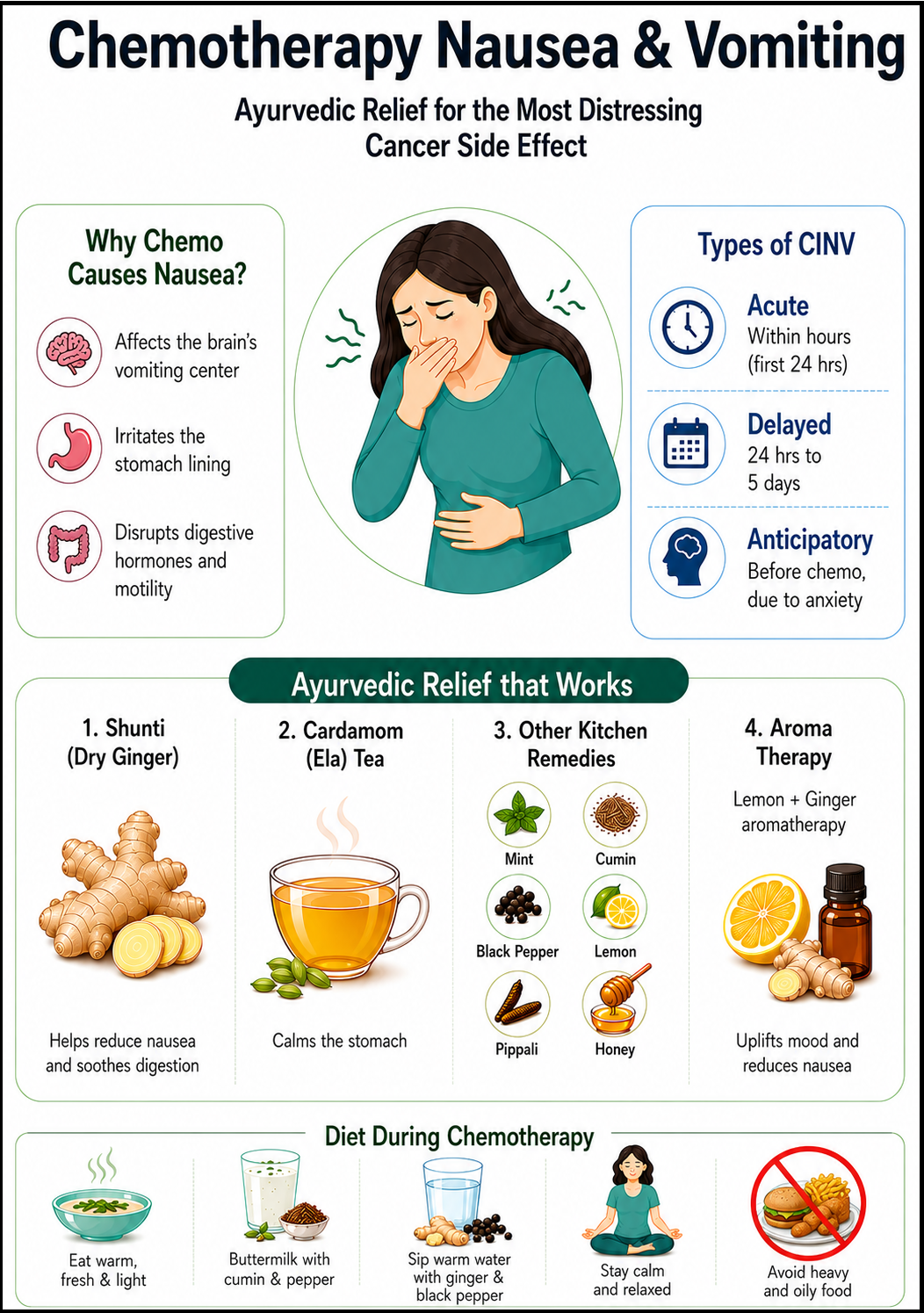
- Acute CINV appears within minutes to hours after treatment and usually peaks within the first 24 hours.
- Delayed CINV may begin after 24 hours and continue for several days.
- Anticipatory nausea can strike before treatment even begins, often because the body recalls past miserable experiences.
While modern medicine handles the initial symptoms, the Ayurveda approach is useful for the delayed and anticipatory phases. They calm the system, support digestion, and make the body less sensitive internally.
Shunti for Nausea
Dry ginger, or shunti, is one of the key Ayurvedic antiemetic herbs. For ages, people have used it for digestion issues, queasiness and a poor appetite. Studies back up its effectiveness too; ginger can ease nausea when paired with usual antiemetic drugs. Its active compounds, including gingerols and shogaols, are believed to support the body’s anti-nausea response.
How ginger may be used supportively
- Small doses of ginger powder or capsules may be started a few days before chemotherapy, depending on the oncologist’s advice.
- It may be continued for a few days after treatment.
- It is often preferred because ginger for chemotherapy nausea is generally gentle and well tolerated.
For many patients, this simple herb can become a practical part of chemo induced nausea natural remedies.
Cardamom Tea and Other Gentle Home Supports
When a patient cannot tolerate strong foods or medicines, soft and aromatic remedies can be comforting.
Cardamom, or Ela, is one such option in chardi Ayurveda treatment. It is traditionally valued for its soothing, digestive-supportive qualities and can be used as a light tea.
Simple Ela tea
Crush 2–3 green cardamom pods and simmer them in one cup of water for a few minutes. Sip it warm and slowly.
This may help ease gastric discomfort and reduce the feeling of heat and irritation often associated with nausea.
The other supportive natural remedies are:
- Mint (Pudina): Useful to ease digestion and as a refreshing tea.
- Cumin (Jeeraka): May be used to aid digestion when taken in small doses.
- Black pepper (Maricha): Used sparingly, it can aid digestion.
- Pippali (Long Pepper): May sometimes be used when nausea is caused along with loss of appetite.
- Honey (Madhu): Can be taken in small doses, particularly when there is discomfort in the stomach.
- Turmeric (Haridra): Used to help with inflammation, though one must take it with care during chemotherapy for cancer.
- Lemon (Nimbuka): Simply the scent of it can ease nausea.
- Asafoetida (Hingu): A tiny quantity in food may support digestion and reduce bloating.
These are not a substitute for treatment, but they can be part of thoughtful Ayurvedic medicine for nausea and vomiting when used safely and with medical guidance.
Diet During Chemotherapy
In Ayurveda, food is medicine. During chemotherapy, the goal is to support it gently.
To reduce nausea and vomiting during cancer treatment, the following are often advised:
- Eat freshly prepared, warm, light food.
- Avoid leftovers and heavy, oily, or overly spicy meals.
- Sip warm water or light digestive drinks in small amounts.
- Use buttermilk only if it suits the patient and is well tolerated.
- Eat in a calm emotional state, without rushing.
A stable routine and simple meals can make a real difference in chemotherapy nausea, according to Ayurveda care.
Aroma and Marma Support for Acute Nausea
When nausea becomes intense and oral intake is difficult, external therapies may bring relief.
- Aromatherapy with lemon or ginger may help some patients feel better by reducing sensory discomfort and shifting attention away from nausea.
- Marma therapy, when done gently and appropriately, may help calm the nervous system and ease the fear that often accompanies CINV Ayurvedic treatment. It can be especially useful for anticipatory nausea, where anxiety and memory of previous episodes worsen symptoms.
Important Precautions During Chemotherapy
Even though herbs are natural, they are not automatically safe in every situation. Some herbs and supplements may interact with chemotherapy drugs.
Patients should always speak with their oncologist before using any herbal product, especially concentrated supplements.
A few examples that may need caution include:
- Curcumin supplements
- Ashwagandha
- St John’s Wort
- Green tea extract
- Giloy
The safest approach is to provide individualised care
A Balanced Ayurvedic Approach
With the careful use of shunti for nausea, gentle dietary support, calming aromas, and selected Ayurvedic antiemetic herbs, many patients may find meaningful comfort.
When used responsibly, Ayurvedic medicine for nausea and vomiting can become a compassionate bridge between traditional wisdom and modern cancer care.