Introduction
Some pains can be explained. Others can be measured. But trigeminal neuralgia is often described by patients as pain that is beyond words. A simple smile, a sip of water or even a gentle breeze on the face can trigger sudden, electric shock-like pain and make ordinary life feel unexpectedly difficult.
Modern medicine recognises it as a chronic neuropathic disorder affecting the trigeminal nerve. Ayurveda, however, looks at it through a wider lens — one that considers the nervous system, the balance ofdoshas and the body’s natural capacity to restore harmony. Correlated with anantavata, this condition is understood as a severe Vata-predominant disorder that needs care at multiple levels, not just symptom relief. Through personalised therapies, dietary support and lifestyle changes, trigeminal neuralgia Ayurvedic treatment aims to calm the nerves, reduce pain episodes and improve quality of life.
Anantavata and Trigeminal Neuralgia
It is a chronic neuropathic pain condition that affects the fifth cranial nerve.
Neurovascular compression is known to be the most common cause of this disorder, wherein a vessel presses on the nerve, damaging the myelin sheath covering it. The disorder could also result from other causes such as multiple sclerosis, tumour formation and even after an injury because of ENT/dental procedures.
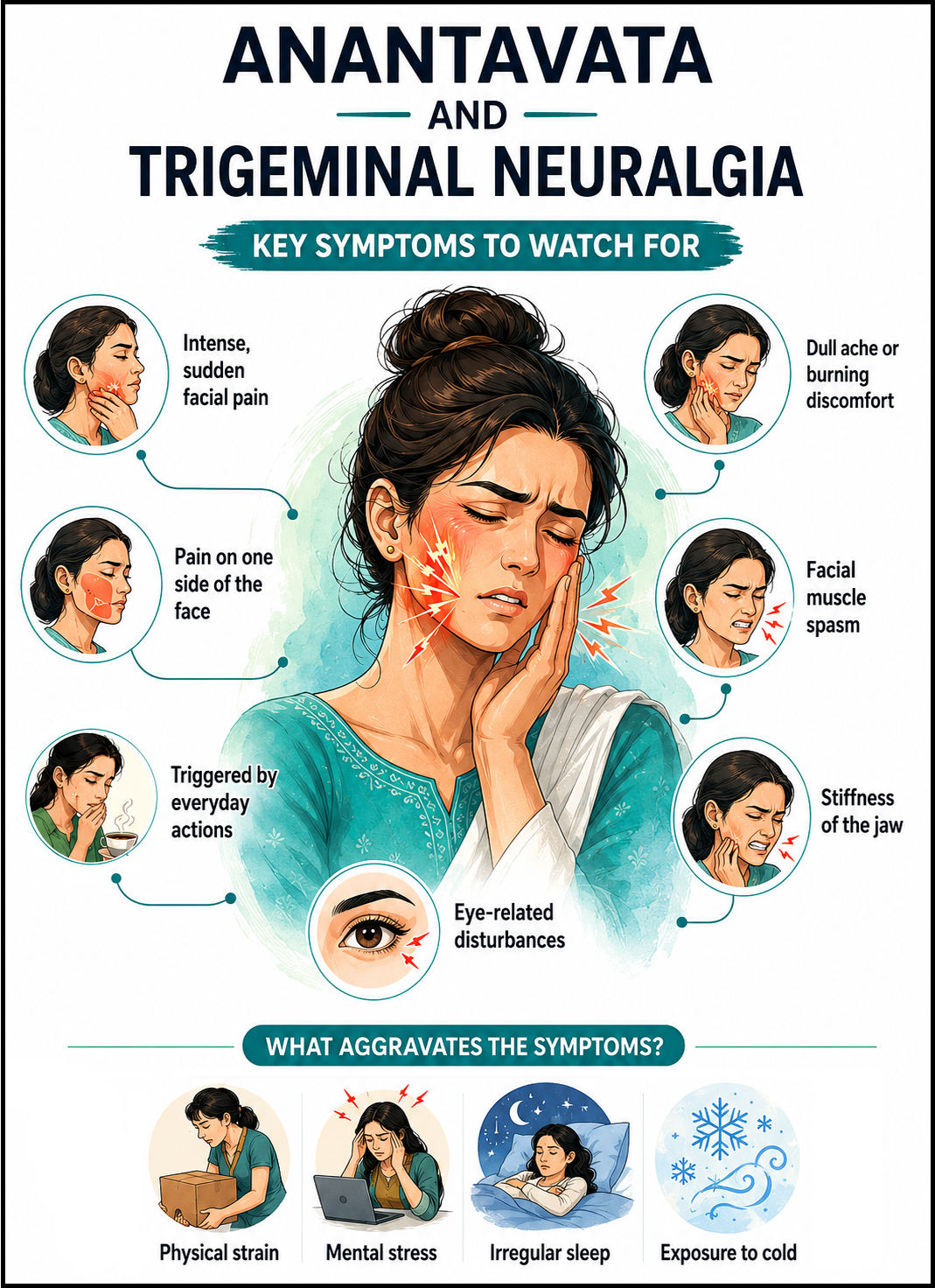
The sensation of pain is typically very strong but lasts only for a short period of time and can recur repeatedly. The affected patient would generally experience pain in one side of the face, especially in areas around the jaw, gums, teeth, cheeks, and mouth.
Even everyday actions such as talking, chewing, brushing the teeth, washing the face, or feeling a breeze can trigger an attack. Between episodes, some people may also experience a dull ache or burning discomfort, and in severe cases, the pain may be accompanied by facial muscle spasm.
In Ayurveda, this condition is correlated with Anantavata, a Vata-predominant disorder affecting the head and face. The word “Ananta” suggests something endless, which reflects how the pain may seem to travel across the face, around the eyes, temples, jaw and sometimes even toward the head and neck.
Along with pain, patients may experience stiffness of the jaw (Hanugraha / Stambha) and difficulty opening the mouth, twitching or pulsation in the cheek (Sphurana / Gandaparswakampa) region and disturbances related to the eyes. Cold wind, physical strain, mental stress, and irregular sleep often aggravate the symptoms.
Trigeminal neuralgia Ayurvedic treatment focuses mainly on calming aggravated Vata dosha. Vata governs movement, sensation and nerve impulses. When it becomes excessively dry, unstable or disturbed, the nervous system becomes overly sensitive. Such conditions can contribute to the sharp, stabbing and unpredictable facial pain.

Why Conventional Treatment Can Feel Limited
In the contemporary world, conventional methods of treatment involve medication like anticonvulsants. Although these medications help certain patients, other individuals are unable to cope with their side effects, such as drowsiness, vertigo, nausea, or brain fogginess.
If medication fails to yield any results, more serious methods like microvascular decompression might be recommended. While this surgery can be effective, it does not always work for everyone.
Naturally, many people begin looking for trigeminal neuralgia natural treatment options that feel gentler and more holistic.
Ayurveda Approach to Healing
Ayurveda sees trigeminal neuralgia not only as pain but also as a deeper imbalance involving Vata, nerve sensitivity, tissue depletion and stress. A thoughtful trigeminal neuralgia Ayurvedic treatment plan usually aims to calm the nervous system, nourish the tissues, and reduce trigger sensitivity.
Nasya
Nasya is one of the important therapies for conditions above the neck. In trigeminal neuralgia Ayurvedic treatment, medicated oils may be used under proper supervision to support the head and facial region. This helps pacify local Vata and may support nerve nourishment.
Shirodhara
Shirodhara, the gentle pouring of medicated oil over the forehead, can be deeply soothing for patients living with repeated pain episodes. It helps relax the mind, reduce stress, and calm the nervous system. In many cases, it becomes an important part of face pain Ayurvedic treatment because pain and stress often intensify each other.
Jalauka Avacharana
In selected acute cases, qualified practitioners may consider leech therapy. It is intended to reduce local inflammation and improve circulation. It is not suitable for everyone, but in some cases it may support the overall plan for trigeminal neuralgia Ayurvedic treatment.
Trigeminal Neuralgia Home Remedies for Support
Along with clinical treatment, a few simple supportive practices may help patients cope better at home. These are not substitutes for medical care, but they can be part of trigeminal neuralgia relief at home.
Warm oil application over the affected side of the face may help some people, especially when Vata aggravation is prominent. A soft cloth or cotton pad soaked in warm sesame oil or medicated oil is traditionally used with care.
Gentle heat may soothe some patients but should be avoided if warmth is a trigger.
Practices like pranayama can assist in calming the nervous system and reducing the effects of stress-induced attacks.
In cold, windy weather conditions, covering your face with a scarf can be helpful as trigeminal neuralgia home remedies.
Diet and Trigger Foods
In terms of long-term treatment, diet and triggers play an important role. In Ayurveda, the primary aim is to decrease the imbalance caused by excess Vata and provide nourishment.
Patients are encouraged not to eat any food that is considered cold, dry, raw and light as they tend to increase Vata.
On the contrary, warm, moist, soft and easy-to-digest foods are recommended for the patients. Consumption of ghee is suggested since it provides nourishment.
Those who experience symptoms when chewing should opt for soft and semi-liquid foods. Patients who experience pain from cold liquids can drink using straws to limit the exposure to affected areas.
These small adjustments can support trigeminal neuralgia natural treatment in a practical, everyday way.
Pathya in anantavata
In anantavata, the diet should ideally be soothing, nourishing, and Vata-pacifying.
Some recommended foods consist of warm food products such as soups, stews, porridge, cooked cereals, ghee and other beneficial fats in appropriate quantities, warm milk preparations when appropriate for the particular person, and easily digestible cooked vegetables. Some classical nourishing food items like Madhumastaka, Samyava and Ghritapura can be taken.
- Madhumastaka: A mixture of honey, flour, ghee and oil.
- Samyava: A cake prepared from wheaten flour with ghee, milk, sugar candy and wheat.
- Ghritapura: A type of sweetmeat made from flour, milk, coconut and ghee.
This diet provides nourishment to the Agni (digestion) without making the body dry and unstable.
What to Avoid
To prevent flare-ups, it becomes essential to stay away from triggers that might cause Vata to act up.
Cold food, ice creams and frozen foods will further intensify problems. Foods that have a dry nature, such as biscuits and salads, may not be very easy on the stomach.
Coffee and alcohol can disrupt the normal functioning of the nervous system and may aggravate problems. Food in its processed form is always preferred in limited quantities.
Skipping meals, fasting and inadequate intake of food can also lead to an increase in Vata.
In some individuals, even certain pungent spices may feel too stimulating unless balanced properly.