Psoriasis is far more than a visible skin problem — it is a systemic, inflammatory disorder that upends daily life for millions. Patients get exhausted by the cycle of remission and flare-ups that follow conventional care, which too often leans on long-term steroids or immunosuppressants and treats surface symptoms rather than causes. If you are searching for a pathway that addresses the root triggers – psoriasis treatment in Ayurveda – we offer a structured, holistic protocol aimed at reversing underlying imbalance.
Whether your concern is localised plaques or you’re looking specifically for scalp psoriasis treatment, Panchakarma—the intensive detoxification approach—provides a disciplined, evidence-informed framework for lasting relief. Choosing the right skin psoriasis treatment is really choosing a journey back to whole-person health, and Ayurveda can be the roadmap.
Psoriasis Ayurveda view
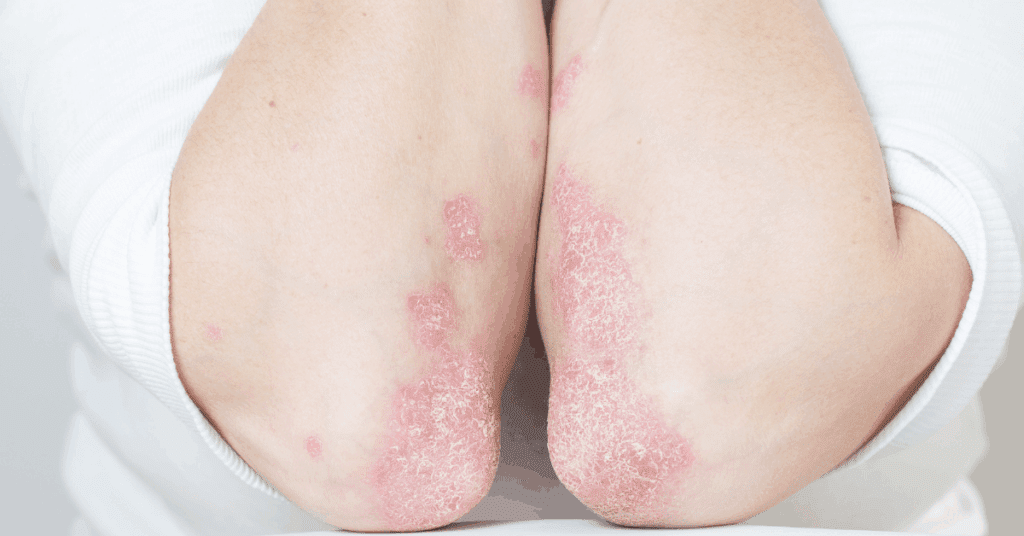
Described in our classical texts as Kitibha Kushtha, this chronic autoimmune condition presents as red, inflamed plaques with silvery scales—a sign that the body’s innate healing intelligence is disturbed. We work to rebalance the internal terrain and remove the metabolic toxins that provoke the immune system to attack healthy skin.
It is a complex interaction of dosha disturbances and impaired digestion. Primarily, Vata–Kapha imbalance with Pitta aggravation drives the inflammatory picture. When Agni (digestive fire) is weak—Agni Mandya—undigested metabolic byproducts (Ama) form and enter the circulation, lodging in the skin strata (Rasa, Rakta, Mamsa). These deposits obstruct channels and accelerate abnormal skin turnover. Dietary incompatibilities (Viruddha Ahara), chronic stress, and unhealthy routines further destabilise the system. The promise of psoriasis treatment in Ayurveda lies in addressing these fundamental disturbances, thereby arresting progression and reducing dependence on suppressive drugs.
Why Panchakarma helps
मलो हि देहादुत्क्लेश्य हियते वाससो यथा ॥ ५८ ॥ स्नेहस्वेदैस्तथोत्क्लिष्टः शोध्यते शोधनैर्मलः । (AH.Su.18)
The Vagbhata insight—Panchakarma works like washing the cloth—purifying deep impurities, re-establishing equilibrium, and conditioning the body to receive nourishment and healing. This is precisely why Panchakarma becomes indispensable in managing psoriasis.
A properly staged Panchakarma (careful Poorvakarma to oleate and mobilise toxins; targeted Shodhana—Vamana, Virechana, Vasti, Nasya, or Raktamokshana, as indicated; and the disciplined Paschatkarma for consolidation, flushes deep-seated impurities, restores digestive fire, and clears the microchannels, allowing immune regulation to re-establish itself.
Practically, this translates into softened scales, less itching, reduced erythema, and—crucially—longer symptom-free intervals when followed by Rasayana, diet, and lifestyle correction. For stubborn areas, such as the scalp, combining systemic purification with local soothing measures (medicated dhara, topical lepanas, and gentle oiling) significantly improves outcomes.
Panchakarma is central to skin psoriasis treatment because it offers systematic internal cleansing beyond topical relief. It clears the soil so true healing and durable remission become possible.
Key benefits include:
- Root-cause correction — Panchakarma eliminates deep-seated Ama and vitiated doshas rather than merely covering lesions.
- Immune remodulation therapies bring the immune system back into balance so it stops attacking the skin in the wrong way.
- Marked symptomatic relief — patients commonly experience less itching (Kandu), decreased redness (Raga), and a reduction in thick scaling (Matsyashakalopamam).
- Calming the nervous system — procedures such as Takra Dhara soothe stress pathways, an important element since psychological triggers often precipitate flares.
- Better quality of life—standardised indices like DLQI frequently show meaningful improvement after a well-conducted Panchakarma course.
The Panchakarma protocol we follow
At Apollo AyurVAID, we practice a protocol-driven form of Ayurveda—precision Ayurveda—tailored Panchakarma to the patient’s constitution and disease state. The treatment proceeds in three stages:
- Poorvakarma (preparatory phase)
We begin by kindling and correcting digestion with Deepana–Pachana for 3–7 days. This is followed by Snehapana —graded internal administration of medicated ghee to oleate tissues and mobilise toxins toward the gastrointestinal tract. External oleation ( Abhyanga) and steam therapies (Swedana) help draw toxins from the tissues into the gut for safe elimination.
- Pradhanakarma (main detoxification)
The core Shodhana is chosen according to Prakriti and the present Vikriti:
- Vamana (therapeutic emesis) — highly useful in Kapha-predominant presentations with heavy, oozing, or widespread scale; it clears toxins from the upper body and respiratory channels.
- Virechana (purgation therapy) — indicated when Pitta and Rakta are primarily involved; it clears the liver and bloodstream through controlled purgation.
- Vasti (medicated enemas)—central to chronic skin disorders by pacifying Vata and removing residual toxins from the lower channels.
- Raktamokshana (blood purification) — in cases of acute inflammation, local methods like Jalaukavacharana (leech therapy) rapidly reduce itching and redness by drawing out toxified blood.
- Paschatkarma (post-treatment care)
This recovery phase is very important: a diet that cleanses and balances Pitta, specific rejuvenating medicines, and herbal pastes or medicated oils help maintain improvements and lower the chance of returning issues
Special care for the scalp
Nutrition and lifestyle—essential supports

Conclusion
Treating psoriasis with Ayurveda is like tending a neglected garden: you must amend the soil, clear the roots, and restore balanced irrigation rather than simply painting the leaves. Psoriasis treatment in Ayurveda, especially panchakarma, is a disciplined, personalised path that seeks to restore the body’s harmony and reduce reliance on symptom-only measures. If you are ready to move beyond temporary relief toward sustained, whole-person healing — whether for plaque disease or scalp psoriasis treatment — we can design a safe, evidence-informed plan that suits your constitution and medical needs.
References
- Ramanunny AK, Wadhwa S, Singh SK, Sharma DS, Khursheed R, Awasthi A. Treatment strategies against psoriasis: Principle, perspectives and practices. Current Drug Delivery. 2020;17(1):1–161.
- Achuthan D, Nellikode S. Efficacy of Shodhana and Sarvang Takradhara Therapy in the Management of Psoriasis: A Case Study. International Journal of Preclinical & Clinical Research. 2023;4(1):15-20.
- Kumar Y, Bhatkoti M, Kumar V, Varma S. Efficacy of Virechana Karma Along with Shaman Yoga in Ekakushtha W.S.R. Psoriasis: A Single Case Study. Journal of Ayurvedic and Herbal Medicine. 2020;6(3):139-144.
- Yadav P, Anoop M, Kaur A, Mukati S, Thakur C. Integrative Management of Psoriasis through Panchakarma and Nutritional Modulation: A Case Study. International Journal of Innovative Research in Technology. 2025 July;12(2): ISSN: 2349-6002.
- Shinde S, Bhargava P, Mishra DS. Management Of Psoriasis: A Comparative Clinical Study Of Standard Ayurveda & Allopathic Protocols. International Journal of Research – GRANTHAALAYAH. 2021 Aug;9(8):290-301.