Rheumatoid Arthritis (RA) is more than just joint pain; it is a systemic challenge that requires a holistic approach to management. In the ancient science of Ayurveda, this condition is known as Amavata, a term that perfectly describes its dual nature: the accumulation of Ama (metabolic toxins) and the aggravation of Vata (the principle of movement). While modern treatments often focus on suppressing symptoms, an effective amavata diet Ayurveda strategy targets the root cause—your digestion.
Why Diet is Critical for Rheumatoid Arthritis Management
In the Ayurveda tradition, food is hailed as Mahabheshaja, the supreme medicine. For someone living with RA, a specialised rheumatoid arthritis diet is not just an addition; it is the treatment. Acharyas have long stated that if a patient follows a wholesome diet (Pathya), medicine may not even be necessary, but if they continue to eat unwholesome foods (Apathya), no medicine will be effective. This is because RA is fundamentally a disease of the gastrointestinal tract that manifests in the joints. By following a strict diet chart for rheumatoid arthritis, you can normalise your “digestive fire” (Agni), stop the production of new toxins, and help your body clear up theexisting inflammation.
Amavata — Ayurveda Understanding (Ama & the Gut-Joint Connection)
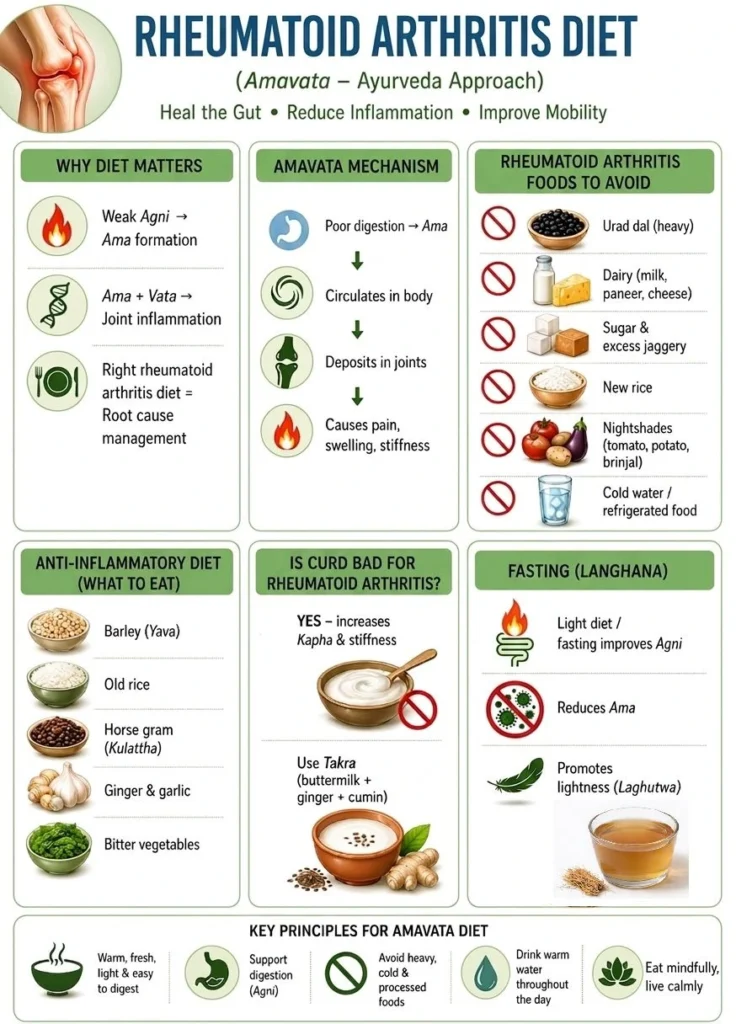

Rheumatoid Arthritis Foods to Avoid (Inflammatory Triggers)
To stop the cycle of inflammation, certain “trigger” foods must be strictly removed from your daily life. These rheumatoid arthritis foods to avoid are known as ‘Apathya’ because they are heavy, cold, and promote the formation of Ama.
- Black Gram (Urad Dal): Extremely heavy to digest and can increase uric acid levels.
- Dairy Products: Milk, cheese, and paneer are heavy and often provoke gut inflammation.
- Sweets and Jaggery: High-glycemic foods increase inflammatory cytokines. (Note: While jaggery is sometimes used in specific medicinal preparations, refined sugar and excessive jaggery in the general diet are discouraged).
- Newly Harvested Rice: Is considered heavy and Kapha-aggravating compared to old, stored rice.
- Nightshades: Tomatoes, potatoes, eggplants, and bell peppers contain solanine, which can exacerbate pain in sensitive individuals.
- Contaminated or Cold Water: These dampen the digestive fire and increase stiffness.
Best Anti-inflammatory Foods for RA in India
- Barley (Yava) & Old Rice: Both foods are good options since they help digestion and are rich sources of fibre and anti-inflammatory substances.
- Horse Gram (Kulattha): Great food for RA patients because of its ability to decrease inflammation and prevent toxic buildup.
- Ginger & Garlic: They contain natural substances like gingerols and organosulfur that prevent inflammatory cytokines such as TNF-α from forming.
Specific Indian Foods
7-Day Meal Plan for Rheumatoid Arthritis
This rheumatoid arthritis diet chart focuses on warming the body and stimulating digestion.
| Day | Breakfast (8:00–9:00 AM) | Lunch (1:00–2:00 PM) | Dinner (7:30–8:30 PM) |
| 1 | Red rice porridge with ginger | Barley roti + Horse gram dal | Moong dal soup + Steamed veggies |
| 2 | Barley upma with garlic | Red rice + Bitter gourd stir-fry | Vegetable khichdi (Barley-based) |
| 3 | Ginger tea + Soaked almonds | Barley roti + Snake gourd curry | Light millet porridge |
| 4 | Dalia with turmeric | Red rice + Drumstick leaf curry | Moong dal soup with garlic |
| 5 | Red rice poha (no potatoes) | Barley roti + Horse gram soup | Steamed veggies with cumin |
| 6 | Barley porridge with honey | Red rice + Pointed gourd curry | Mixed vegetable soup |
| 7 | Red rice porridge + Cumin | Barley roti + Moong dal | Light barley khichdi |
Tip: Always drink lukewarm water throughout the day to aid detoxification.
Herbs to Include Daily: Turmeric, Ginger, Ashwagandha, Shallaki
Incorporate these healing botanicals into your rheumatoid arthritis diet chart:
- Ginger (Sunthi): Known as the “universal medicine”, it is the best for digesting Ama.
- Turmeric: Curcumin provides powerful anti-inflammatory support.
- Ashwagandha: Helps manage the stress and physical debility of chronic RA.
- Shallaki (Boswellia): While often taken as a supplement, it is traditionally used for joint health and reducing inflammation (Note: from general Ayurveda practice, though ginger and guggulu are the primary herbs highlighted in these sources).
Fasting & RA — Does Intermittent Fasting Help?
Seasonal Diet Adjustments for RA
References
- Raskotra K, Sharma A, Gupta P. A conceptual study on role of Pathya- Apathya Ahara in Amavata. International Journal of Multidisciplinary Research and Growth Evaluation. 2023;4(6):792-795.
- Suryawanshi R, Shirke JM, Joshi VN, Wele A. Management of Amavata (Rheumatoid Arthritis) with Gud (Jaggery) and Adraka Lepa (Ginger Paste): A Natural Ayurvedic Approach. World Journal of Pharmaceutical and Medical Research. 2025;11(5):200-204.
- Khayamali R, Bhusal S, Maharjan S. Pathya Implication in Aamavata (Rheumatoid Arthritis): A Review. The Healer Journal. 2024;5(2).
- Shinde P, Dere N, Soman S. Role of Langhana in Management of Amvata. International Journal of Pharmaceutical Research and Applications. 2023;8(4):1342-1344.
- Bhandarkar A, Kulkarni R, Khandare J, Lokhande S. Amavata: A Literature Review. World Journal of Pharmaceutical Research. 2024;13(21):1200-1206.