Sometimes emotional experiences don’t just stay in the mind — they can show up later as physical pain in the body. In PTSD (post-traumatic stress disorder), this becomes especially clear. A difficult experience may already be over, and daily life can continue as usual. Life moves back into work, conversations, and normal routines. To others, it can genuinely seem like everything has settled and moved on. But inside, the body does not always settle at the same pace. Sometimes the body stays a little on edge even after everything is “over”. It can feel like something inside never fully relaxed back into normal. Over time, that quiet strain may slowly show up as pain, tightness, or discomfort that is difficult to clearly point to or explain in simple terms.
Ayurveda has long recognised that emotional strain doesn’t stay only in the mind; it can also slowly show up in the body. It does not separate the mind from the body because both continuously influence each other. Fear affects breathing. Grief affects energy. Stress changes digestion, sleep, muscle tension, and pain sensitivity. This is the deeper basis of the mind-body-pain Ayurveda approach and the growing understanding around the trauma and physical pain connection.
When experiences become too difficult to process
Not every painful experience affects the system in the same way. Some experiences are emotionally difficult but gradually settle with time. The mind processes them, the body relaxes again, and life slowly regains rhythm. But certain experiences remain active inside the system long after they are over.
A person may logically know they are safe now, yet the body continues reacting differently. The nervous system stays alert. Rest does not feel fully restorative. Small situations create unexpectedly strong reactions. Ayurveda explains this through Asatmendriyartha Samyoga, which means an unhealthy interaction between the senses and what they experience. In trauma-related conditions, this disturbance can happen in different ways.

Ati Yoga
Mithya Yoga
Hina Yoga
‘Hina’ yoga means reduced engagement with life and one’s surroundings. Sometimes the system responds by emotionally withdrawing. A person may begin to avoid closeness, find it hard to express emotions openly, drift away from others, or feel emotionally numb, as if getting involved with anything deeply just feels too tiring inside.
Ayurveda views these patterns as protective responses that develop after prolonged strain on the nervous system and mind.
How Ayurveda explains trauma-related symptoms
Ayurveda describes two important levels of imbalance in such conditions. The first is Shareera Dosha, involving Vata, Pitta, and Kapha, which governs physical functioning. The second is Manodosha, involving Rajas and Tamas, which influence emotional and mental states.
In trauma-related conditions, Vata is usually affected the most. Vata governs movement, nerve communication, breathing patterns, sleep, sensory processing, circulation, and muscular activity. When Vata remains disturbed for long periods, the body loses steadiness and regulation. This is why many people with PTSD experience:
- interrupted sleep
- muscle tightness
- shallow breathing
- digestive irregularity
- fluctuating body pain
- fatigue
- physical restlessness
At the same time, the Manodoshas also become disturbed. Rajas increases hypervigilance, overthinking, emotional reactivity, irritability, and difficulty relaxing. The mind remains alert even during safe situations. Tamas creates emotional heaviness, withdrawal, numbness, low motivation, and disconnection. Some people describe it as feeling emotionally shut down. Ayurveda sees these emotional changes and physical symptoms as part of the same process rather than separate problems.
How does emotional stress start appearing physically?
One of the most difficult parts of trauma is that the body slowly adapts to living in a guarded state. The jaw remains tight without awareness. Breathing becomes shallow during ordinary situations. The shoulders stay tense through the day. Sleep never feels fully deep.Digestion becomes more sensitive during stress. After a while, these patterns begin feeling normal because the body gets used to functioning this way. This is why trauma held in body Ayurveda, is not viewed only as emotional memory. The body itself begins carrying the effects of prolonged stress.
Many people develop chronic neck and shoulder tightness, especially during emotional strain. Others experience lower back pain that worsens during periods of anxiety or exhaustion. Ayurveda relates this to long-standing Vata aggravation affecting muscles, posture, and nervous system regulation. Some people also develop widespread fluctuating pain resembling trauma and fibromyalgia, where the body becomes highly sensitive to stress, disturbed sleep, and overstimulation.
Shoka and Bhaya in Ayurveda
Ayurveda gives deep importance to Shoka (grief) and Bhaya (fear). These emotions are not considered temporary mental states alone. When they continue for long periods, they begin affecting physical stability as well. Fear keeps the system on alert, always a little watchful, as if it cannot fully relax. Grief, on the other hand, slowly takes away emotional steadiness and makes it harder for the body and mind to recover the way they normally would.
Many people notice this physically before they fully recognise the emotional strain behind it. Appetite changes. Energy drops more easily. Pain increases during emotionally difficult periods. Recovery from stress becomes slower. Over time, unresolved fear and grief disturb Vata further and make the system more sensitive to fatigue, tension, and physical discomfort.
Healing begins when the system feels safe again
Ayurveda does not approach trauma by focusing only on symptom control. The deeper aim is to help the system slowly move out of a constant state of protection and alertness. For this purpose, stability in daily life becomes important. A routine, warm and nourishing food, consistent sleep timing, quiet surroundings, gentle support from others, and a safe environment all help the nervous system feel less threatened over time.
Along with this, Ayurveda uses practices that help calm Vata and steady the nervous system. Abhyanga, slow breathing, proper rest, a regular daily routine, and Sattvavajaya Chikitsa are all used because healing is not only about the body or only about the mind, but both together.
Ayurveda describes Sattvavajaya Chikitsa as working directly with the mind. It is called ‘Manonigraha’, meaning ‘guiding the mind away from harmful patterns of thinking and perception’. It is not about stopping thoughts. It is about changing how the mind reacts when those thoughts come. Slowly, fear-based reactions and repeated distorted thinking reduce. Over time, Rajas and Tamas settle, and the mind becomes clearer, steadier, and balanced.
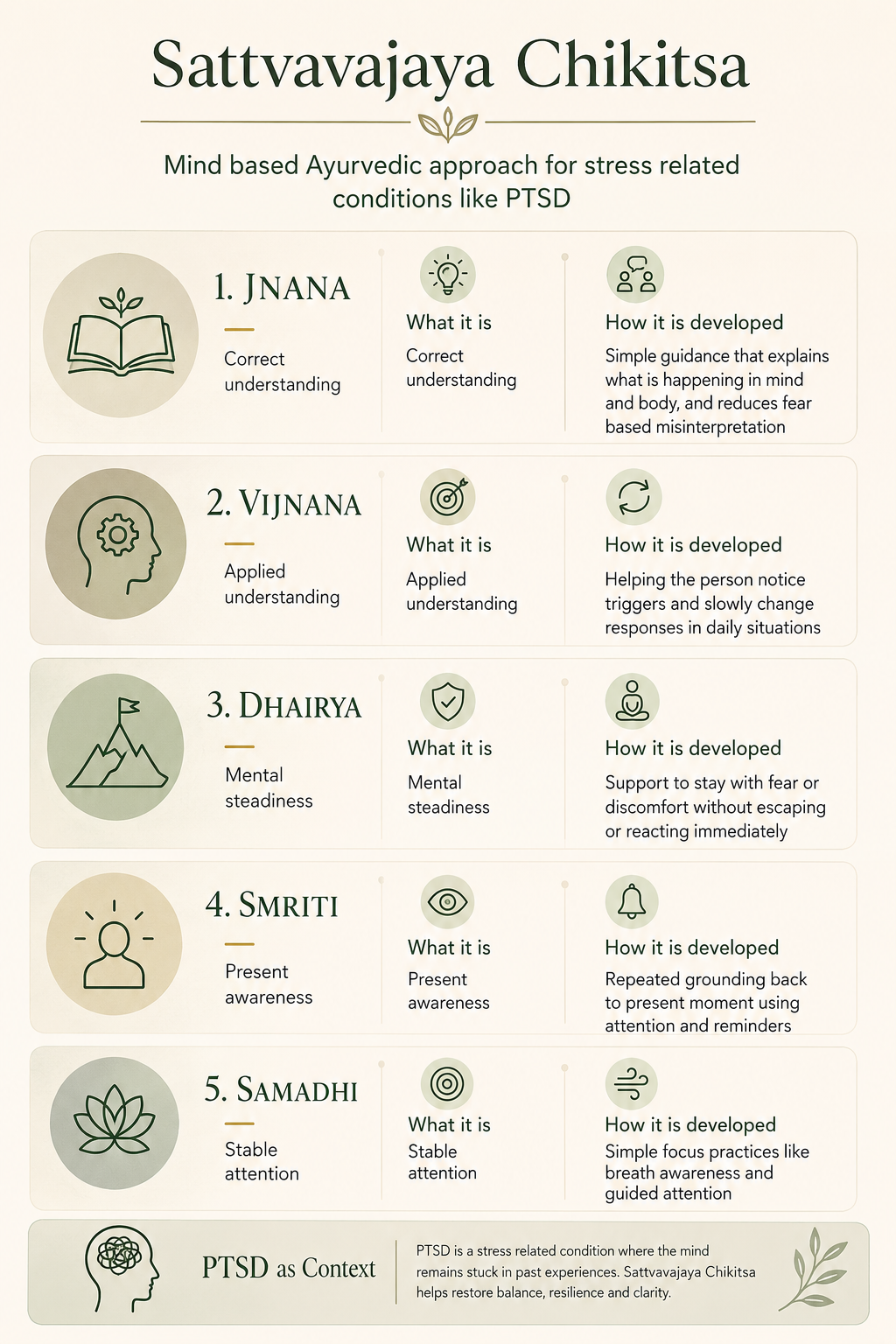
Sattvavajaya Chikitsa is not a single therapy session. It is done through repeated guidance in daily or regular interaction between the practitioner and the person.
‘Jnana’ means ‘correct understanding’. It is given through simple explanations about what is happening in the body and mind. The practitioner explains symptoms in a clear way so the person understands that reactions are due to stress and not ongoing danger.
‘Vijnana’ means using that understanding in real life. The person is helped to notice their triggers and slowly change how they respond in daily situations.
‘Dhairya’ means ‘mental strength’. It is built by helping the person stay steady while experiencing fear, discomfort, or emotional reactions without immediately reacting or escaping.
‘Smriti’ means ‘present awareness’. It is developed by repeatedly bringing attention back to the present moment through grounding and reminder-based practices.
Samadhi means stable attention. It is trained through simple focus practices like steady breathing or guided attention, so the mind becomes less scattered.
In conditions like post-traumatic stress disorder, this approach helps reduce ongoing mental overactivation linked with Rajas and emotional shutdown linked with Tamas. Over time, it supports a gradual return to a more stable, present-centred, and balanced state of functioning. This is why PTSD pain management Ayurveda focuses not only on reducing pain but also on rebuilding steadiness within the entire system.
Final thoughts
PTSD is not only about remembering painful experiences. It is also about how the body continues responding after those experiences are over. Ayurveda understands that emotional overload, grief, fear, shock, and prolonged stress slowly affect sleep, muscles, digestion, breathing, energy, and pain perception together. Healing begins gradually when the body no longer feels it must remain constantly prepared for danger. And as that sense of safety slowly returns, the body often starts softening its protective responses as well.
References