Introduction
Headache is a common reason people struggle through the day, but not every headache is the same. There are several types of headache Ayurveda describes, where the pattern of pain, associated symptoms, triggers, and relief clues all matter.
The head is not just a physical structure. It is the seat of clarity, perception, and vital energy. When the doshas become disturbed, the imbalance may show up as pain, pressure, burning, throbbing, or heaviness in the head. When we clearly understand the nature of the pain, treatment becomes more meaningful and more individualised.
Among the most commonly seen presentations are pitta headache, migraine, and tension-type headache. Though they may overlap at times, each has its own Ayurveda pattern and therapeutic approach.
Understanding headache due to pitta
A headache due to pitta often feels hot, sharp, and inflamed. Patients may describe it as heat building up inside the head, a burning sensation behind the eyes, or discomfort that worsens in the sun, after spicy food, or during episodes of acidity.
This pattern usually points toward excess heat in the body. Along with the headache, there may be sour belching, burning in the eyes, irritability, sweating, thirst, or a sensation that the head is “overheated.” In clinical practice, this condition is one of the situations where cooling and digestive correction go hand in hand.
When pitta aggravation is the main driver, the focus extends beyond just pain relief. We also aim to reduce heat, calm digestion, and prevent recurrence. That is why the management of pitta headache often begins with food correction, lifestyle adjustment, and gentle cooling therapies.

How to recognise migraine vs pitta headache
One of the most common questions patients ask is about migraine vs pitta headache. The two can seem similar because both may involve light sensitivity, nausea, or a desire to lie down in a quiet room. But the quality of pain often provides a valuable clue.
A pitta headache is more likely to feel burning, hot, or sharp with clear signs of acidity or heat. A migraine, on the other hand, tends to come in attacks. It may be one-sided, throbbing, severe, and accompanied by nausea, vomiting, light sensitivity, sound sensitivity, or even visual disturbance.
In Ayurveda,migraine is classically described under Ardhavabhedaka, where Vata plays a major role andPitta may also be involved. This is why migraine is not just “a bad headache.” It is a patterned pain disorder that needs careful attention to triggers, sleep, diet, digestion, and nerve balance.
Tension headache and the pressure of stress
The third common pattern is tension headache, described as a Vata-dominant state, often linked to mental strain, overwork, poor posture, disturbed sleep, and prolonged screen time.
This headache usually feels like a tight band around the head or a dull pressure on both sides. The pain is not typically burning or pulsating. Instead, it feels heavy, constricted, or sore, often extending into the neck and shoulders. Many patients with this type of headache are surprised to learn that emotional tension can become physical pain.
In Ayurveda, warm oil therapies, rest, gentle routine, and nervous system support make a real difference. Unlike pitta headache, which benefits from cooling, tension headache tends to improve with warmth, grounding, and lubrication.
How to reduce pitta headache immediately
When a patient is in the middle of a heat-type headache, the first question is often how to reduce pitta headache immediately. The immediate aim is to reduce irritation.
Some simple supportive measures include resting in a cool, quiet room, placing a cold cloth over the forehead, avoiding sunlight, and sipping fluids gently. Sandalwood paste on the temples may also provide a soothing effect. A glass of warm milk with 1 teaspoon of sugar and ghee can also pacify the pitta. If acidity is a clear trigger, meals should be light and non-irritating until the episode settles.
The key is not to provoke more heat. Delaying meals, consuming spicy food, remaining in the sun, or pushing through intense work often worsens the episode. For recurrent patterns, a proper Ayurveda assessment is important so that the practitioner can address the deeper cause rather than only suppressing pain.
Home remedies that support recovery
Many patients ask for pitta headache home remedies, especially when the pain is recurrent but not severe enough to need emergency care. Gentle, simple measures are often the best place to begin.
Cooling applications can be helpful. So can fresh, easy-to-digest food that does not aggravate acidity. Tender coconut water, warm water in small sips, and a calm environment are often more useful than people expect. If digestive heat is the core issue, dietary correction becomes essential. Avoiding fermented foods, excess chilli, sour items, and heavy, fried foods can reduce recurrence.
At the same time, rest matters. People with pitta aggravation often try to “work through” the headache, but the body is already asking for cooling, slowing down, and less stimulation. When supported well, the system often settles much faster.
Bringing the patterns together
Understanding types of headache Ayurveda recognises helps us avoid one-size-fits-all treatment. A burning headache is not the same as a throbbing migraine, and a squeezing pressure headache is not the same as heat in the head. Each pattern reflects a different disturbance in dosha balance, digestion, nerves, and lifestyle.
That is also why migraine vs pitta headache must be approached carefully. Migraines may need different therapeutic priorities than a pitta flare. Likewise, tension headache Ayurveda are often relieved by a completely different strategy than heat-driven pain.
The deeper aim is not only to reduce symptoms for a few hours. It is to understand what the body is trying to say and to correct the underlying imbalance with the right food, routine, therapies, and timing.
Ayurveda Treatments for Each Type
Pitta Headache
- Treatment requires
- cooling and a reduction in acidity.
- Virechana (purgation)
- Sheeta Lepa & Parisheka (cooling paste application and liquid pouring over forehead)
- Nasya (nasal instillation) Therapy using oil or ghee
- No spicy, salty and sour foods
- Avoid exposure to heat
- Consume coconut water, ghee and meals regularly
- It concentrates on Vata balancing and avoiding triggering factors.
- Nasya
- Basti (enema)
- Shirolepa
- Vamana or Virechana depending upon requirements
- Routine sleep, meal and stress management
- Sometimes medicated ghee helps
Tension Headache (Vataja Shirashoola)
- Treatment needs relaxation and nourishment.
- Abhyanga (oil massage)
- Shirodhara (pouring of oil)
- Snehana and Swedana (oleation and sudation)
- Shirobasti (retention of medicated oil over head)
- Regular sleep, posture correction, meditation
Conclusion
Headache becomes far more manageable when we stop treating all pain as the same. Whether it is pitta headache, migraine, or tension-type pain, Ayurveda gives us a precise framework to understand the root pattern and guide treatment accordingly.
If you are dealing with recurring pain, especially with acidity, light sensitivity, neck tension, or one-sided throbbing, the pattern itself is already a clue. With the right assessment, recovery can be more targeted, more natural, and more sustainable.
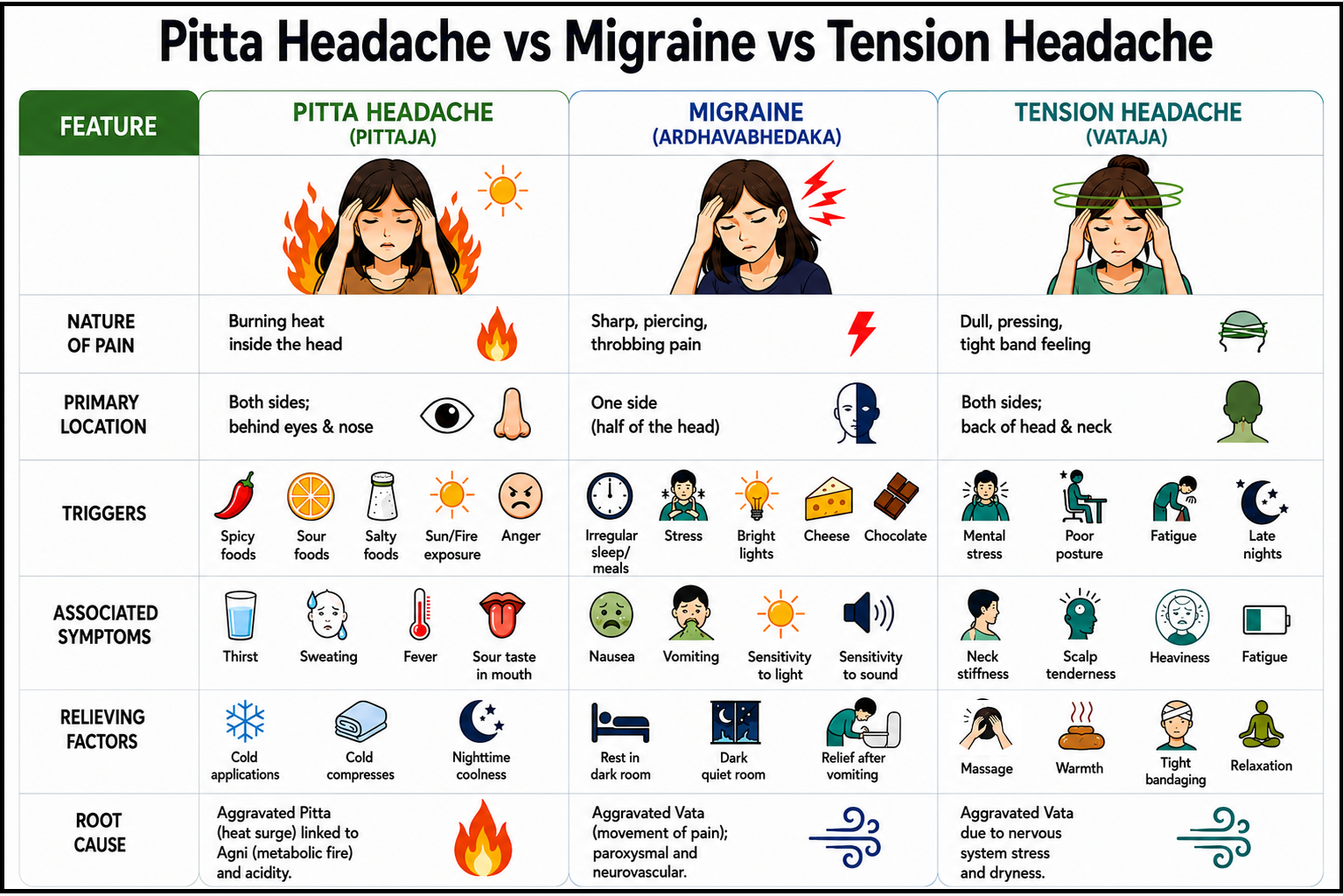
The following table provides clear distinguishing points between Headaches
| Feature | Pitta Headache (Pittaja) |
Migraine (Ardhavabhedaka) |
Tension Headache (Vataja) |
|---|---|---|---|
| Nature of Pain | Intense burning sensation; it feels like “burning charcoal” or hot fumes filling the head. | Paroxysmal, sharp, and piercing pain; feels like a red-hot needle or a “churning rod”. | Constant, dull, pressing sensation; feels like a tight band is being squeezed around the head. |
| Primary Location | Often bilateral; includes burning behind the eyes and nose. | Unilateral (affecting exactly one half of the head). | Bilateral (both sides); often starts in the occipital (back) or cervical region. |
| Triggers | Pungent, sour, and salty foods; excessive anger; exposure to sun or fire. | Irregular sleep/eating habits; stress; bright lights; specific foods like cheese or chocolate. | Mental stress, anxiety, depression; poor posture; physical exhaustion; late nights. |
| Associated Symptoms | Thirst, excessive sweating, fever, and a sour taste in the mouth. | Severe nausea, vomiting, and extreme sensitivity to light (photophobia) and sound. | Neck stiffness, scalp tenderness, heaviness, and fatigue. |
| Relieving Factors | Cold applications, cold compresses, and nighttime coolness. | Complete rest in a dark room; may improve after vomiting the “bilious surge”. | Massage, tight bandaging of the head, warmth, and relaxation. |
| Root Cause | Aggravated Pitta (heat surge) often linked to metabolic fire (Agni) and acidity. | Primarily aggravated Vata (movement of pain), often paroxysmal and neurovascular. | Aggravated Vata due to nervous system stress and “dryness”. |