Introduction
The monsoon has arrived, and the welcome break from the harsh summer heat has turned the landscape into a lush green heaven. But this gift from the weather also brings a surge in a variety of infectious diseases, including skin. High humidity in the air (often 70-90%), frequent sweating, and damp clothing create a “perfect storm” for microbial growth. In monsoon skin infections, Ayurveda has a great deal to say about why the skin is susceptible and how to bring back its natural resilience.

Why Monsoon Affects Your Skin: An Ayurveda Perspective
The classical texts of Ayurveda state that the rainy season (Varsha Ritu) greatly disturbs our internal body dynamics. This season brings a unique set of physiological challenges:
Manda Agni (Dampening of Digestion): The most important effect of damp weather is the lowering of our internal metabolic fire (Agni). When digestion is poor,Ama, a toxic metabolic byproduct, remains. This Ama is circulating in blood plasma (Rakta) and skin tissues (Twak). These are the main causes of recurrent skin infections (Kushtha Rogas).
The Rise of Fungal and Bacterial Problems
Monsoon is warm and wet and these are exactly the conditions fungi like to grow in. Fungal skin infections can occur in places where skin rubs against skin, including the groin, between the toes, and under the arms.
1. Fungal Infections (Dadru Kushtha)
In Ayurveda, a fungal skin infection is often called Dadru Kushtha. It is clinically similar to modern conditions such as Tinea (ringworm). It generally appears as elevated, rounded red lesions with scaly surfaces and extreme itching. These lesions may merge and extend centrifugally, often aggravated by hyperhidrosis and humid weather.
2. Boils and Pustules (Visphotaka/Pidaka) due to bacterial infection
When pores are clogged with sweat, dirt and excess oil, bacteria have a breeding ground. These are painful eruptions filled with fluid or pus and are known as Visphotaka or Pidaka in Ayurveda. These are often due to Pitta and Rakta vitiation, causing local heat and inflammatory pain.
Ayurveda for Monsoon Skin Infection: A Holistic Strategy
To deal with these problems, you need more than just a topical cream; you need a systemic “internal cleanup” and a strict lifestyle change.
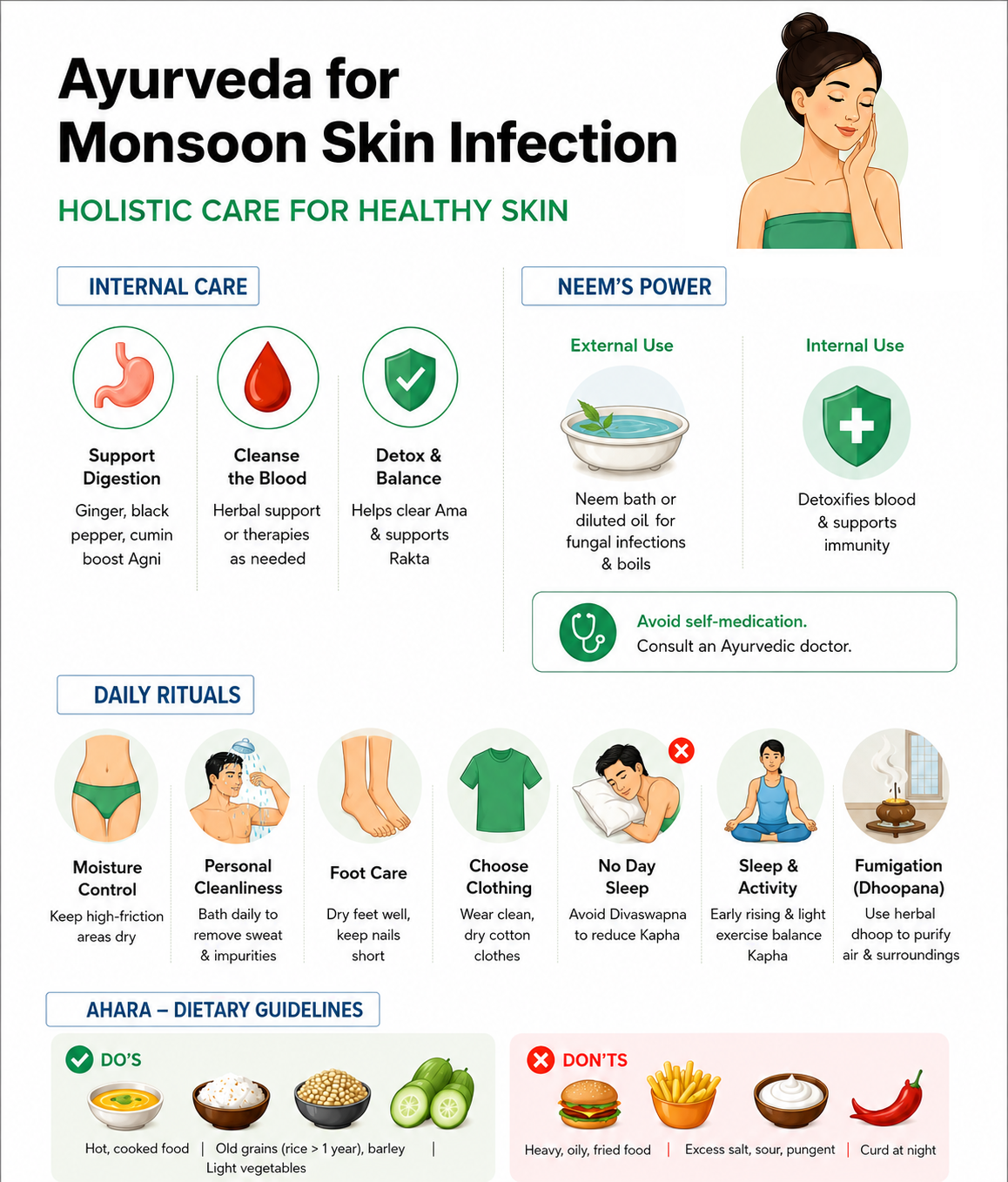
- Agni and Internal Detoxification Support: Most skin infections involve Rakta (blood); hence, internal management is a must.
- Support Digestion: Ginger, black pepper and cumin are amongst the spices that help to flush toxins and help in the absorption of nutrients.
- Cleanse the Blood: Deep cleansing of the blood is carried out with formulations or bloodletting therapies based on the severity of the condition and the strength of the patient.
Neem’s Power: Nature’s Skin Shield
Neem (Azadirachta indica) is the gold standard for monsoon skin infection Ayurveda for its potent antibacterial, anti-fungal and anti-inflammatory properties.
- External Use: Fresh neem leaves can be soaked in bath water to treat fungal skin infections and prevent bacterial boils. Diluted neem oil can also be applied to the affected areas.
- Internal Use: Detoxifies blood and supports the immune system in fighting cutaneous infections.
NOTE: Avoid self-medication. Consult a qualified Ayurveda doctor before starting the treatment.
Daily Rituals for Healthy Skin
One of the important measures for prevention of skin infections by Ayurveda is Ritucharya (Seasonal Regimen). Having a proper routine is an important way to prevent fungal skin infections or bacterial infections.
- Moisture Control: Drying the high-friction areas such as interdigital toe spaces, axillae, and groin regions properly is one of the most important measures in preventing the multiplication of microbial organisms (Malaja Krimi).
- Personal Cleanliness: Taking a bath daily is one of the essential steps to wash out the sweat and environmental pollution that blocks the pores.
Foot care: Immediately drying feet when they become wet due to rain or dirty water is very important, and one must maintain short fingernails regularly. - Choosing clothing: Wearing clean, light, and dry cotton clothing is important for maintaining healthy skin, as it allows the skin to breathe, whereas artificial fabrics trap moisture against the skin.
- No day sleep: One must not take day sleep (Divaswapna), as it increases Kapha and leads to skin congestion and a slow metabolism rate.
- Sleep and activity: Maintaining proper routine in terms of sleep and activity, awakening during Brahma muhurta (early morning) and doing indoor exercises to avoid Kapha accumulation.
- Fumigation (Dhoopana): Purify your living space and clothes by fumigating with Neem leaves and other medicinal ingredients to stimulate resistance to infections.
Home Remedies and Topical Care
The natural ways will help soothe irritation and also stop the spreading of the skin infection.
- Antimicrobial baths: Include fresh Neem leaves or Triphala decoction into your bath water to preserve the protective covering of the skin.
- Natural cleansers: Use the natural astringent flours such as Besan (gram flour) and the mixture of chickpea flour and water to remove excess oil from your skin without drying it.
- Herbal pastes (lepa): Make a paste of Neem and turmeric leaves to apply on the infected skin for fungal skin infections. In case you have acne, try to make a face pack of Multani Mitti with rose water to get rid of extra sebum.
- Medicated oils: Massage the body with neem oil and any other oils such as sesame or coconut before taking a bath with hot water.
- Cooling agents: Use Aloe Vera gel, cucumber juice, or sandalwood paste to treat the irritation caused by pitta vitiation.
Ahara – Dietary Guidelines
What you eat during the monsoon is directly mirrored on your skin.
- Do’s: Hot and cooked food, old grains (Rice aged over one year), barley, and light vegetables like pointed gourd (Patola) and bitter gourd (Karavellam) etc.
- Avoid heavy, oily, fried foods which are difficult to digest. Avoid too much salty, sour and pungent tastes, as these can aggravate pitta and rakta. Avoid curd (yoghurt) at night, particularly as it increases Kapha and causes congestion.
- Specific Restrictions: Avoid curd, especially at night, as it causes congestion and increases Kapha.
When to See a Physician
If a fungal skin infection or bacterial boil continues to grow, gets larger or becomes painful, you should see a doctor. Professional treatments can be:
- Raktamokshana (Bloodletting): It is an effective therapy for the removal of vitiated blood in chronic inflammatory skin disorders.
- Panchakarma: Therapies such as Vamana (therapeutic emesis) and Virechana (Therapeutic purgation) helps remove deep-rooted seasonal imbalances.