The rainy season changes how people eat, travel, and fall ill. In clinics, it is common to see a sudden rise in fever with stomach upset, nausea and vomiting, loose stools that leave people exhausted, and jaundice that begins with nothing more than loss of appetite and dark urine. Many families first assume it is a minor digestive problem and wait for a few days before seeking help.
Typhoid, hepatitis A, cholera, and acute gastroenteritis become more common during monsoon because contaminated water and food spread infection more easily. Ayurveda has always treated this season as a time when digestion becomes less dependable. Heavy meals, stale food, cold drinks, and irregular eating habits are often tolerated poorly during these months. This blog does not suggest replacing modern medical treatment for serious infections. Typhoid, hepatitis A, cholera, and severe gastroenteritis may require laboratory testing, rehydration, antibiotics, hospitalisation, or other urgent care. What Ayurveda offers is a practical seasonal approach that can help reduce risk, support digestion during illness, and help the body regain strength afterwards.

Why the Rainy Season Affects Digestion
Most people notice some change in their digestion during monsoon, even if they do not develop a major infection. There may be less hunger, more bloating, a feeling of heaviness after meals, or occasional loose stools.
Ayurveda associates these changes with Varsha Ritu, the rainy season, during which digestion is believed to weaken, and the body becomes more vulnerable to imbalance. After the heat of summer, the body is relatively depleted. With the arrival of rain, humidity increases, the environment becomes cooler and damper, andJatharagni, the digestive fire, tends to weaken. At the same time,Vata becomes aggravated, while previously accumulated Pitta may also become unstable. This is one reason why the same meal that feels perfectly fine in winter may feel heavy during monsoon. Classical Ayurveda advice for this season is surprisingly simple:
- Eat freshly cooked food.
- Prefer warm meals over cold food.
- Drink boiled or properly purified water.
- Avoid stale, fermented, or repeatedly reheated food.
- Do not eat just because it is mealtime; eat when appetite is present.
In practice, these seasonal habits often make a noticeable difference.
The Ayurveda View: Agni, Ama and Illness
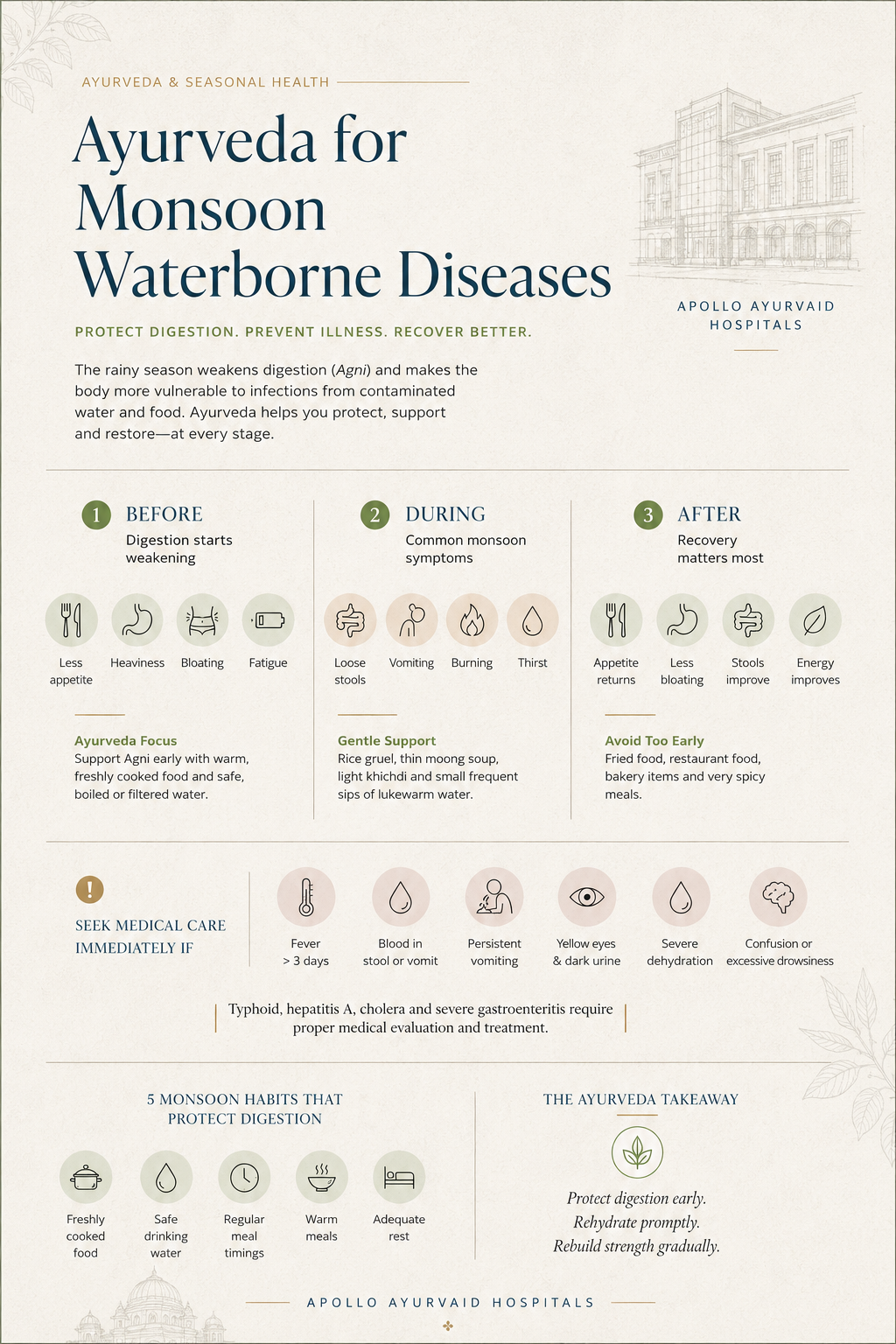
Ayurveda does not look at monsoon stomach infections as only a problem of germs. Microorganisms are important, but the body’s response to them also matters. When digestion is weak, food may not be processed properly. Ayurveda describes the resulting toxic, sticky byproduct as Ama. Ama is believed to obstruct normal channels and disturb the balance of the doshas. Different patterns may appear:
- Vata predominance: cramps, gurgling, irregular stools, dehydration, weakness.
- Pitta predominance: fever, burning sensation, thirst, yellow discolouration, loose stools.
- Kapha predominance: nausea, heaviness, coating on the tongue, sluggish digestion.
This does not mean that a person has only one dosha involved. In many monsoon-related digestive illnesses, all three may be affected to some extent, but one pattern may appear more strongly than the others. That is why two people who consume the same contaminated food may not develop the same symptoms or recover at the same pace.
Typhoid: More Than Just Fever
Typhoid is commonly associated with prolonged fever, but it is essentially an intestinal infection that can affect the whole body.
Common symptoms
- Fever that persists for several days
- Headache
- Weakness
- Abdominal discomfort
- Constipation or diarrhea
- Coated tongue
- Reduced appetite
Proper medical evaluation is important because untreated typhoid can lead to complications.
Ayurveda texts describe several Jwara conditions in which fever is accompanied by digestive disturbance, heaviness, burning sensation, bowel changes, and loss of strength. The classical understanding recognises that digestion and systemic illness influence each other. During the recovery phase, many patients feel that the fever has gone, but the body has not yet returned to normal. Appetite is poor, even small meals cause discomfort, and fatigue lingers.
At this stage, Ayurveda generally favours gentle Deepana and Pachana rather than heavy nourishment. Thin rice gruel, moong soup, soft rice, and gradually increasing food quantity are often better tolerated than rich food introduced too early. One of the most common mistakes is celebrating recovery with fried or restaurant food as soon as the temperature becomes normal.
Hepatitis A and the Ayurveda Understanding of Kamala
Hepatitis A usually spreads through contaminated food and water. It often begins with fever, nausea, vomiting, tiredness, dark urine, and later jaundice.
Ayurveda describes Kamala, a condition characterised by yellow discolouration of the eyes, skin, nails, and urine, along with anorexia, weakness, indigestion, and a burning sensation. The condition is linked to Pitta aggravation affecting Rakta andMamsa dhatus. In clinical practice, symptoms such as loss of appetite, nausea, weakness, dark urine, yellow discolouration, and digestive disturbance are therefore assessed through the framework of Kamala, with special attention given to both liver-related symptoms and the state of digestion.
What becomes very important during recovery is not forcing nutrition. Families often worry when the patient eats little, but a weak digestive system may not handle heavy food well. Helpful foods are usually:
- Rice gruel
- Moong dal soup
- Soft cooked vegetables
- Light khichdi
- Warm water
- Small frequent meals
Many patients notice that the fatigue lasts longer than the jaundice. Ayurveda places great emphasis on restoring digestion first and rebuilding strength gradually.
Cholera: When Dehydration Becomes the Real Danger
Cholera is different from an ordinary stomach upset. The rapid loss of fluids and electrolytes can become life-threatening. In Ayurveda, severe watery diarrhoea with vomiting and intense thirst is often understood through the framework of Visuchika, where disturbed Agni, accumulation of Ama, and aggravated Vata lead to the sudden expulsion of fluids through both the upper and lower digestive tract. The condition is considered serious because excessive fluid loss can quickly weaken the body.
Warning signs
- Very frequent watery stools
- Intense thirst
- Sunken eyes
- Reduced urination
- Dizziness
- Lethargy
- Confusion
In such situations, the priority is immediate medical care.
- ORS should be started early.
- Clean water is essential.
- Intravenous fluids may be required.
- Medical supervision should not be delayed.
Ayurveda may be considered only as supportive care during recovery, while rehydration remains the first and most important treatment for suspected cholera. Once the acute phase is controlled, digestion and nutrition can be supported gradually.
Gastroenteritis and Food Poisoning: The Most Common Monsoon Problem
This is the illness many people experience after eating outside food, stale food, or contaminated meals.
Typical symptoms
- Loose stools
- Vomiting
- Abdominal cramps
- Bloating
- Weakness
- Sometimes fever
From an Ayurveda perspective, this condition is often understood as Atisara, where impaired Agni fails to digest food properly, and Ama begins to form. The disturbed digestive process can lead to frequent loose stools, abdominal discomfort, weakness, poor appetite, and a feeling of heaviness in the body.
When vomiting is also present, Ayurveda considers that the doshas are moving in both upward and downward directions, indicating that the digestive system has become temporarily overwhelmed. In many monsoon-related cases, Vata and Pitta are commonly aggravated, which may cause cramps, excessive bowel movements, thirst, burning sensation, and fatigue. For mild cases, supportive care may include:
- Rest
- Warm water in small sips
- Rice gruel
- Thin moong soup
- Light khichdi
- Avoiding milk, fried food, bakery items, and heavy meals
The goal is not to “eat for strength” immediately. The goal is to allow digestion to recover. If vomiting continues, stools contain blood, fever becomes high, or signs of dehydration appear, medical consultation is necessary.
Monsoon Food Habits That Ayurveda Considers Protective
Ayurveda seasonal advice is often more practical than people expect.
What usually helps
- Warm, freshly cooked meals
- Boiled or filtered water
- Rice and green gram preparations
- Light soups
- Moderate use of ginger, cumin, coriander, and black pepper
- Regular meal timings
What commonly creates trouble
- Street food during heavy rains
- Cut fruits from uncertain sources
- Stale leftovers
- Deep-fried snacks in excess
- Very cold beverages
- Overeating when appetite is poor
- Sleeping immediately after meals
These are not rigid rules. They are observations gathered from long seasonal experience.
A Small Detail Many People Miss
During monsoon, people often drink less water because the weather is cooler. At the same time, diarrhoea and vomiting can lead to significant fluid loss. Ayurveda prefers small, frequent sips of warm or lukewarm water rather than large quantities taken at once when digestion is weak. For patients recovering from gastroenteritis, this simple habit is often easier to tolerate.
The Recovery Phase Matters More Than People Think
In practice, many patients are declared “recovered” while they still have:
- Poor appetite
- Weakness
- Irregular bowels
- Bloating
- Bitter taste
- Fatigue after minor activity
Ayurveda gives this phase considerable importance. A gentle progression is usually better:
Days 1–2: rice gruel, moong soup, warm water
Days 3–5: soft khichdi, boiled vegetables
Days 6–7: slightly thicker meals in small portions
After a week: gradual return to normal food if appetite is stable. This stage may be understood as rekindling Agni, clearing residual Ama, and restoring Bala (strength). Rushing back to heavy food often delays recovery more than people realise.
When Urgent Medical Attention Is Needed
Please seek medical care immediately if there is –
- Fever lasting more than three days
- Blood in stool or vomit
- Severe dehydration
- Persistent vomiting
- Yellowing of eyes with dark urine
- Confusion or excessive drowsiness
- Very frequent watery diarrhea
- Symptoms in infants, elderly persons, pregnant women, or people with chronic diseases
Ayurveda support should complement, not delay, necessary medical treatment.
Why Monsoon Illness Feels So Draining
What makes these illnesses difficult is not only the infection itself. It is the disruption of ordinary life. The child who refuses food for days. The elderly parent who becomes weak after diarrhoea. The office worker who returns to work too early. The mother who falls sick while caring for everyone else. Ayurveda, at its heart, is not merely a list of medicines. It asks practical questions:
- Is digestion improving?
- Is sleep returning?
- Is strength coming back?
- Can the body handle nourishment again?
Sometimes the most therapeutic measures are simple: warm food, safe water, adequate rest, and patience during recovery.
Conclusion
Most monsoon stomach infections do not begin dramatically. They often start with poor appetite, heaviness after food, mild nausea, or a day of loose stools that seems unimportant. Paying attention to these early changes can prevent a small problem from becoming a prolonged illness.
The rainy season is a reminder that digestion is not the same throughout the year. Warm freshly cooked food, clean drinking water, regular meal timings, and adequate rest sound simple, yet they remain some of the most effective protective measures. When illness does occur, the body usually recovers better when food is reintroduced gradually, and strength is rebuilt patiently rather than hurriedly.
Typhoid, hepatitis A, cholera, and severe gastroenteritis require proper medical evaluation and treatment. Alongside that care, Ayurveda seasonal wisdom offers something equally valuable: a practical way to protect digestion, reduce unnecessary strain on the body, and support a steadier recovery during the monsoon months
References