Introduction
Going through cancer treatment can be physically and emotionally overwhelming. Along with the hope that treatment brings, many patients also have to face difficult side effects that affect the most basic parts of daily life. One of the most painful of these is oral mucositis — sore, inflamed mouth ulcers that can make speaking, eating, drinking and even swallowing feel unbearable.
At such a time, what a person needs most is not just treatment, but comfort, reassurance and gentle support. Ayurveda offers exactly that kind of care. A caring chemotherapy mouth sores Ayurveda treatment allows one to feel nurtured by providing relief through soothing, healing and alleviating irritation. Anyone suffering from mouth sores during cancer treatment will find it relieving in more ways than just strength and nourishment. Ayurveda aims to improve the quality of life for patients.
What is Oral Mucositis (OM)?
It is inflammation and ulceration of the lining of the mouth and throat. In simple terms, the delicate tissues inside the mouth become red, raw, painful, and sometimes covered with open sores. In Ayurveda, this pattern is often understood as Mukhapaka, a condition linked to the aggravation of Pitta and Rakta. The burning, redness, tenderness and ulceration fit beautifully with this Ayurveda description.
Chemotherapy and radiation work by targeting rapidly dividing cells. This is how they help control cancer, but the same effect can also damage the healthy cells of the mouth, which normally renew themselves quickly. When this protective lining is injured, the mouth loses its ability to repair itself efficiently and painful ulcers develop. At the same time, some patients develop low immunity during treatment, which can make healing slower and increase the risk of infection.
That is why oral mucositis Ayurvedic treatment needs to be gentle, cooling, tissue-supportive and immune-conscious.

Stages of Mucositis
- Initiation phase: The mouth lining begins to get damaged at a cellular level, but symptoms are not yet visible.
- Primary damage response phase: Inflammatory signals start increasing in the tissue.
- Signalling and amplification phase: The inflammation worsens and the injury spreads further.
- Ulceration phase: Redness turns into painful open sores, sometimes covered with a white or yellow layer.
- Healing phase: After treatment is adjusted or completed, the mouth slowly begins to recover.
Why These Sores Can Become So Severe
Many patients are surprised by how distressing mouth sores can be. It is not just pain. Severe ulceration can interfere with nutrition, hydration, sleep and emotional well-being. For some people, the discomfort becomes so intense that they begin to avoid food and water. That leads to weakness, dehydration, weight loss and a further drop in resilience during treatment.
When symptoms become severe, doctors may need to reduce the chemotherapy dose or postpone the next cycle. That is why prevention and early care matter so much. Supporting the mouth lining from the beginning can help reduce complications and improve tolerance to treatment. In that sense, chemo mouth ulcers relief is not just about comfort — it is also about helping a patient stay strong enough to continue cancer therapy safely.
The Ayurveda Lens: Cooling, Soothing, Rebuilding
Ayurveda looks at these ulcers through the lens of heat, inflammation, tissue irritation and imbalance in the oral environment. The treatment approach is therefore designed to calm Pitta, nourish tissues, support immunity and maintain oral hygiene without adding further irritation.
A good cancer oral ulcers Ayurveda plan is simple in principle: reduce heat, protect the mucosa, support digestion and encourage healing with gentle local care. This is where time-tested herbs and lifestyle measures become very valuable.
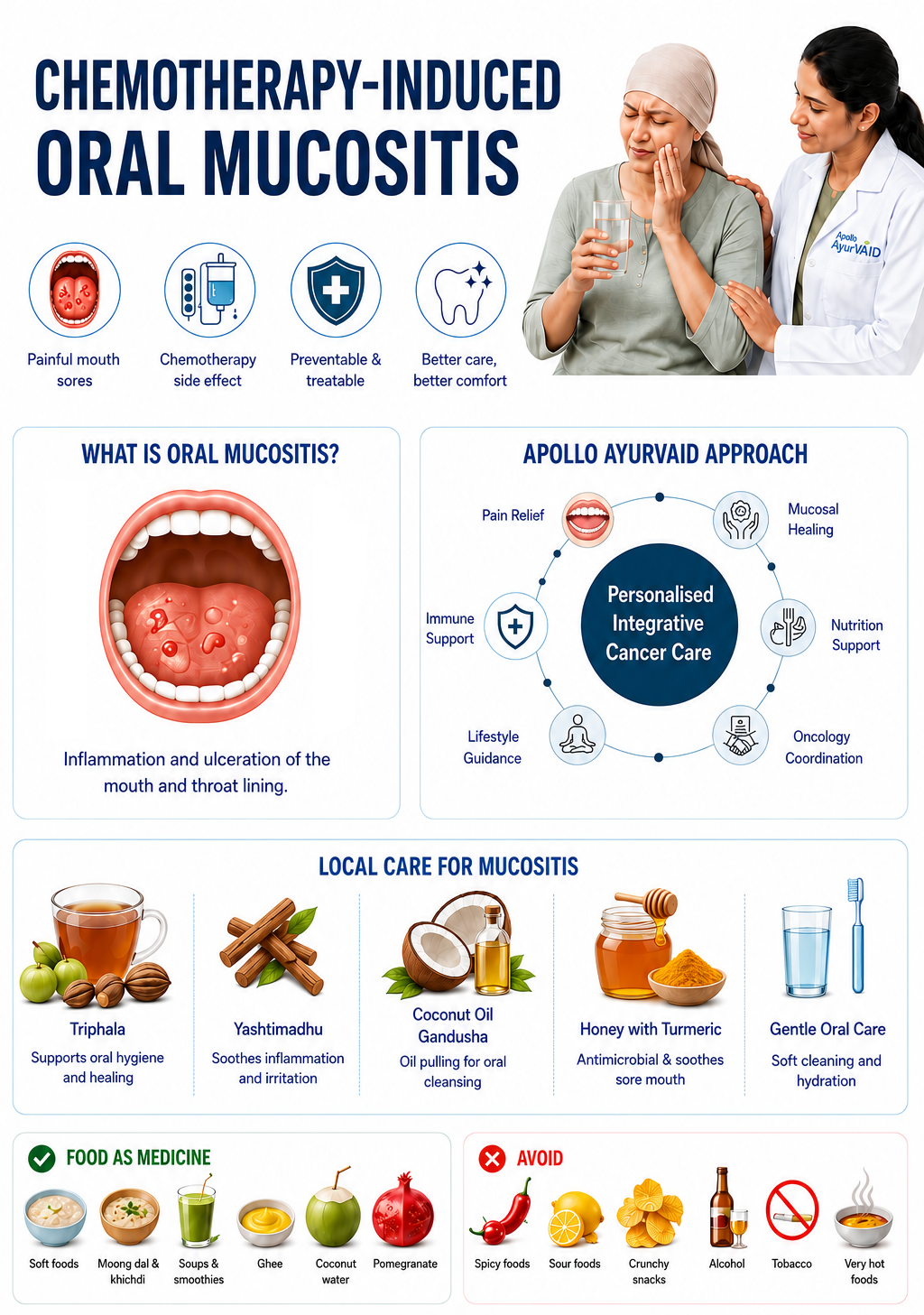
At Apollo AyurVAID, oral mucositis is cared for as part of a larger, compassionate,integrative cancer care that supports the patient beyond the disease itself. The focus is on easing pain, reducing treatment-related side effects such as mucositis and helping patients tolerate chemotherapy and radiation more comfortably through personalised, whole-person care that includes Ayurveda support, diet, lifestyle guidance and close coordination with the oncology team.
Triphala for Mucositis
Among the most widely used Ayurveda supports for oral care is triphala for mucositis. Triphala, made from Haritaki, Vibhitaki, and Amalaki, is valued for its cleansing, healing and balancing properties. It is mild enough to be used frequently and at the same time provides good assistance in maintaining oral hygiene and tissue healing.
Using Triphala extract as mouthwash or Gandoosha can assist in keeping things clean, decreasing the number of microorganisms present and soothing the irritated mucosa. Using Triphala for mouth cleansing has been studied in the clinical setting with regard to reducing mucositis intensity and improving patient comfort. Many patients find that regular use brings meaningful chemo mouth ulcers relief, especially when started early.
The beauty of Triphala is that it does not feel harsh. For someone whose mouth is already sore and sensitive, this matters a great deal.
Simple Topical Measures That Help
When the mouth is inflamed, local care often brings the most immediate comfort. A few Ayurveda supports are particularly useful.
Yashtimadhu (liquorice) is one of the best-known soothing herbs for the oral lining. It helps coat and calm irritated tissues, making it a helpful option for mouth sores during cancer treatment. Because it is naturally cooling, patients who describe a burning or raw sensation often appreciate it.
Honey with Haridra (turmeric) is another traditional combination often used in gentle oral care. Honey helps create a soothing barrier, while turmeric brings its well-known anti-inflammatory support. When used carefully and appropriately, this combination may help reduce irritation and support healing.
Coconut oil pulling or gentle Gandusha can also be beneficial for some patients. It may help keep the mouth more comfortable and reduce dryness. These measures are simple, but they often make a real difference in day-to-day ease.
Internal Support for Healing
Topical measures are important, but the body also needs internal support to recover. Ayurveda often uses herbs that strengthen the mucosa, improve resilience and support the body’s ability to tolerate treatment.
Yashtimadhu is one such herb, and Guduchi is another. Guduchi is valued for its immune-supportive and antioxidant properties and it is often used when a patient needs strength without heaviness. Together, these herbs may offer a more comprehensive support system during therapy. In some clinical observations, this combination has been associated with improved tolerance and reduced mucosal discomfort.
This is where oral mucositis Ayurvedic treatment becomes more than a local remedy. It becomes part of a wider effort to support the person as a whole — the mouth, the digestion, the strength and the emotional endurance needed during treatment.
Food Matters More Than We Think
When the mouth is sore, food becomes medicine. The texture, temperature and taste of meals all matter. In this stage, the goal is not indulgence. It is comfort, nourishment and ease.
Soft, moist, easy-to-swallow foods are usually best. Think of moong dal, khichdi, soups, mashed vegetables, smoothies, yoghurt and other bland, nourishing preparations. Ghee can be especially helpful because it is soothing and restorative. Coconut water, pomegranate and room-temperature milk are often better tolerated than hot or spicy meals.
On the other hand, foods that are spicy, sour, salty, crunchy or very hot tend to irritate the ulcers further. Chips, fried snacks, acidic fruits, strong tea, alcohol and tobacco can all worsen discomfort and delay healing. When patients understand this connection, they often find it easier to make small but meaningful changes.
This is an essential part of chemotherapy mouth sores Ayurveda care: not just treating the sore mouth, but protecting it from repeated irritation.
Final Thoughts
Oral mucositis can turn a necessary cancer treatment into a painful daily struggle. But patients do not have to endure it helplessly. With appropriate Integrative care, patients can find a path towards healing.
Ayurveda practices include the use of triphala for mucositis as well as Yashtimadhu, Guduchi and appropriate dietetic therapy for managing inflammation and safeguarding the oral cavity. In fact, it has been shown to significantly improve comfort, nutritional intake, hydration and general confidence for many undergoing treatment. Perhaps more important is the reassurance that healing is taking place, albeit indirectly, while undergoing such treatment.
For anyone in need of chemo mouth ulcers relief, the key is timely intervention, gentle nurturing and personalisation. This is precisely what the Ayurveda practice for cancer oral ulcers has to offer.
Disclaimer: This information is for educational purposes and should not replace professional medical advice. Always discuss complementary treatments with your oncology team.
References