Introduction
We often realise the importance of our health only when a routine check-up shows that something is not quite right. Blood pressure is one such number. You may feel perfectly well, go about your work, exercise occasionally, and sleep reasonably well—and still have elevated blood pressure.
This is where hypertension Ayurvedic treatment can offer a personalised and holistic approach. Ayurveda considers the idiet, digestion, sleep, stress, activity, mental state, constitution and other factors that influence overall health of an individual.
Importantly, Ayurveda should complement, not replace, appropriate medical evaluation and prescribed treatment. Regular monitoring of blood pressure remains essential.

How Does Ayurveda Understand Hypertension?
There is no single classical Ayurveda disease name that corresponds exactly to modern hypertension. Ayurveda understands high blood pressure through different patterns involving Doshas, Rakta, circulation and the body’s regulatory functions.
Vata governs movement and circulation, including the movement of blood through the vessels. Prana Vata is associated with neurological and cardiac regulation, while Vyana Vata plays an important role in circulation.Pitta is closely associated with metabolism and heat, andKapha contributes to stability and structural support.
When factors such as chronic stress, irregular food habits, inadequate sleep, excessive salt intake, sedentary living or metabolic imbalance persist, these systems may become disturbed.
For one person, stress and poor sleep may be major contributors. For another, weight gain, an unhealthy diet or metabolic disturbances may need greater attention. Someone else may need a closer look at medication adherence, kidney health or other medical causes.
The starting point of hypertension Ayurvedic treatment is therefore assessment.
Can Ayurveda Therapies Help?
Ayurveda therapies can be useful as supportive interventions, particularly when stress, poor sleep, muscular tension and lifestyle factors are contributing to an overall sense of imbalance.
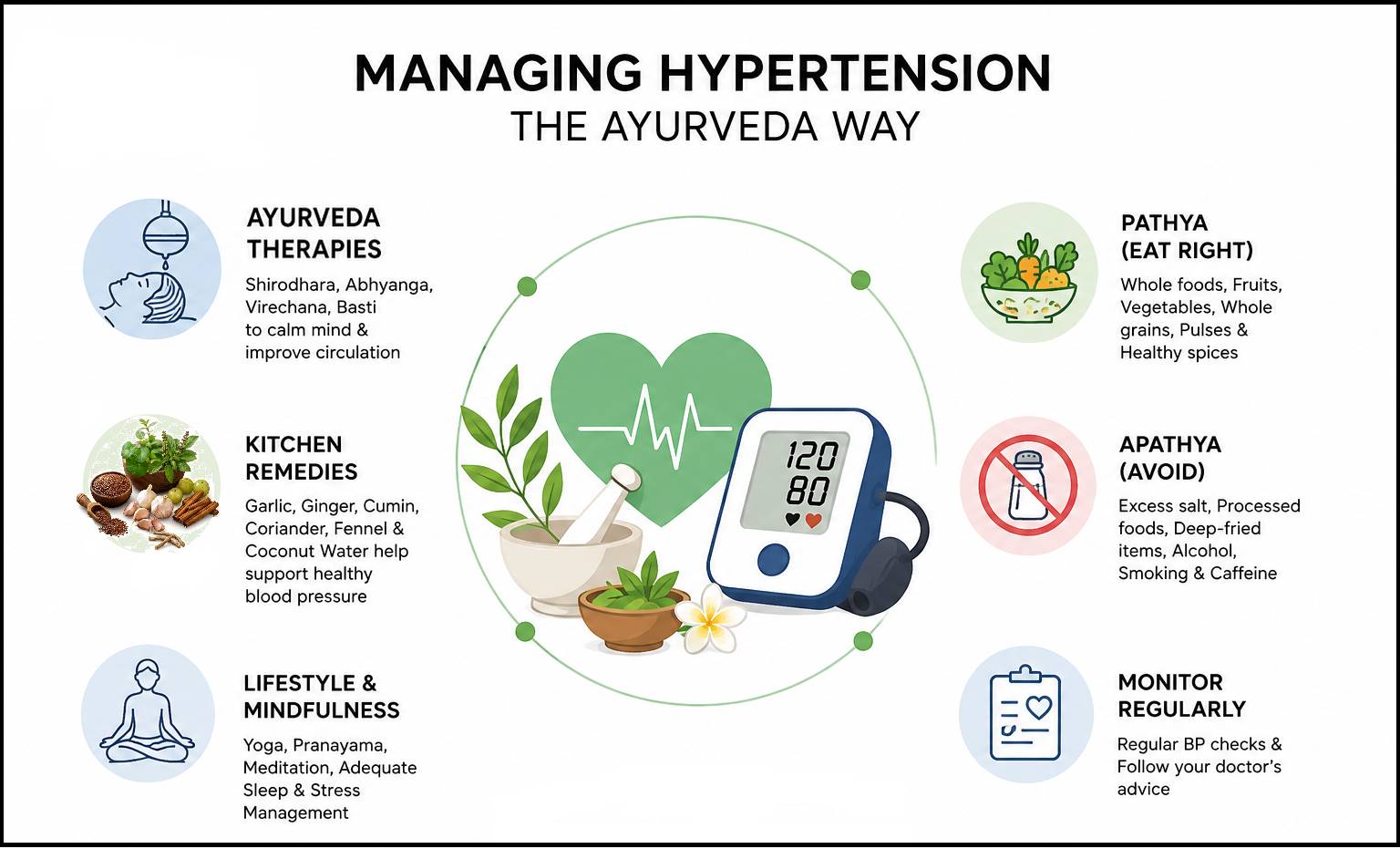
Shirodhara and Takradhara
Shirodhara involves a continuous stream of a selected liquid over the forehead, while Takradhara uses medicated buttermilk. These therapies are traditionally used for their calming and relaxing effects.
For individuals experiencing stress, disturbed sleep or mental overactivity along with elevated blood pressure, such therapies may form part of a carefully planned treatment programme.
The important point is that these treatments should not be viewed as a universal cure for hypertension. Their suitability, duration and choice of liquid need to be decided by a qualified practitioner after assessment.
Abhyanga
A warm oil massage, or Abhyanga can encourage relaxation, improve the sense of physical wellbeing and become part of a healthy self-care routine.
For someone whose daily life is dominated by stress and physical tension, incorporating appropriate relaxation practices may indirectly support healthier blood pressure management.
Virechana and Basti
Panchakarma procedures such as Virechana and Basti may be recommended in selected individuals based on Ayurveda assessment.
However, these are not routine “blood pressure cleansing” treatments. They require proper patient selection, preparation, supervision and follow-up. They should never be undertaken simply because someone has hypertension.
A responsible hypertension Ayurvedic treatment plan focuses on the individual rather than promising that one procedure will work for everyone.
Everyday Food Choices Matter
Many people search for a particular herb, spice or home remedy that can instantly lower blood pressure.
A predominantly whole-food diet, rich in vegetables, fruits, pulses, whole grains and appropriate healthy fats, can support cardiovascular health.
Foods such as green gram, barley, vegetables, leafy greens, pomegranate, citrus fruits, watermelon and other fresh fruits can be incorporated according to individual dietary needs.
Spices such as garlic, ginger, cumin, coriander, fennel, turmeric and cardamom can add flavour without relying heavily on salt.
Garlic, in particular, has been studied for its potential cardiovascular benefits. But “natural” does not automatically mean “treatment,” and consuming large amounts of any single food is not a substitute for proper hypertension care.
What About Salt?
For anyone with high blood pressure, sodium intake deserves particular attention.
Reducing processed foods, packaged snacks, instant foods, pickles, sauces and other high-sodium foods can be more useful than simply changing the type of salt used at home.
Rock salt or Saindhava Lavana is traditionally valued in Ayurveda, but from a modern cardiovascular perspective, it still contains sodium. It should therefore not be considered a “safe unlimited salt” for people with hypertension. The quantity matters more.
Habits That Support Healthy Blood Pressure
Ayurveda places great importance on the habits and foods that support health.
For someone living with hypertension, these practices may include eating regular, balanced meals, reducing excess salt, maintaining a healthy body weight, staying physically active and getting adequate sleep.
Stress management also deserves attention.
A few minutes of slow breathing, meditation, yoga or another calming practice may seem insignificant on a busy day, but consistency matters. The objective is not perfection. It is creating habits that the body can live with every day.
Sleep is another frequently neglected factor. A late-night routine, inadequate sleep, and prolonged mental stress can all make it more difficult to manage blood pressure in optimal level.
What Should You Limit?
Excessively salty and processed foods, frequent deep-fried meals, refined carbohydrates, sugary beverages, excessive alcohol and smoking are best avoided or minimised.
Caffeine intake should also be individualised, especially if you notice that coffee or other caffeinated beverages seem to affect your readings.
Replacing packaged snacks with fresh foods, cooking more meals at home, reducing added salt and walking regularly may have a far greater impact than following an extremely restrictive diet for a few weeks and then abandoning it.
Ayurveda Is About the Person, Not Just the Number
One of Ayurveda’s strengths is its emphasis on individualisation.
Two patients may both have a blood pressure reading of 150/90 mmHg, yet their health stories can be very different. One may be struggling with anxiety and poor sleep. Another may have obesity and a sedentary lifestyle. A third may already be taking medication but have difficulty maintaining it consistently.
A thoughtful Ayurvedic hypertension treatment plan considers the person’s constitution, symptoms, digestion, lifestyle, stress levels, sleep, diet, and co-existing health concerns, alongside appropriate modern medical evaluation. Never stop prescribed antihypertensive medication on your own because you have started Ayurveda. Make any medication adjustments under the supervision of the treating physician, based on repeated, reliable blood pressure readings and the overall clinical picture.
The Goal Is Long-Term Health
Managing hypertension is about building a healthier routine that you can sustain for years. Ayurveda can be a valuable part of this journey when it is practised responsibly and personalised for the individual. Ultimately, the goal is bigger than lowering one number on a monitor.
It is about protecting your heart, brain, kidneys and blood vessels—and giving yourself the best possible chance of living a healthier, more active and longer life.