Piles, or hemorrhoids, are swollen and inflamed veins in the rectum and anus that may lead to pain, bleeding, itching and discomfort. They are one of the most common anorectal conditions worldwide, affecting millions of individuals. They are categorised into internal piles (developing inside the rectum) and external piles (developing outside the anal opening). Modern lifestyle factors—like prolonged sitting, low-fiber diets, and stress—are major reasons for their rising incidence today. In Ayurveda, piles are called “Arsha.” The term ‘Arsha’ is derived from the “Ru Gatau” Dhatu with the suffix “Asun,” that signifies the pain and trouble these growths bring—like an enemy within. Arsha, in Ayurveda, is caused as a result of deranged Agni (digestive fire), which forms Ama (toxins) and vitiates the three doshas, more so Vata, Pitta, and Kapha. Piles treatment in Ayurveda by Apollo AyurVAID adopts an integrated, individual, and protocol-driven approach (Precision Ayurveda), addressing the root causes and the individual’s specific imbalances rather than merely suppressing its symptoms. A whole-person health assessment by an expert team of Ayurveda physicians is done to design a personalised treatment protocol. This includes classical Ayurveda medications and therapies, targeted anorectal care, and individualised diet and lifestyle modifications. This personalised Ayurveda treatment for piles focuses on reducing inflammation, correcting digestive imbalances, ensuring smoother bowel movements, and promoting healing of the affected veins and tissues, thereby preventing recurrence and improving quality of life. In some cases, minimally invasive Ayurveda procedures are used to support faster recovery and lasting results.
Who Can Benefit and Who May Not: Ayurveda Treatment Scope
Who Benefits from AyurVAID’s Treatment?
Patients with early-stage Piles (Grade I & II) Symptoms: Mild bleeding, itching, discomfort during bowel movements.
Chronic Piles Patients Individuals who have endured months or years of suffering, frequently encountering recurrent symptoms.
Post-Surgery Patients Patients who have undergone surgical procedures for piles and are seeking long-term management and relapse prevention.
Patients Looking to Avoid Surgery If you’re in the moderate stage of piles (Grade II or early Grade III) and wish to avoid invasive procedures.
Patients with Digestive Disorders Piles often occur with constipation, IBS, or poor digestion, and may lead to fissures.
Patients who are pregnant or in postpartum Women Hemorrhoids are common during and after pregnancy. AyurVAID provides safe, personalised and non-invasive care suitable for this group.
Who May Not Benefit from Ayurveda Treatment?
Grade IV piles with severe prolapse requiring immediate surgery
Severe bleeding causing anemia or hemodynamic instability
Complicated piles with severe infection, abscess formation, or gangrene
Piles linked to underlying cancer or inflammatory bowel disease
Thrombosed piles with severe acute symptoms requiring emergency care
Piles due to portal hypertension
Any other situation needing immediate surgical management
What Patients Can Expect from AyurVAID's Approach
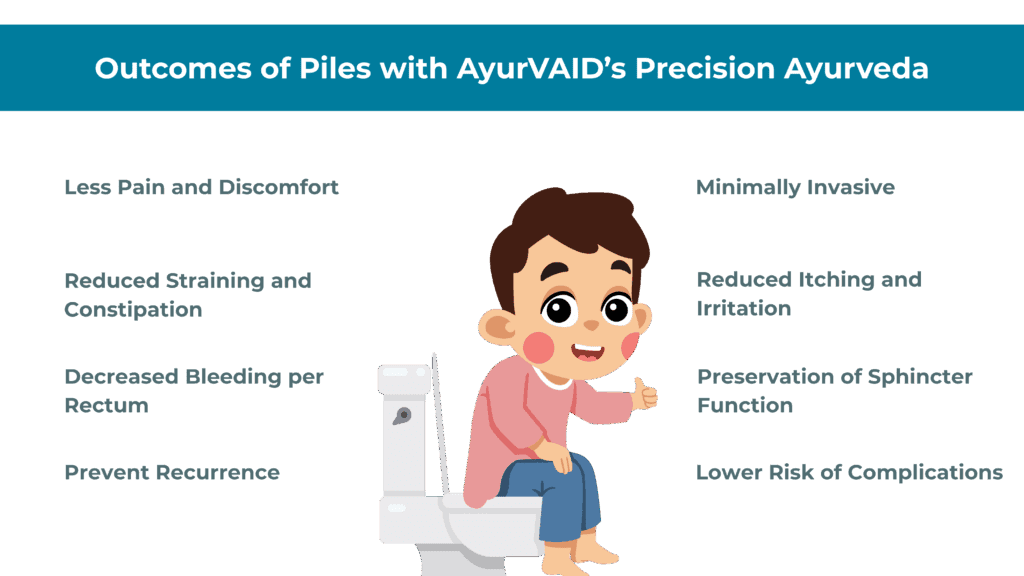
Symptomatic Relief: Decrease in pain, bleeding, itching, and prolapse within 2-3 weeks
Improved Digestion: Increased digestive fire resulting in improved bowel movements
Tissue Healing: Strengthening anal tissues to avoid recurrence
Personalised lifestyle plan: Diet and habits tailored to your body
Long-Term Prevention: Treats the root cause to avoid future flare-ups
Enhanced Quality of Life: Improved bowel habits, less discomfort, and better daily functioning
Become free from pain and bleeding due to Piles.
Relieve pain, reduce bleeding, and promote tissue regeneration using Precision Ayurveda therapies.
The various physiological events involved in the disease cause imbalances in the three doshas—mainly Pitta, Vata, and Kapha.
Both systems, when investigated holistically, put a great deal of stress on diet, lifestyle, bowel function, and mental status as the major contributors to the causation of piles.
Diet and Digestion: The Root of Agni Imbalance and Vascular Stress
In Ayurveda, eating spicy, sour, salty, or heavy-to-digest foods aggravate Pitta and Kapha doshas—leading to poor digestion (Mandagni), internal heat build up and rectal vessel congestion.
These eating patterns resonate with contemporary research, whereby low-fiber, processed food, alcohol cause constipation, straining, and venous engorgement – major causes of piles.
Even incompatible food combinations (Viruddha Ahara) as per Ayurveda are now linked to gut issues and inflammation.
Constipation and Irregular Bowel Habits
Chronic Constipation and straining raise pressure in the rectal veins, causing piles. It is due to Vata imbalance from dry, cold, and erratic diets.
Modern medicine attributes this to low fibre, fat-rich diet and inadequate bowel training. Straining during defecation raises intra-abdominal pressure, which causes the distension and prolapse of rectal veins—a direct pathophysiological rationale for piles.
Lifestyle Factors
A sedentary life, unstructured routines, and stress causes dosha imbalance, especially Vata and Kapha – these are known to slow down gut motility, reduce blood flow, and induce obesity, all of which increase the risk of piles.
Suppression of natural urges for defecation or urination result in harder stools and lead to straining.
Emotional and Hormonal Influences
In Ayurveda, it is recognised that emotions such as anger, irritability, and stress, aggravate Pitta and Vata, resulting in internal inflammation and compromised digestive function.
In females, hormonal changes, particularly during pregnancy or menstruation, may elevate pelvic venous pressure. This observation aligns with Ayurveda principles regarding Rakta Dushti and the imbalance of Apana Vata during reproductive transitions.
Systemic Conditions and Medications
Conditions like liver disease or portal hypertension cause rectal vein congestion.
Further, the intake of blood-thinning drugs may increase the risk of bleeding in piles.
Any compromised digestive/metabolic condition (Dhatukshaya or Agnimandya), can aggravate piles.
Risk Factors for Piles
Age: Increasing age results in weakening of supporting tissues of anus, thus increasing the risk for piles.
Pregnancy: Increased abdominal pressure and changes in the hormones during pregnancy predispose to piles.
Chronic Constipation: Constipation and prolonged straining have been alleged to be etiologies of the development of hemorrhoids.
Sedentary Lifestyle: Physical inactivity has been suggested as a risk factor.
Obesity: Obesity puts excessive pressure on the lower abdomen, causing veins in and around the anus to stretch and swell abnormally.
Genetics: Inheritance of piles increases risk.
Dietary Factors: Low fiber intake, too much spicy food, and poor fluid intake.
Prolonged Sitting: Constipation is caused by sitting on the toilet for a long time, which puts extra pressure on anal veins.
Heavy Lifting: Jobs that involve regular heavy lifting or straining.
Alcohol Consumption: Alcohol intake has been suggested as a risk factor.
Signs (Lakshanas) and Symptoms (Rupas) of Piles
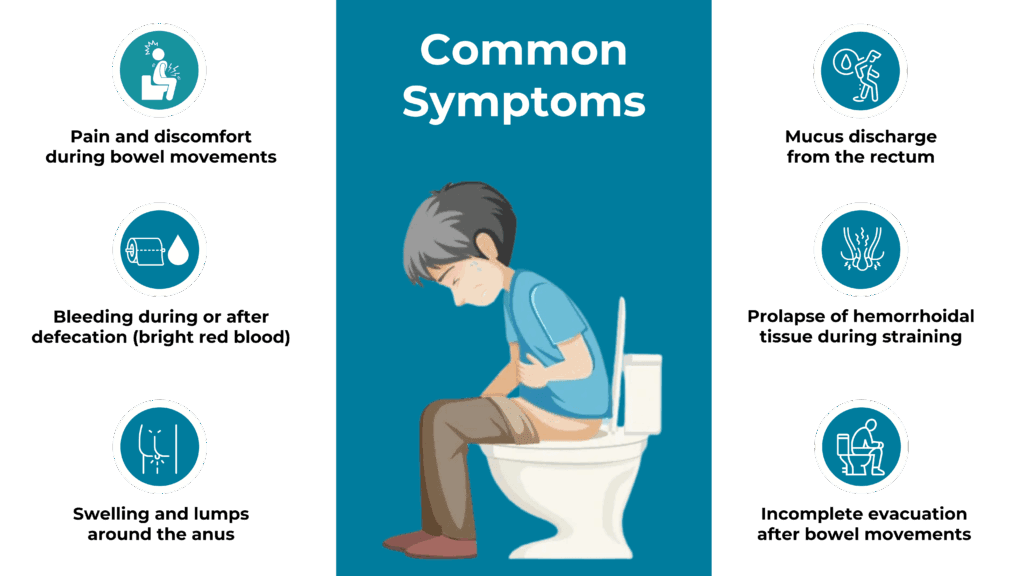
Common Symptoms:
Pain and discomfort during bowel movements
Bleeding during or after defecation (bright red blood)
Itching and irritation around the anal area
Swelling and lumps around the anus
Mucus discharge from the rectum
Incomplete evacuation after bowel movements
Prolapse of hemorrhoidal tissue during straining
Vata-Type Piles:
Severe pain and burning sensation
Hard, dry stools and constipation
Black or dark-colored hemorrhoids
Piercing or shooting pain
Pitta-Type Piles:
Bleeding with bright red blood
Burning sensation and inflammation
Fever and excessive thirst
Red or yellowish hemorrhoids
Associated with diarrhoea or loose stools
Kapha-Type Piles:
Large, soft, and painless masses
Mucus discharge and heaviness
Pale or whitish hemorrhoids
Sluggish digestion and nausea
Associated with obesity and lethargy
Say Goodbye to Repeated Piles Trouble.
Apollo AyurVAID’s root-cause approach prevents recurrence by improving digestion, reducing inflammation, and tissue healing.
The etiology of Arsha (piles) develops gradually with faulty digestion and lifestyle leading to changes in the gut function, pressurising vessels and tissues in the anal canal. The root cause lies in the disturbance of doshas, especially Vata and Pitta, along with impaired Agni (digestive fire) and toxin accumulation (Ama).
Nidana Sevana (Causative Factors Initiate the Process) Daily consumption of Ahita Ahara-Vihara—like pungent, oily, incompatible foods (Viruddha Ahara), sedentary lifestyle, suppression of natural urges, and habitual constipation—starts to derange the internal balance. These habits mainly derange Jatharagni (digestive fire).
Jatharagni Mandya → Ama Formation Faulty digestion results in incomplete metabolism and the formation of Ama (toxic metabolic products). This Ama affects the normal function of the digestive tract.
Srotodushti and Pressure Build-up Ama blocks the microchannels (Srotorodha), disrupting the regular flow of waste. This causes elevated intra-rectal pressure, venous congestion, and stagnation, leading to vascular changes.
Dysfunction of Apana Vayu Agitated Apana Vayu, which helps with downward elimination, gets blocked and flows backward, increasing pressure in the anal area and causing prolapse and problems with bowel movements.
Tridosha Vitiation and Their Local Effects Because of persistent Nidana and Srotodushti: Vata aggravation: Causes hard, dry stools, constipation, and straining at defecation, producing mechanical pressure and trauma. Pitta vitiation: Produces inflammation, bleeding, and burning pain because of its ushna and tikshna nature’s action on blood vessels. Kapha imbalance: Leads to mucosal swelling, heaviness, and development of fleshy, prolapsing masses because of its sthira and snigdha nature.
Rakta Dushti and Vessel Damage Vitiated Pitta and Vata, and Ama, result in Rakta Dushti (corruption of blood), which results in inflammation and debilitation of the hemorrhoidal veins. This causes dilatation, weakness, and bleeding piles (Raktarsha).
Involvement of Dhatu (Mamsa & Meda) Long-term involvement of Mamsa (muscle) and Meda (fat) dhatus results in overgrowth of local tissues, leading to the formation of non-bleeding piles. The mass and prolapse are the result of structural degeneration and congestion.
Chronicity and Structural Change When not corrected, recurrent inflammation and straining lead to fibrosis, irreversible vessel dilation, and prolapse, rendering the condition chronic and more difficult to correct without treatment.
AyurVAID's 4-Step Approach to Determine Root Cause and Create Individualised Treatment Plan
1. Whole-Person Health Assessment Conducted by our specially trained doctors, this assessment includes an in-depth evaluation of present and past complaints, Nidana Panchaka (causative factors), and disease pathways using clinical methods such as Ashta Sthana Pariksha (8-fold examination), Dasha Vidha Pariksha (10 factors), and Srota Pariksha along with clinical examination (proctoscopic examination). Complete medical history including associated conditions like constipation and liver disorders, or pregnancy. Advanced diagnostic procedures may include colonoscopy or sigmoidoscopy to rule out other conditions when clinically indicated.
2. Disease Tree A comprehensive disease tree, from root cause to all signs and symptoms, is derived from causative factors, imbalances in doshas, involved sub-systems, and progression.
3. Personalised Protocol-Based Care Plan Based on the disease tree and assessments, we create:
Customised treatment protocols targeting specific dosha imbalances
Phase-wise treatment approach from acute symptom management to long-term prevention
Integration of internal medicines, external therapies, and procedural interventions (ksharakarma and ksharasutra)
Personalised dietary and lifestyle modification plans
Yoga and exercise recommendations specific to piles management
4. Disease Monitoring and Outcomes Tracking The Hemorrhoid pain Severity Score and Visual Analogue Scale (VAS) are the scales used to monitor treatment success and disease progression.
The assessment parameter includes bleeding severity and frequency, prolapse classification, quality of life index, bowel movement diary, and functional assessment to gauge overall well-being. Whole-Person Health Assessment
AyurVAID's Protocol-Driven Treatment for Piles (Precision Ayurveda)
The Apollo AyurVAID’s protocol-driven approach for Ayurveda treatment for piles focuses on symptom relief, healing of damaged tissues, restoration of normal bowel function, and prevention of recurrence. Piles Treatment in Ayurveda – duration and approach are individualised based on the grade, type, and severity of piles.
Phase 1: Acute Symptom Management and Detoxification (7-10 days)
Primary Aims:
Initial relief from pain, bleeding, and inflammation
Detoxification and elimination of metabolic toxins (Ama)
Re-establishment of digestive fire and function (Agni)
Regulation of bowel movement
Treatment Regimen:
1. Internal Medicine
Digestive enhancers to enhance Agni and minimise Ama formation
Hemostatic herbs to manage bleeding in Raktarsha
Anti-inflammatory preparations to minimise swelling and pain
Mild laxatives to maintain regular soft bowel motions
2. External Therapies
Sitz baths with medicated decoctions (Avagaha Sweda)
Local application of healing ointments and pastes (Lepa)
Prakshalana (medicated enemas) for local cleansing and healing
Cold compresses for acute inflammation and pain relief
3. Dietary Modifications
Light, easily digestible foods to decrease digestive burden
High-fiber diet to avoid constipation
Adequate hydration with warm water
Avoidance of spicy, fried, and processed foods
Phase 2: Specialised Piles Treatment and Tissue Healing (10-15 days)
Key Goals: Targeted treatment of hemorrhoidal tissue Anal and rectal muscles strengthening Prevention of prolapse and recurrence Restoration of normal anatomy and function
Specialised Procedures:
Kshara Karma: Effective, para-surgical Ayurveda treatment for piles in which an alkaline medicinal cream is applied over the hemorrhoids employing a slit proctoscope, which chemically cauterises bleeding hemorrhoids and promotes natural process of sloughing, necrosis and then fibrosis which aids in healing of the haemarrhoids.
Kshara Sutra Therapy: Employing medicated thread to ligate hemorrhoids at the base, allowing it to shrink over time and eventually slough and reduce. Following which, regular therapies are done in order to facilitate early healing and reduce post-op infections and pain.
Agni Karma: Therapeutic thermal cauterisation for individual cases where bleeding is excessive
Raktamokshana: Therapeutic bloodletting if indicated
Panchakarma Therapies: Piles Treatment in Ayurveda incorporating Panchakarma treatment is beneficial during the initial to moderate grade (Grade I and II) of piles (Arsha), when the symptoms are confined to bleeding, pain, and minor prolapse. At those grades, Panchakarma treatments like Kshara Vasti (medicated enemas), Virechana (purgation), and local therapy alleviate inflammation, facilitate bowel movements, and ensure healing. In serious cases (Grade III and IV), in which there is major prolapse or complications, Panchakarma is a supportive treatment but minimally invasive surgery is required. Specific Vasti treatments (Matra Vasti) for healing and fortifying Abhyanga with special oils for enhancing circulation are also administered post kshara therapy.
Advanced Internal Medicines: Clinically effective proven medicines, Rasayana preparations for regeneration of tissues, Specific dosha predominance-based combinations
Phase 3: Strengthening and Prevention (1-3 months)
Primary Objectives:
Fulfillment of complete healing and fortification of tissues
Prevention of recurrence
Lifestyle modification
Long-term maintenance of digestive health
Treatment Protocol:
Rasayana Therapy:
Tissue-specific rejuvenative medicines
Immunomodulatory herbs to avoid infections
Digestive tonics for long-term maintenance of Agni
Lifestyle Integration:
Disciplined exercise regimen including yoga asanas
Techniques of stress management and meditation
Planned long-term diet and counselling
Follow-up and monitoring policies on a regular basis
Preventive Measures:
Bowel training and good defecation techniques
Occupational changes for risky occupations
Seasonal diet changes
Promoting regular detoxification
Measures to Maintain Treatment Outcomes and Prevent the Recurrence of Piles
Adequate toilet habits – do not read or use phones while defecating
Having healthy skin and body weight
Stress management practices
Sufficient rest and sleep
2. Dietary Suggestions:
Fiber-rich diet with adequate fruits, vegetables, and whole grains
Sufficient water intake (8-10 glasses per day)
Frequent but regular meal times with proper chewing
Consume buttermilk, yogurt, and fermented foods for digestion
Avoid gas-producing, bloat-inducing, or digestive-disturbing foods
3. Lifestyle Changes:
Exercise and physical activity regularly to enhance circulation
Adequate toilet habits – do not read or use phones while defecating
Having healthy skin and body weight
Stress management practices
Sufficient rest and sleep
4. Special Yoga Asanas and Exercises:
Pavanamuktasana (wind-relieving pose) for digestive health
Malasana (deep squat) for pelvic floor muscle strengthening
Vajrasana (diamond pose) post meals for improved digestion
Walking and swimming for overall fitness
Pelvic floor strengthening exercises
5. Home Care Practices:
Frequent sitz baths with warm water
Application of coconut oil or ghee for local comfort
Gentle anal hygiene with soft, unscented materials
Avoid rough wiping or abrasive toilet papers
6. Regular Monitoring:
Annual follow-up even after full healing
Early treatment for recurrent symptoms
Periodic consultation for lifestyle modifications
Seasonal Panchakarma for preventive detoxification
By following this comprehensive approach, AyurVAID’s protocol-driven Ayurveda treatment for piles offers lasting relief while addressing the root cause and preventing recurrence through personalised, holistic care.
Case Studies
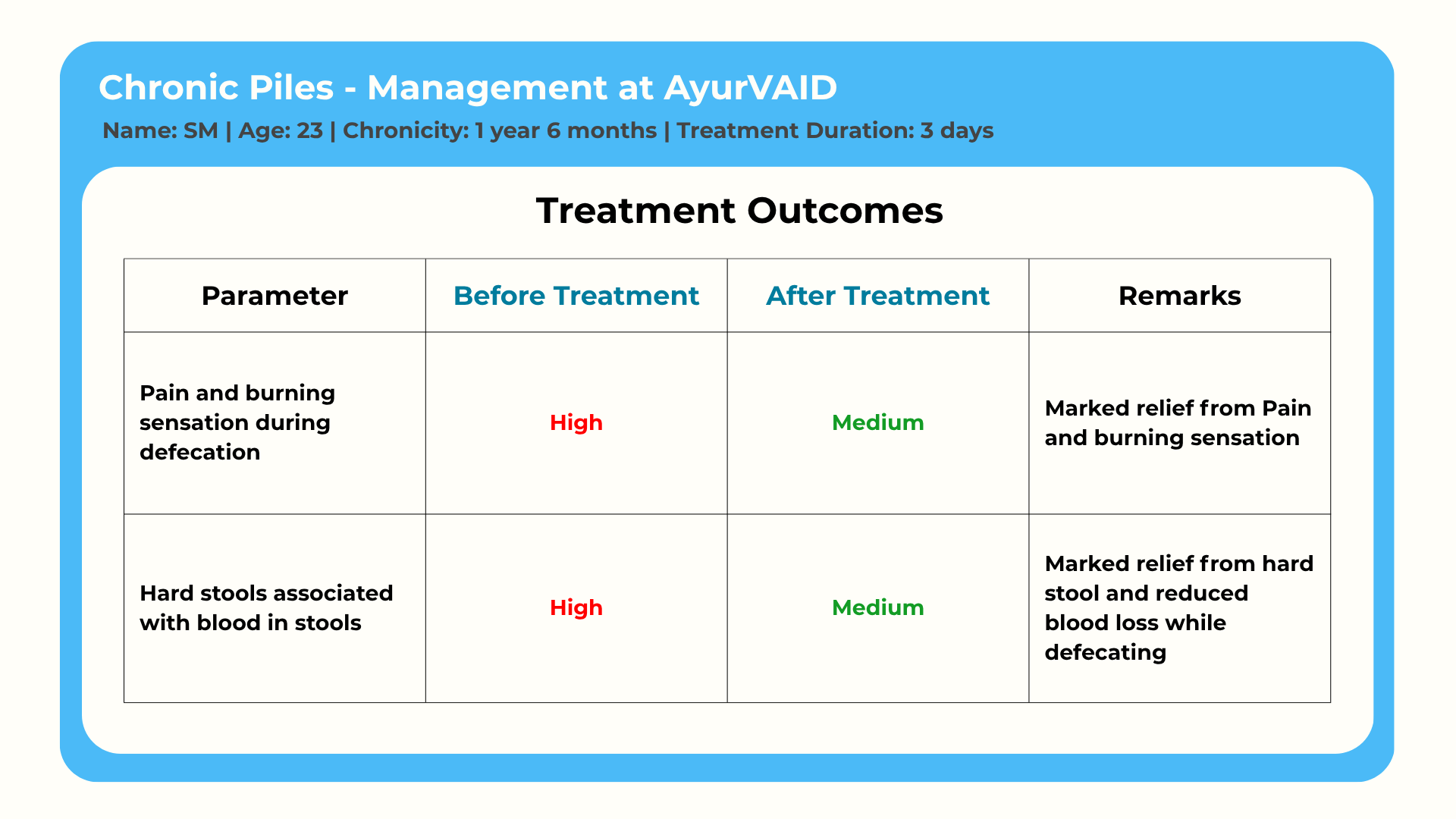
Case 1: 30-year-old female presenting with recurrent bleeding piles and constipation
Case Summary:
A 30-year-old woman presented with repeated episodes of rectal bleeding, painful defecation, constipation, and anal discomfort persisting for many years, indicative of chronic hemorrhoids. She received inpatient Ayurveda therapies such as Agni Deepana, Vatanulomana, and management of Raktapitta as the treatment protocol. Internal medications combined with local and systemic therapies like Kshara Lepa, Panchavalkala sitz bath, Abhyanga, Avagaha Sweda, Parisheka, and Virechana were administered.
After treatment, the patient complained of complete stoppage of bleeding, resolution of pain on defecation, regular and strain-free passage of stools, and considerable relief in itching and local discomfort. Appetite, energy level, and general well-being were much improved. Patient-reported outcomes became “Excellent” instead of “Poor” in all areas. She was discharged with instructions for the ingestion of a light, pitta-pacifying diet, good hydration, daily sitz baths, avoidance of straining during bowel movements, and a follow-up review in one month.
A Clinical Study on the Role of Kshara Vasti and Triphala Guggulu in Raktarsha (Bleeding Piles); 2011, Research Article: In this CCRAS study, 129 patients with bleeding piles were treated using Apamarga Kshara Basti and Triphala Guggulu. About 55 patients showed marked improvement, demonstrating that the combination can be an effective and recurrence-preventive therapy for Shonitarsha (bleeding hemorrhoids).
Efficacy of Kshara Application in the Management of Internal Haemorrhoids – A Pilot Study; 2016, Research Article: This pilot study investigated the use of plant-alkali-based Ksharakarma (using Apamarga) in internal hemorrhoids. In 33 patients, significant improvement was noted in prolapse, bleeding, and pain within 15 days—without surgical intervention, emphasizing its utility as a minimally invasive approach.
A Critical Review on Management of Arsha (Hemorrhoids) in Ayurveda; 2019, Review Article: This review article explores the theoretical and practical aspects of Arsha (hemorrhoids) from Ayurvedic texts. It discusses etiology, pathogenesis, classifications, and therapeutic modalities, including Kshara, Agni, and Shastra Karma, while reinforcing the relevance of holistic approaches in modern times.
Systematic review on efficacy of various Pratisarneeya Kshara application in Ayurveda for the management of hemorrhoids w.s.r. to size reduction of pile mass; 2024, Research Article: This 2024 systematic review analyzes 18 clinical studies exploring the effectiveness of various Pratisarneeya Kshara types for reducing pile mass in internal hemorrhoids. Ksharas like Apamarga, Arka, Kutaja, and Saptacchada were found to induce coagulation, necrosis, and fibrosis, leading to sloughing and healing of pile tissue. Most formulations achieved significant size reduction within 14–30 days. Apamarga and Saptacchada Kshara showed 100% efficacy, while complications such as burning and discharge were mild and manageable. The study affirms Kshara therapy as a cost-effective, minimally invasive alternative to surgery with favorable outcomes.
Hear from our patients!
I had a very good experience with the treatment I took for piles. Initially, I was uncertain whether to choose laser treatment or Ayurveda, but the pre-surgery consultation gave me hope to proceed with Ayurveda. They take complete care of the patient by regular follow-ups. The hospital staff and front desk personnel were very kind and helpful. The front desk also handled insurance, ensuring a positive overall experience. I would heartily endorse Apollo AyurVAID. Mr. SM , 34 years
I can't thank you enough for the special, excellent care this hospital has provided and for the unique gift you have for your patients. I would like to extend my gratitude to fellow doctors and a few others for taking very good care of me and relieving me from pain. I am feeling 100% confident, and I am recovering to my full life again. Mr. AD, 24 years
Chronic constipation and straining during bowel movements are considered the foremost causes of piles. Lifestyle factors such as prolonged sitting (drivers), heavy lifting, consuming dry, spicy, processed food, and improper meal timing also exacerbate the situation.
How long will piles last?
Small hemorrhoids may resolve in a few days or weeks with good home care, diet, and lifestyle modification. More extensive hemorrhoids may take weeks to get better, and these may require medical treatment. Piles can become chronic without proper treatment and lifestyle changes.
What is the fastest treatment for piles?
Over-the-counter creams.
What is the best relief for piles?
Piles Treatment in Ayurveda such as ksharakarma provide immediate relief. Usually, the most effective option involves a combination of dietary changes, adequate hydration, topical treatments, and sitz baths for milder instances. Ayurveda treatment for piles with some lifestyle management is beneficial in the more severe cases.
What are the early signs and symptoms of piles?
Early signs include rectal bleeding, particularly during bowel movements, anal itching, discomfort while sitting or during bowel movements, and small lumps near the anus that are painful.
When is surgery necessary for piles?
When home remedies for piles don’t relieve the symptoms, when hemorrhoids are large, severely symptomatic, or don't respond to other treatments, surgery becomes necessary. Complications like persistent bleeding or thrombosis may also necessitate surgical intervention.
Are piles more common during pregnancy?
Pregnancy has an impact on the development of hemorrhoids. It puts additional pressure on the pelvis which leads to hormonal changes. These slow down the rate of bowel movement along with other factors, making it even more likely for piles to develop in an expectant mother.
Do hormonal changes during menopause contribute to piles?
Menopause hormonal variations may even slow down digestion, manifest into constipation, and raise the chances of hemorrhoid formation. This hormone change is associated with age-related weakness of supportive tissue, increasing the susceptibility of menopausal women further to piles.
What are the long-term effects of untreated piles?
If left untreated, piles will give rise to serious complications like chronic bleeding with anemia, painful thrombosed hemorrhoids that might need surgery, etc. The condition may also progress to a situation in which the rectal lining may slip out of the anus, causing intense pain and requiring medical intervention.
How to remove piles naturally?
Mild cases of piles can be managed naturally by increasing dietary fiber, staying hydrated, avoiding straining during bowel movements, taking warm sitz baths, using aloe vera or coconut oil topically, and maintaining regular exercise. If symptoms persist, consult a doctor.
Can I eat chicken in hemorrhoids?
Yes, lean chicken can be eaten in moderation. However, avoid fried or spicy chicken as it may irritate the digestive tract and worsen symptoms. Stick to grilled, steamed, or boiled preparations.
What is high risk of hemorrhoids?
Factors that increase the risk of hemorrhoids include chronic constipation or diarrhoea, prolonged sitting (especially on the toilet), pregnancy, obesity, low-fiber diet, heavy lifting, and aging. Addressing these risk factors can help prevent recurrence.
Is rice good for hemorrhoids?
Brown rice is a good choice as it contains fiber which helps prevent constipation. White rice, being low in fiber, may not be as beneficial. Incorporate whole grains into your diet for better digestive health.
Which fruit is best for piles?
Fruits rich in fiber and water are best for piles. Bananas, apples (with skin), pears, papaya, and berries help soften stool and promote easy bowel movements, reducing strain during defecation.
What is the best treatment for bad haemorrhoids?
The best treatment for haemorrhoids is Ksharasutra, providing long-term relief with minimal recurrence. Along with herbal medicines and dietary changes, procedures like Kshara Karma and Agnikarma help shrink pile masses and prevent complications.
What are the worst symptoms of haemorrhoids?
Symptoms of haemorrhoids include severe pain in the anus, too much bleeding, thrombosis (a blood clot in the haemorrhoids), prolapse (the haemorrhoids moving outward the anus), and strong itching or burning.
References
Y., R. (2022). Conceptual view on Arsha and its Management through Ayurveda Prospective. International Journal of Indian Medicine.
Ram, B et al. (2023). Multimodal Treatment Approaches for Arsha: A Critical Review. August – September 2023.
Sharma, S et al. (2023). The Management of Second-Degree Internal Haemorrhoids with Apamarga Pratisaraneeya Tikshna Kshara. AYUSHDHARA.
Dissanayake, D et al. (2019). Clinical Study to Evaluate and Compare the Efficacy of Two Ayurvedic Treatment Regimens Including Cyathula Prostrata and Achyranthes Aspera in Managing Bleeding Piles. International Journal of Ayurveda and Pharma Research.
Mehra, R et al. (2011). A clinical study on the role of Ksara Vasti and Triphala Guggulu in Raktarsha (Bleeding piles). Ayu, 32, 192–195.
Parés, D et al. (2021). Influence of Bowel Habit and Hormonal Changes on the Development of Hemorrhoidal Disease During Pregnancy and the Postdelivery Period: A Prospective Cohort Study. Diseases of the Colon & Rectum, 64, 724–734.
Ali, Z H et al. (2011). Effect of Conservative Measures in Improving Hemorrhoid Stages and Relieving Symptoms among Patients with Hemorrhoid.
Rao, S, Lakshmi, T. (2014). Natural Remedies for Haemorrhoids and Bleeding Piles – An update. Research Journal of Pharmacy and Technology, 7, 253–254.
Dr. Nikhil S, Dr. Geetha B. Markande, & Dr. Prashanth Jain. (2020). Understanding the Etiology of Arshas – An Observational Study. Journal of Ayurveda and Integrated Medical Sciences, 5(04), 107–111.
Raj Kishor Shah, Binod Kumar Singh, Ram Adhar Yadav, Prashant Kumar Singh, Shiva Mangal Prasad. (2019). A Critical Review on Management of Arsha (Hemorrhoids) In Ayurveda. AYUSHDHARA, 6(6), 2468–2472.
Did the information meet your needs?
As we work hard to improve our services, your feedback is important to us. Please take a moment to help us serve you better.
The information provided in this blog is for general informational purposes only and is not intended as a substitute for professional medical advice, diagnosis, or treatment. Always seek the advice of your physician, Ayurvedic practitioner, or other qualified healthcare provider with any questions you may have regarding a medical condition or treatment.
Stay Connected to Health and Wellness
Subscribe to our hospital newsletter for the latest health tips, updates on services, patient stories, and community events. Sign up today and stay informed!
Content Details
We update our articles as new material becomes available, and our specialists keep a close eye on the health and wellness industry.