For many people, Irritable Bowel Syndrome (IBS) is thought of as a gut problem alone – bloating, cramps, urgency, constipation, or loose stools. But in clinical practice, we often see that the burden of IBS goes far beyond the abdomen.
This is why the message IBS symptoms beyond stomach is so important. IBS is not just about digestion; it can affect energy, sleep, mood, concentration, pain perception, and overall quality of life. Many patients silently struggle with these hidden symptoms of IBS for years before they are recognised as part of the same condition.
During this IBS Awareness Month (April), the focus on #MoreThanAStomachache is timely and necessary. For someone with IBS, the most distressing symptoms may not always be visible on the outside.
The gut–brain link: why IBS affects the whole person
The gut brain connection Ayurveda and modern science both acknowledge. The gut and brain are in constant communication through the enteric nervous system, the vagus nerve, stress pathways, and inflammatory mediators.
When stress rises, the brain can influence gut motility, sensitivity, and secretion. At the same time, gut dysfunction can influence mood, cognition, and emotional balance. This is why many patients with IBS experience not only physical discomfort but also IBS anxiety, low mood, and a sense of being overwhelmed.
In Ayurveda, this interplay is understood through the concepts of Agni, Vata, Ama, and Grahani. When digestive fire becomes weak, digestion becomes incomplete. Over time, these disruptions can disturb both the body and the mind.
The hidden symptoms of IBS that are often missed
Many patients report that their bowel symptoms are only part of the problem. The more difficult question revolves around what else might affect the system. The following list includes symptoms of IBS that often go unnoticed:
- IBS fatigue
Tiredness, which is among the most frequent yet overlooked symptoms. The patient may complain of exhaustion despite getting proper sleep, which results from an inability to digest food properly and absorb nutrients.
- IBS brain fog
Irritable bowel syndrome may manifest itself as a reduced ability to concentrate or think quickly, as well as other forms of “brain fog”. This condition may impair performance both in studies and in the work environment.
- IBS anxiety
Fear of experiencing IBS symptoms in public places or while travelling is often accompanied by permanent stress. IBS anxiety may become a cycle in itself — stress worsens gut symptoms, and gut symptoms increase stress.
- IBS and mental health
The link between IBS and mental health is strong and clinically important. Many patients experience low mood, irritability, emotional exhaustion, or a sense of isolation. This is one reason why IBS care must extend beyond symptom suppression.
- Disturbed sleep
Stomach aches, urges, and increased nervousness may cause poor-quality sleep. With prolonged periods of insomnia, the person experiences increased pain, fatigue, and stress.
- Joint pain
Muscle and joint pain may be experienced by some people. As per Ayurveda, this condition is an indication of internal Vata imbalance and the effect of Ama on the entire body.
- Sensitive bladder
Urination may happen more often because of similar nerves connecting both organs.
- Headaches and migraines
Chronic gut stress can present outside the digestive tract, including recurring headaches or migraines.
- Skin flare-ups
The gut and skin are closely linked. When internal balance is disturbed, some people notice acne, eczema, or other inflammatory skin changes.
- Sexual health issues
Fatigue, pain, stress, and problems with psychological state have an impact on sexuality, but these problems are ignored due to the focus on diarrhoea, constipation, and cramps.
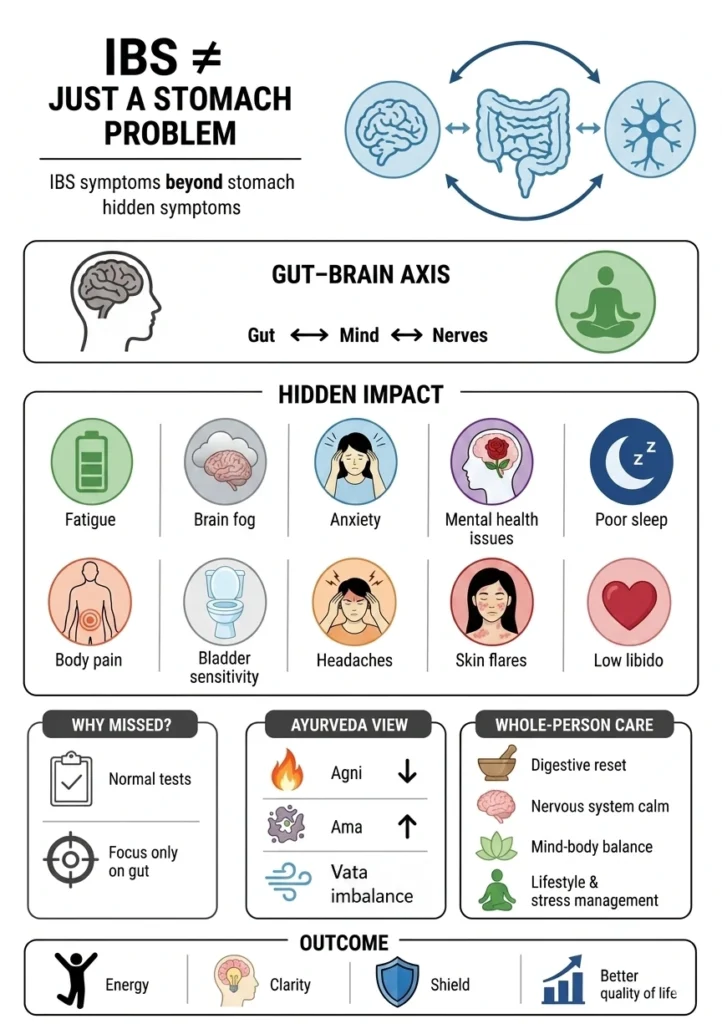

Why are these symptoms often overlooked?
An Ayurveda perspective on IBS
How AyurVAID approaches IBS
At AyurVAID, the focus is on precision, root-cause care, and whole-person healing. We do not look at IBS as a single symptom to be controlled. We look at the person in full — gut, mind, sleep, energy, and emotional balance.
Our approach may include:
- Restoring Agni through Deepana and Pachana
- Reducing Ama through personalized dietary and therapeutic guidance
- Supporting gut resilience with suitable food protocols
- Calming Vata through therapies such as Shirodhara and Vasti, when indicated
- Addressing IBS anxiety and stress patterns through Satwavajaya Chikitsa, counseling, and pranayama
- Supporting recovery from IBS fatigue and IBS brain fog by improving digestion, absorption, and systemic balance
The goal is not just fewer bowel complaints. The goal is better sleep, steadier energy, clearer thinking, and improved quality of life.
A final word
If you are living with IBS, please know that your symptoms are real. And if you have been told that everything is “normal” simply because a test came back normal, your experience still matters.
IBS is not just a stomach problem. It is a condition that can affect the whole person — body, mind, and daily life. Recognising IBS symptoms beyond stomach, understanding the hidden symptoms of IBS, and addressing IBS and mental health together can open the door to more meaningful healing.
A thoughtful, individualised approach rooted in both modern understanding and the gut brain connection Ayurveda recognises may offer the most lasting relief.
References
- Sharma S. A Case Report on the Treatment of Irritable Bowel Syndrome (IBS) in Ayurveda. International Journal for Multidisciplinary Research (IJFMR). [Date not fully resolved in excerpt, but references internal studies up to 2021].
- Arya JC, Rawat P, Bohra M. AN AYURVEDIC REVIEW OF GRAHANI ROGA W.S.R IRRITABLE BOWEL SYNDROME (IBS). World Journal of Pharmaceutical and Medical Research. 2022;8(3):214-222.
- Singhal P. Ayurvedic Perspective of Irritable Bowel Syndrome :A Didactic Review. Annals of Ayurvedic Medicine (AAM). 2016;5(1-2):24-32.
- Patankar B. Ayurveda treatment in Irritable Bowel Syndrome. Journal of Traditional Medicine & Clinical Naturopathy. 2023;12(4):377.
- Jeitler M, Wottke T, Schumann D, Puerto Valencia LM, Michalsen A, Steckhan N, et al. Ayurvedic vs. Conventional Nutritional Therapy Including Low-FODMAP Diet for Patients With Irritable Bowel Syndrome—A Randomized Controlled Trial. Frontiers in Medicine (Lausanne). 2021 Sep 6;8:622029.