Introduction
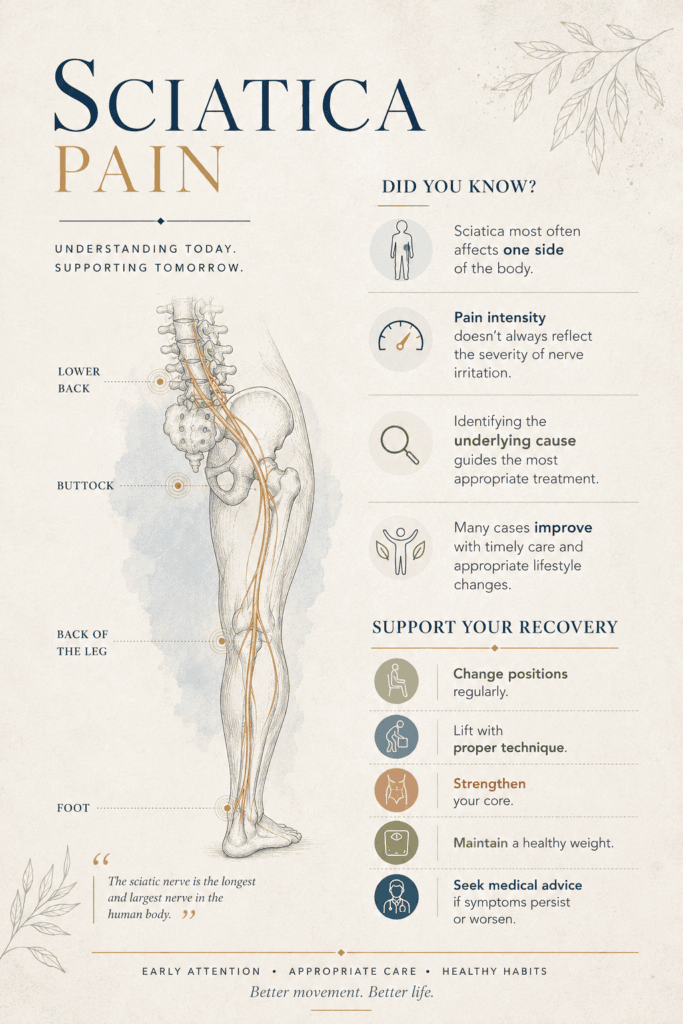
Pain that begins in the lower back and travels down the buttock and leg is often caused by irritation of the sciatic nerve, the longest nerve in the body. Health care providers usually define sciatica pain as occurring in two forms.
- True sciatica: the sciatic nerve or one of its nerve roots is directly involved.
- Sciatica-like conditions: the source of the pain is actually a nearby muscle or another nerve rather than the sciatic nerve itself.
Sciatica doesn’t have a single cause, even though the symptoms often feel similar. That’s why the diagnosis isn’t based on pain alone. A herniated disc is one of the most common reasons, but spinal stenosis, age-related wear of the spine, previous injuries, or a tight piriformis muscle can also irritate the sciatic nerve and produce the same pattern of pain.
In Ayurveda, sciatica pain is known as Gridhrasi. It is mainly related to an aggravated Vata dosha, which governs movement and nerve activity. The most effective sciatica pain treatment depends on what is irritating the nerve. If you can identify the cause of the problem, it helps to decide the course of treatment – whether it be lifestyle modifications, physiotherapy, medicines, Ayurveda therapies or a combination of all of them.
Causes
Sciatica occurs when the sciatic nerve or its constituent nerve roots are compressed or inflamed. A prevalent cause is a herniated disc. The centre of a spinal disc protrudes through its annulus, exerting pressure on an adjacent nerve. Other potential causes are the following:
- Spinal stenosis (constriction of the spinal canal)
- Degenerative disc disorder
- Osteophytes
- Pregnancy
- Lower back injury
- Contraction of the piriformis muscle
- Cysts or tumours, but these are rare
Sciatica is more likely to occur in those who have certain medical conditions.
- Changes in the spine that are caused by age
- Prolonged sitting
- Repeated heavy lifting
- Weak core muscles
- Obesity
- Diabetes mellitus
- Tobacco use
- Bad posture while working out
Not every person with these risk factors develops sciatica, but they can increase the likelihood of nerve irritation.
Symptoms
Sciatica usually affects one side of the body, although both sides can be involved in rare cases. The symptoms vary depending on the amount of pressure placed on the nerve.
- Pain starting in the low back or buttock and radiating down the leg
- Shooting or stabbing pain
- Pins & needles or tingling sensation
- Numbness in the leg, foot, or toe
- Weakness in the leg affected
- Pain that is worse when you sit, cough or sneeze
- Walking with a limp or taking short, cautious steps because of the pain
Some experience mild discomfort, while others experience severe pain that interferes with everyday activities. During a flare-up, it can be difficult to walk, stand or climb stairs.
The diagnosis of sciatica is usually made based on the patient’s symptoms and the findings of the physical examination. As part of the assessment, the physician may ask the patient to walk, bend forward, or raise one leg while lying on the examination table. These movements help determine whether they reproduce the patient’s usual symptoms. The Straight Leg Raise Test is routinely used to assess for irritation of the sciatic nerve. They also assess the strength of the back, legs, and other muscles, as well as reflexes, sensation, and movement in the back and legs. No single part of these tests individually diagnoses sciatica, but together they help to create an overall picture and to determine whether other tests are needed. Imaging tests are usually recommended if symptoms are severe, do not improve after several weeks, or are accompanied by significant weakness. It may include an MRI scan, a CT scan, an X-ray, and Nerve conduction studies or electromyography (EMG), when required.
Ayurveda Perspective
Ayurveda describes sciatica as Gridhrasi, one of the disorders caused by aggravated Vata dosha. When Vata becomes aggravated, pain, stiffness, tingling, and restricted movement may develop. Some of the factors that might aggravate Vata are:
- Excessive use of dry, cold or light meals
- Irregular eating schedules
- Sleep deprivation
- Too much travelling
- Hard physical labour
- Bad posture when sitting
- Suppressing natural impulses
Ayurveda also describes Dhatu Kshaya (depletion of bodily tissues) and Margavarodha (obstruction of body channels) as a cause of the Gridhrasi. Because the weak supporting tissues surrounding the lower back make the spine more sensitive to strain, clogged channels can impair the regular passage of Vata. Ayurveda doesn’t treat all patients the same but takes into account the person’s physical constitution, digestive strength, intensity of symptoms and related dosha imbalance before designing treatment.
Ayurveda Treatment
Ayurveda approaches sciatica pain treatment by addressing both the symptoms and the underlying Vata imbalance. Treatment may consist of medicines, external treatments and Panchakarma procedures. The treatment is different for each person. Some common procedures in Ayurveda are:
- Abhyanga: Massage with warm medicinal oils relaxes muscles, improves blood circulation and reduces stiffness.
- Swedana: Herbal steam therapy is commonly administered after massage to relax muscular tension.
- Kati Basti: Warm medicinal oil is held for a particular time period on the lower back to facilitate the afflicted area.
- Vasti: Medicated enemas are one of the main therapies for Vata issues and are often advised in chronic cases of Gridhrasi.
- Pichu or Parisheka: Local application or pouring of medicinal oils over the afflicted area
An Ayurveda physician may also prescribe herbal formulations that are Deepana and Pachana (to improve digestion) and Vata-Kapha pacifying, medicated ghee or medicated oils, depending on the individual’s situation, to support nerve health and minimise inflammation. In a few selected individuals, surgical procedures like Sira Vedhana (bloodletting by puncturing), Agni Karma (cauterization therapy), Viddha Karma (puncturing), Pracchana Karma (bloodletting by multiple incisions), and Raktamokshana (bloodletting) might be indicated in the overall therapy plan. Such therapies should always be done under the guidance of a certified Ayurveda practitioner.
Lifestyle and Diet Recommendations
Daily habits play an important role in recovery. Small adjustments might ease the strain on the lower back and avoid repeated attacks. If you are sitting for lengthy hours, take brief rests every 30 to 45 minutes. Get up and stretch or walk around for a few minutes to help ease the stiffness. Generally, a medium-firm mattress will give you greater spinal support than one that is overly soft. Maintaining good posture when sitting, driving and lifting goods also helps limit undue pressure on the lower back. In Ayurveda, warm, freshly cooked foods are ideal to balance Vata.
Some of the recommended common foods are:
- Hot vegetable soups
- Moong dal
- Veggies cooked
- Whole grains like red rice and wheat
- Sesame oil, ghee in limited quantity
- Warm milk
Foods that aggravate Vata include:
- Chilled drinks
- Dried Packaged Snacks
- Too hot, bitter or astringent cuisine
- Deep-fried and processed meals
Adequate sleep, regular meal timings, and gentle physical activity are equally important during recovery.
Home Remedies
Simple self-care often helps ease mild symptoms and may also provide immediate relief for sciatica pain, though it works best when used alongside advice from healthcare providers. At first, a cold pack can be helpful, especially if the area is quite painful or swollen. After a day or two, warm compresses or a heating pad tend to feel more comforting, as the heat helps relax tight muscles in the buttocks and lower back. Other simple steps might also be beneficial:
- Gentle stretching exercises recommended by a healthcare professional
- Short walks to help avoid stiffness in the legs and back If it feels soothing
- Consider massaging the lower back with warm sesame oil.
- Avoid prolonged bed rest, since it may sometimes worsen stiffness.
- Use a chair that supports the lower back
- Avoid heavy lifting and sudden twisting movements
For many patients, managing discomfort at home is enough while inflammation decreases. But if sciatic nerve pain continues, it’s time to see a doctor rather than waiting for it to resolve on its own.
When to Seek the Doctors
While many cases of sciatica improve with time and appropriate care, some symptoms should never be ignored. It is a good idea to arrange a medical appointment if the pain lasts for more than a couple of weeks or if you notice worsening numbness or tingling, muscle weakness in the leg or foot, difficulty walking, or symptoms such as an unexplained fever, weight loss, or pain that is particularly severe at night. Seek immediate care if you lose control of your bowel or bladder, develop numbness around the groin or inner thighs, or experience severe weakness in one or both legs. Although these complications are uncommon, they can be a sign of significant nerve compression and should be assessed without delay.
Conclusion
Sciatica can be painful and, at times, frustrating to live with. The good news is that most people improve when the condition is recognised early and treated appropriately. In Ayurveda, the treatment for sciatica is tailored to the individual. It brings together therapies, dietary advice, and lifestyle changes with the aim of restoring Vata balance rather than simply easing the pain. With timely care, many people experience better pain relief, improved mobility, and fewer flare-ups over time. Ultimately, the goal is not just to reduce symptoms but to help people get back to everyday life with greater comfort and confidence.