Asthma affects about 339 million people around the world. And for most people, the difficult part isn’t just getting diagnosed. It’s managing it every single day. That’s really why World Asthma Day matters.
In India alone, over 30 million people live with asthma. For many of them, it’s not just about taking treatment. It’s also about access, cost, and just being able to stay consistent with it.
World Asthma Day is observed every year on the first Tuesday of May. It’s a way to talk more openly about asthma and help people really understand what living with it involves, especially the small daily adjustments that often go unnoticed. The theme for World Asthma Day 2026 is “Access to anti-inflammatory inhalers for everyone with asthma, still an urgent need.” It reflects something very real. Many people still don’t get steady access to the inhalers and medicines they rely on, even though these can make a real difference and, in some cases, be life-saving. And yes, breathing should not be tied to what someone can afford.
At the same time, treatment is not the only part of the story. Along with medical care, many people also look at natural asthma relief remedies to understand how lifestyle and triggers play a role. Ayurveda describes asthma as ‘Tamaka Shwasa’, which is linked to an imbalance of Prana Vata and Kapha dosha. In this blog, we will explore how to prevent asthma attacks with Precision Ayurveda while complementing ongoing treatment so both approaches can work together for better outcomes.
Early Signs of Asthma to Watch Out For
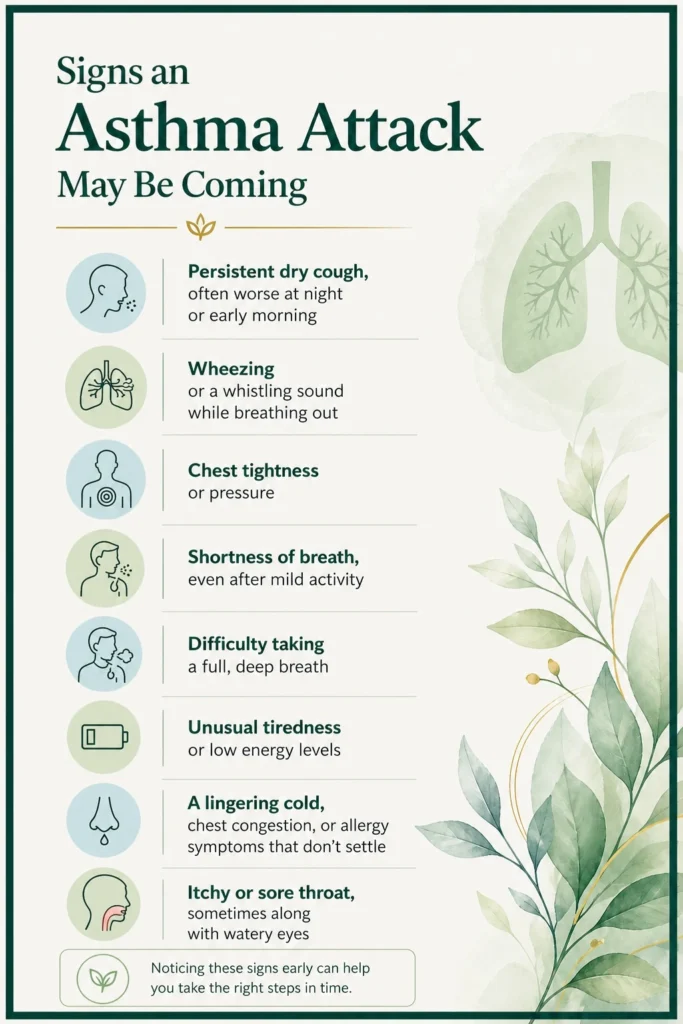
Asthma does not always start in an obvious way. These signs can show up quietly, sometimes well before an asthma episode becomes obvious:
- A cough that just doesn’t seem to go away. It is often dry, sometimes irritating, and tends to get worse at night or early in the morning when everything else is quiet.
- A mild whistling or wheezing sound when breathing out. It may start subtly and come and go, especially during activity, cold air exposure, or at night.
- There is a sense of tightness in the chest. Not always pain, but more like pressure or a feeling that breathing is restricted.
- Getting out of breath more easily than usual. Even small things like climbing a few steps or walking quickly can leave you feeling winded.
- At times, it may feel harder to take a deep, satisfying breath. You try, but it does not feel complete.
- Feeling unusually tired. This is often because breathing is slightly laboured, especially at night, which can disturb your sleep without you fully realising it.
- What feels like a lingering cold or mild allergy that never quite clears. The congestion seems to settle more in the chest than usual.
- A scratchy or irritated throat may occur, sometimes accompanied by watery eyes, especially if allergies are part of the trigger.
What Symptoms Usually Feel Like
- Breathlessness or wheezing, regardless of the intensity of physical activity
- A persistent wheeze, particularly during the evening and while lying down
- A sensation of abdominal pressure or constriction
- Frequently occurring coughing episodes, particularly in a cold climate or following physical activity

How to Prevent Asthma Attacks Naturally
Triggers like dust, smoke, pollen, and even stress can lead to asthma attacks. That’s the frustrating part. Many triggers are right in front of us. The good news, though, is you can reduce quite a few of them just by changing small daily habits. Ayurveda calls this Nidana parivarjana. Basically, avoiding what worsens the condition. Here are some simple things that help
- Keep your surroundings dust-free. Sometimes, just cleaning a little more often makes a difference
- Open windows when the air outside feels better. Not all day, just when it actually feels cleaner.
- Avoid smoking indoors. Even incense or strong fragrances can irritate
- Stay physically active. On days when the air quality is poor, skip outdoor workouts
- Add tulsi or black pepper to your diet. Nothing complicated, just small additions
- Apply AyurVAID’s Karpooradi Thailam on the chest in the early stages of congestion.
- Cut down on processed and cold foods, especially if you notice more mucus after.
- Try breathing practices or even sitting quietly for a few minutes. Stress does show up in breathing
In India, some triggers are hard to ignore. Air pollution. Construction dust. Crop burning smoke. Even indoor cooking smoke in some homes. Dust mites, too. You may not avoid all of this, but once you notice patterns, it becomes easier to manage. These steps won’t replace your inhaler. But they can reduce how often things flare up.
Can Ayurveda Offer Natural Asthma Relief?
A common question is whether Ayurveda can replace inhalers. It cannot, especially in urgent situations. But Ayurvedic treatment for asthma focuses on long-term support rather than immediate relief.
- Nidana Parivarjana: Eliminate all causative and triggering factors to prevent aggravation of Doshas and worsening of the condition.
- Shodhana (Purification Therapy): Poorvakarma and Panchakarma therapies like Snehana (Oil therapy), Swedana (Steam therapy), Vamana (Induced emesis) to expel vitiated Kapha, Dhoomapana (Herbal smoke therapy) post-Vamana to remove residual toxins, and Virechana (Purgation) to clear lower channels and balance Doshas.
- Shamana (Palliative Therapy): Used in physically weaker individuals, children, and the elderly. It includes Agnideepana (digestive stimulants), Kapha-Vata-balancing herbs, and Pranavaha Srotas-purifying regimens.
- Brimhana & Rasayana Chikitsa: Restore strength and immunity, especially in chronic or recurrent cases. These therapies rejuvenate tissues and help prevent future attacks.
- Asthma lifestyle changes include Aushadhis (formulations) designed to support lung function and reduce inflammation; Pranayama (yogic breathing) that improves lung capacity and relaxes the nervous system; and Ahara (Dietary adjustments) that include spices such as pepper, ginger, and cumin. To prevent Dosha aggravation, it is essential to eliminate triggers such as Ruksha Bhojana (consuming dry and rough food), Sheetavata Sevana (exposure to cold wind), Bharavahana (carrying heavy loads), Ativyayama (excessive physical exertion), and Vegadharana (suppressing natural urges).
You might hear terms like panchakarma for asthma, vamana therapy asthma, or virechana for asthma and wonder if they are something you should try right away. The truth is, these treatments are not the same for everyone. They are quite specific, and in Ayurveda, they are only suggested when the person’s condition, strength, and overall health actually call for them. That is why they are always done under proper medical guidance, not as a general remedy.
At Apollo AyurVAID, the approach is a lot more focused on the root cause. These treatments are not picked randomly. Your body type, your symptoms, how long you have had asthma, your digestion, your daily routine – all of this is taken into account before anything is advised. The idea is to bring together Precision Ayurveda understanding with modern medical insight in a way that feels safe and practical.
If you have asthma, especially if it has been long-term, Ayurveda can help you manage it better. It is not meant to replace ongoing treatment. Instead, it works alongside them. Whether it is therapies or natural remedies for asthma, everything is chosen carefully so it fits into your current care plan and helps you feel more stable over time.
Pranayama for Asthma
Agni Karma for Heel Pain — How It Works
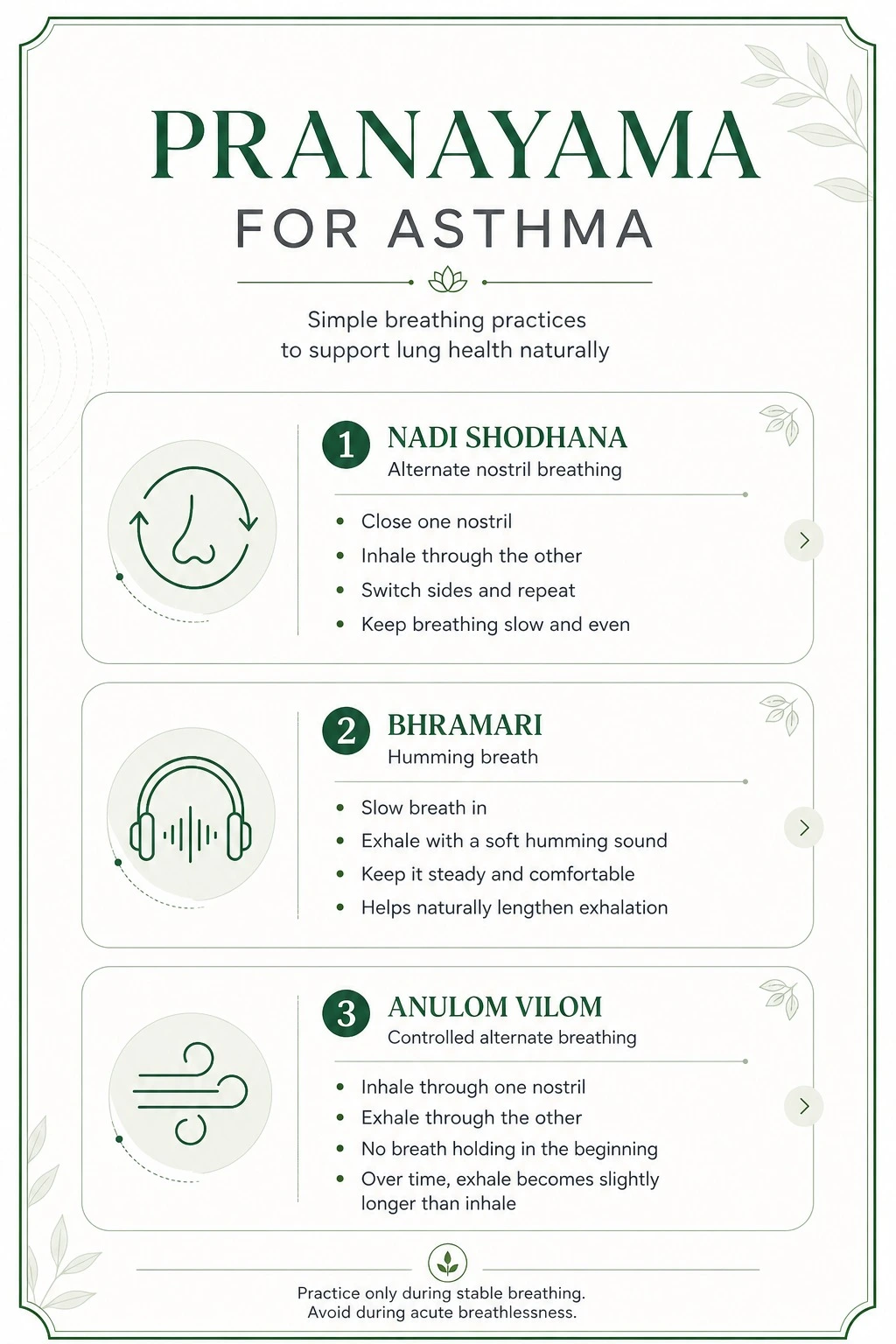
Nadi Shodhana:
Sit in a comfortable position. Close one nostril gently and breathe in through the other. Then breathe out through the opposite nostril. After a few rounds, switch sides and continue the same pattern.
Bhramari
Take a slow breath in. While breathing out, produce a soft humming sound. The sound is steady and long, which naturally helps lengthen the exhalation and relax the chest.
Anulom Vilom
Breathe in through one nostril. Let the breath go out through the other. At the beginning, there is no need to hold your breath. Just keep it simple and steady. With practice, the exhale is kept a little longer than the inhale. This develops gradually over time in a way that feels comfortable and controlled.
These breathing practices are generally done when symptoms are stable and become part of a daily routine over weeks.
Diet Often Gets Ignored, But It Shouldn’t
Diet can make a difference, even if it does not seem obvious at first. In Ayurveda, food is considered a key part of managing health. Simple, warm, easy-to-digest meals are usually preferred.
There are also traditional preparations used when digestion feels weak. Manda is a thin rice gruel. Peya is slightly thicker. Vilepi is even thicker and more nourishing, yet it remains easy to digest. Grains like rice, wheat, and barley are commonly used. Green gram and horse gram are often included because they are lighter. Fruits like pomegranate and certain citrus fruits are preferred. Spices such as ginger, turmeric, cumin, and black pepper are used regularly.
On the other hand, cold drinks, fried foods, and heavily processed items tend to make symptoms worse for many people. This is usually what people are trying to understand when they search for an asthma patient diet chart or ‘foods to avoid in asthma.
Routine Still Matters More Than It Seems
Daily habits quietly affect how the body responds. Irregular sleep, stress, and inconsistent eating patterns can make symptoms worse over time. A steady routine, even a simple one, can help the body stay more balanced. Even small practices, like a few minutes of breathing exercises daily, can make a difference when done regularly.
Bringing It Together
Conventional management has given us inhalers, bronchodilators, and emergency treatments that save lives. That stays.
But you can still support your body alongside that. In most cases, changes are gradual. You don’t really notice it day to day. But over time, breathing can feel a bit easier. Fewer bad days. That’s usually how it shows up.
Looking Ahead on World Asthma Day
So what’s the takeaway? This World Asthma Day, we’re reminded of the importance of access. To inhalers, yes. But also to information. To support. Breathing may be automatic, but for some, it isn’t effortless. Small habits help. Eating warm food. Avoiding what triggers you. Breathing a little slower when you can. It builds over time.
At Apollo AyurVAID, the focus is on helping you integrate Ayurveda safely alongside modern treatment. It’s never too late to find a rhythm that works for you.
References