Introduction
The monsoon is traditionally a season of renewal, but this year nature seems to have changed its rhythm. Large parts of South and Central India are experiencing an unusually weak monsoon, with below-normal rainfall and warmer-than-usual temperatures, while eastern regions continue to receive heavy showers. Ayurveda describes such erratic weather patterns as Ritu Viparyaya—a disruption in the natural characteristics of a season. Those who receive rainfall and those who don’t equally suffer from digestive issues.
According to Ayurveda, Ritu Viparyaya disturbs the body’s ability to adapt, weakens Agni (digestive fire), and upsets dosha balance. In this way, many people suffer from digestive problems due to monsoons such as bloating, indigestion, acidity, diarrhoea and lack of appetite. In terms of monsoon Ayurveda for digestion, keeping the digestive fire healthy is the only solution to building up digestive immunity during monsoons.

Why Does Digestion Become Weak During the Monsoon?
One of the most fascinating principles in Ayurveda is that the human body is deeply connected to nature. The body reacts appropriately to changing environments.
In Varsha Ritu, the weather conditions become cold, wet and humid. Ayurveda states that the situation is similar to pouring water on a burning flame. The way rainwater cools the flames of a fire similarly reduces the digestive fire, Jatharagni, in humans during the rainy season.
During this season, there is an aggravation of Vata dosha. An increase in Vata creates a disturbance in the proper functioning of the digestive process. It slows and imbalances the process. This is why many people complain about heavy feelings after eating, excessive flatulence, bloating, loss of appetite, or constipation during the rainy season.
Modern research also corroborates these seasonal phenomena. Humidity, heat, and light affect our digestive process, microbiome, enzyme secretion and motility. Together, these changes make digestion less efficient and increase our susceptibility to monsoon digestive problems.
Why Are Stomach Infections More Common During the Rainy Season?
The rainy season is ideal for bacteria, viruses, fungi and parasites. Rainy weather contaminates water supplies; on the other hand, high humidity makes the process of food spoilage happen rapidly. There are some microorganisms, like E. coli and Salmonella, that are very active in such conditions and cause poisoning and other gastrointestinal diseases.
Ayurveda explains this phenomenon beautifully. When Agni is already weak, the digestive system loses some of its ability to neutralise harmful organisms that enter through food and water. This makes us far more vulnerable to infections. Fortunately, preventing many of these illnesses is surprisingly simple. To improve your digestive immunity rainy season, make a few mindful changes:
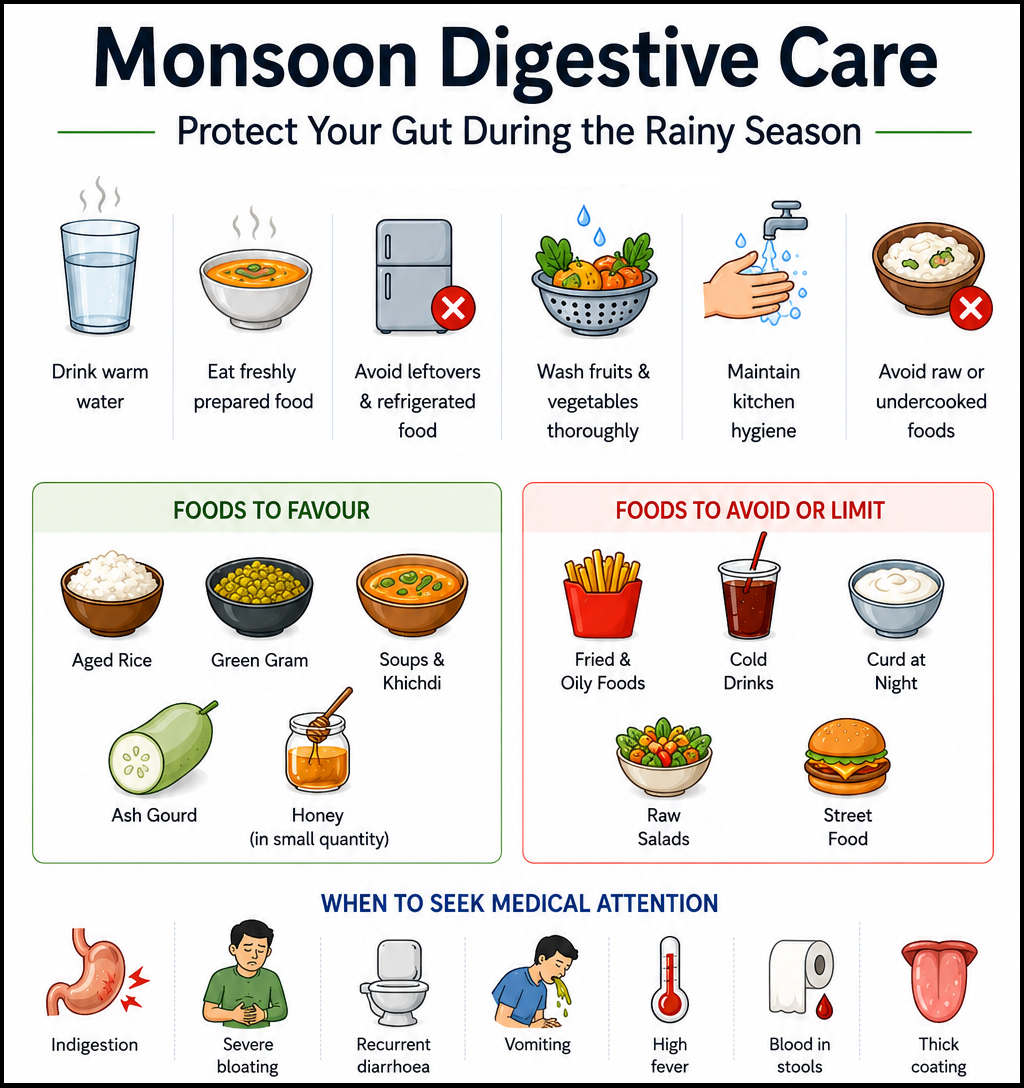
- Drink freshly boiled or warm water instead of chilled water.
- Eat freshly prepared meals whenever possible.
- Avoid stale or refrigerated leftovers.
- Wash fruits and vegetables thoroughly before cooking.
- Maintain good kitchen hygiene.
- Avoid eating raw or undercooked foods during the rainy season.
One timeless Ayurveda recommendation is to drink Ushnajala, or warm water. Besides supporting digestion, warm water also helps reduce Ama (inflammation or digestive toxins) and complements modern food safety practices by lowering the risk of water-borne infections.
Eat According to the Season
Ayurveda never encourages one diet for all seasons. Just as we change our clothing according to the weather, our food choices should also change.
Supporting gut health monsoon Ayurveda simply means choosing foods that are easy to digest while gently stimulating Agni.
Freshly prepared warm meals should always be your first choice. Easy-to-digest items such as rice, khichdi, soup, slightly cooked vegetables and fresh dals make the body’s work easier in digesting food and offer nutrition without making one feel heavy. However, cold drinks, foods stored in a refrigerator and leftover food items are known to weaken Agni and result in slow digestion.
Small Spices, Big Impact
Another aspect that is remarkable about Ayurveda is the smart use of spices available in the kitchen.
Certain spices that have Deepana (appetite enhancer) and Pachana (digestive) properties are readily available in the kitchen. Some of the most beneficial spices during the rainy season include:
- Dry ginger (Shunti)
- Black pepper
- Cumin
- Turmeric
- Carom seeds (Ajamoda)
- Asafoetida (Hingu)
These simple ingredients stimulate digestion, reduce gas and bloating, improve appetite, and help minimise monsoon digestive problems without placing additional stress on the digestive system.
Mindful Eating Matters More Than You Think
Good digestion depends not only on what we eat but also on how we eat.
Many of us eat hurriedly while working, scrolling through our phones, or watching television. These habits interfere with digestion more than we often realise. Ayurveda encourages us to eat with attention.
Take time to chew your food thoroughly. Eat only when genuinely hungry. Always eat on time, avoid binge eating and make sure your body gets enough time to digest one meal before consuming another.
This is how even small steps will benefit you by improving digestion and supporting a healthier digestive immune system during the monsoon.
Foods That Support Digestion During the Monsoon
Your food choices will play an important role in keeping the digestive system healthy during the monsoon. Foods that are generally easier to digest during this season include:
- Aged rice (Purana Dhanya)
- Red rice (Raktashali)
- Wheat
- Barley
- Green gram (Mudga)
- Red lentils (Masura)
- Ash gourd
- Pointed gourd
- Warm soups
- Freshly prepared khichdi
- Herbal drinks
- Small quantities of honey
These foods provide nourishment without overwhelming an already sensitive digestive system.
Foods Better Limited During the Rainy Season
Certain foods naturally become difficult to digest during the monsoon and may increase the formation of Ama.
It is advisable to reduce:
- Deep-fried snacks
- Heavy oily meals
- Cold drinks
- Refrigerated leftovers
- Raw salads
- Street food
- Excessively spicy fast foods
- Poorly washed leafy vegetables
- Curd at night
Although leafy vegetables are nutritious, they can harbour dirt and microorganisms, especially during the rainy season. Ayurveda therefore recommends consuming them in moderation after proper cleaning and cooking.
Don't Ignore Persistent Digestive Symptoms
A little digestive sluggishness during the monsoon is common. However, symptoms that persist or worsen deserve medical attention.
Consult your healthcare provider if you experience:
- Persistent indigestion
- Severe bloating
- Recurrent diarrhoea
- Vomiting
- High fever
- Blood in stools
- Signs of dehydration
- Thick coating on the tongue
- Worsening of existing digestive disorders such as IBS or dyspepsia
Early diagnosis prevents complications and allows timely treatment before the condition becomes more serious.
The Take-Home Message
Supporting gut health in monsoon Ayurveda begins with maintaining your digestive system. Warm, freshly prepared food, clean drinking water, mindful eating, appropriate use of digestive spices and good food hygiene together create a strong foundation for health.
When your digestive fire remains healthy, your body produces nourishment instead of toxins, immunity becomes naturally stronger, and your risk of developing monsoon digestive problems reduces significantly.
This monsoon, don’t just focus on boosting your immunity. Focus on protecting your digestion. Because a healthy gut is where true wellness begins, strengthening your digestive immunity rainy season may be the simplest step you can take towards enjoying the season without digestive discomfort.
References