Introduction
The thyroid gland is a butterfly-shaped marvel that sits at the base of your neck and functions as your biological thermostat, regulating heart rate, temperature, digestion and energy. When this regulator is out of balance, it can turn easy days into hard ones, causing unexplained weight changes, fatigue, or mood swings. If you’re seeking long-term balance, thyroid disorders Ayurveda treatment is a profound, comprehensive strategy. This system brings back deep harmony by working on your lifestyle, digestion and particular constitution instead of focusing on lab data only.
Classical Ayurveda does not describe a single disease that corresponds exactly to thyroid disorders, but they are considered systemic metabolic imbalances. At the centre is Agni, the fire of metabolism in the body. When Agni is strong, tissues are nourished and energy flows. But when it is impaired, toxic waste, orAma, blocks channels and disrupts delicate endocrine pathways.

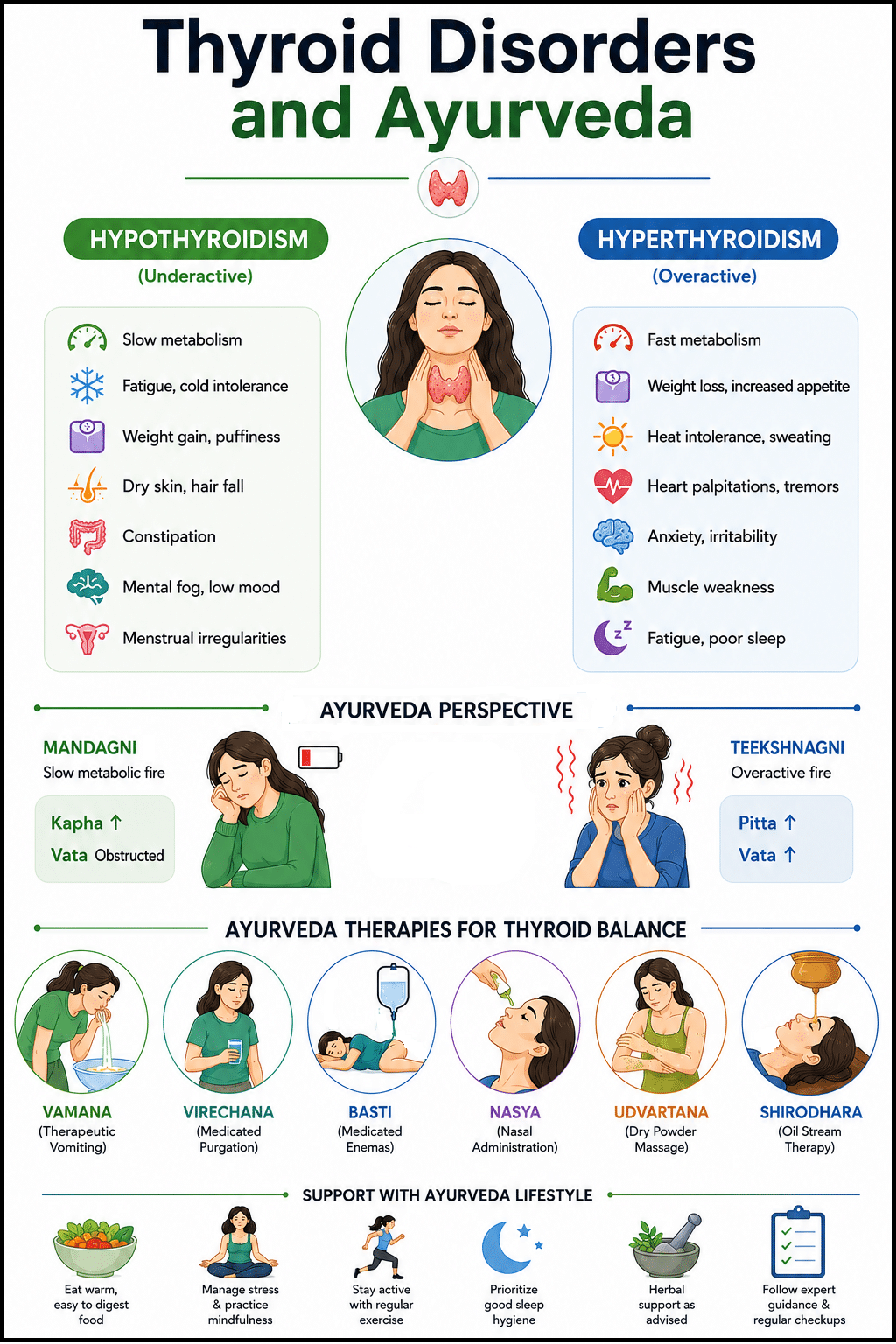
Hypothyroidism – The Lazy and Underactive State
According to Ayurveda, hypothyroidism is a condition of slow metabolic fire or Mandagni. When the fires of digestion and tissue are low, food cannot be fully digested and assimilated, and Ama is formed. This blocks the body’s channels, especially those that carry plasma and fat tissues. This blockage causes the heavy, slow and cold qualities ofKapha dosha to become dominant and then impede the natural movement ofVata dosha. It is not because you eat too much, but because your cellular metabolism has slowed down so much that your body begins to hold on to fluids and gain weight.
Clinical Therapies for Metabolic Correction
Restoring cellular balance and correcting thyroid function requires a comprehensive thyroid disorders Ayurveda treatment to regulate metabolism. Traditional cleansing therapies known as Panchakarma can help extract deeply lodged toxins and restore tissue health when administered under the supervision of a qualified physician:
- Vamana (Therapeutic Vomiting): Eliminates excess Kapha waste from the upper stomach and frees the throat and the chest so that the sluggish metabolic fire is stimulated and heaviness is relieved. This procedure is especially beneficial in hypothyroidism.
- Virechana (Medicated Purgation): Eliminates excess Pitta heat, normalises cellular metabolism, reduces systemic inflammation and clears fluid retention or puffiness of the face.
- Basti (Medicated Enemas): Soothes an overactive Vata, balances the nervous system and endocrine pathways, nourishes depleted tissues and relieves muscle aches.
- Nasya (Nasal Administration): Medicated drops placed in the nasal passages stimulate the neck and throat channels, which in turn support thyroid function.
- Udvartana (Dry Powder Massage): A warm dry massage using medicated powders which helps clear blocked channels, improves circulation and helps to break down stagnant fat tissue.
- Shirodhara (Liquid Pouring): Warm liquids poured over the forehead have a calming effect on the nervous system, alleviating stress, anxiety and tremors in hyperactive thyroid states.
Home Remedies for Thyroid that Work
Simple, noninvasive daily practices can soothe the throat area and increase digestive fire, which can complement clinical treatment:
1. Massage your neck over the thyroid area with warm, organic oil before bedtime to help improve circulation and relieve tightness.
2. Apply a warm paste of flaxseed and water to the neck for twenty minutes. It alleviates local tension thanks to its anti-inflammatory properties.
3. Take warm water with lemon and warming kitchen spices like ginger, black pepper or cinnamon to digest Ama and stimulate metabolism.
4. Slowly stretching your neck up and to the side will help relieve tension and support lymphatic drainage and blood flow to the thyroid.
Dos and Don’ts for Thyroid Care
The keys to your metabolic health are lifestyle choices and a steady daily diet.
Hypothyroidism (Slow Metabolism)
The Do’s:
- Serve Warm, Cooked Foods: Offer warm, freshly prepared, light and easily digestible cooked meals, served hot.
- Cook Cruciferous Vegetables: Properly cooked cabbage, broccoli or spinach neutralises goitrogens and is safe to consume in moderation.
- Cook with Warming Oils: Warming sesame oil can help to stimulate tissues and burn fat when cooking.
- Don’t Skimp on Rest and Sleep: Ensure you get seven to eight hours of sound sleep and practise gentle breathing exercises to protect your metabolic pathways.
The Don’ts:
- Avoid cold and heavy foods: avoid deep-fried, processed, canned or stale foods and ice-cold drinks, which weaken digestive fire.
- Avoid Raw Goitrogens and Soy: Limit raw cruciferous vegetables and unfermented soy products such as tofu or soy milk.
- Avoid Sedentary Habits: Avoid sleeping during the day and irregular eating which lead to metabolic slowdown.
Hyperthyroidism (Overactive Metabolism)
The Dos:
- Focus on cooling, sweet and soothing foods to help reduce excess heat. Introduce Ghee and Dairy: Add organic cow’s ghee, whole milk, and fresh butter for protection and rebuilding of weakened tissues.
- Eat nutritious whole grains like wheat, oats and red rice to regain healthy weight. Opt for Cooling Oils: In your cooking, use coconut oil or cold pressed olive oil.
Things to avoid:
- Don’t eat pickles, vinegar, hot peppers and sour cheeses, as these aggravate heat and speed up metabolism.
- Seaweed, kelp and excessive shellfish can overstimulate the hyperactive gland.
- Avoid coffee, black tea, energy drinks and tobacco, which can worsen palpitations and anxiety.