Dementia changes much more than memory. Over time, a person may struggle to manage familiar tasks, recognise people and places, communicate clearly, sleep well, or respond to everyday situations as they once did. These changes can be difficult for the person experiencing them and equally challenging for the family members providing care.
Home care therefore needs to go beyond tracking medicines and appointments. A predictable routine, nourishing meals, gentle activity, meaningful interaction and a calm home environment can make everyday life more manageable.
Ayurveda does not look at memory changes on their own. In an older person, an Ayurveda assessment may also take into account age, Prakriti (individual constitution), digestion, sleep, bowel habits, daily routine, mental wellbeing and overall strength. These details can help the physician understand what may be affecting the person’s day-to-day wellbeing and where simple changes in routine may be appropriate alongside medical care.

Understanding Dementia Through an Ayurveda Perspective
Memory is described in Ayurveda through the concept of Smriti, while Dhi relates to the ability to understand and discriminate, and Dhriti to the ability to regulate and sustain the mind. These functions work together rather than operating independently.
Ayurveda also recognises that ageing is accompanied by gradual changes in both the body and the mind. Vata is particularly associated with ageing, and disturbances involving Manas (mind), Indriya (sensory faculties) and cognitive functions may become more apparent as a person grows older. This does not mean that every memory change in an older person is dementia. Occasional forgetfulness can occur with ageing, while persistent memory loss, confusion or changes in behaviour require proper medical evaluation.
The Ayurveda approach to dementia care is therefore not simply about trying to improve memory. It is about supporting the person’s overall wellbeing, daily functioning and quality of life.
Dementia Home Care Tips That Make Everyday Life Easier
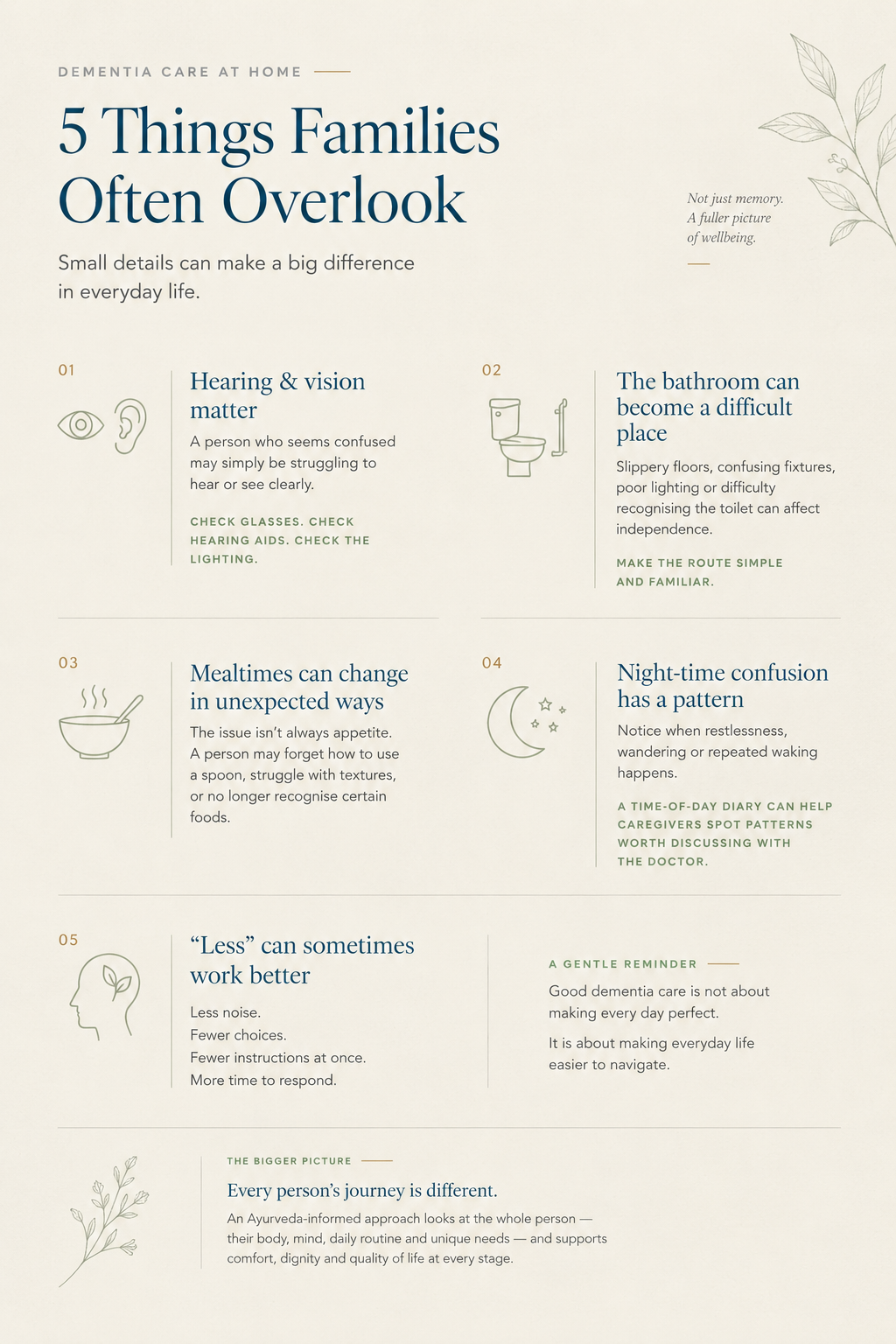
Small changes at home can sometimes make a surprisingly large difference.
Keep the day predictable
A familiar daily rhythm can reduce confusion. Try to keep waking, bathing, meals, medication, activity and bedtime around similar times each day. Avoid making unnecessary changes to the arrangement of the home. Keeping frequently used objects in their usual places can also help the person remain more independent.
Make the home safer
Falls, wandering and confusion around household objects are common concerns in dementia care. Keep walkways clear, improve lighting, use non-slip surfaces where needed and store medicines, cleaning products and other potentially harmful items safely. If the person tends to wander, families may need additional safety measures based on the individual’s needs.
Speak clearly and patiently
Long explanations can become overwhelming. Use short sentences, give one instruction at a time and allow enough time for the person to respond. Correcting every mistake may only increase frustration. Sometimes reassurance works better than repeatedly insisting that the person remember something.
Keep familiar memories alive
Old photographs, familiar songs, family stories, prayer or other culturally meaningful activities can encourage conversation and emotional connection. The purpose is not to test memory. It is to create moments of recognition, comfort and participation.
Food and Digestion in Dementia Care
Eating patterns can change as dementia progresses. A person may forget meals, lose interest in food, eat repeatedly or have difficulty managing certain textures. Ayurveda gives considerable importance to Agni, or digestive capacity. For an older person, meals should be appropriate to their appetite, digestion and physical needs rather than based on a rigid diet.
Some practical approaches include:
- Offer freshly prepared, familiar foods that are easy to chew and digest.
- Keep meal timings reasonably consistent.
- Include adequate protein, vegetables, whole grains or other suitable carbohydrate sources and healthy fats according to individual nutritional requirements.
- Encourage sufficient fluid intake unless fluid restriction has been advised by the treating doctor.
- If appetite is poor, smaller meals offered more frequently may be easier than large portions.
- Avoid making mealtimes stressful or turning every meal into a struggle.
There is no single memory care Ayurvedic lifestyle that suits every older adult. The person’s digestion, medical conditions, medications, swallowing ability and nutritional requirements all need to be considered.
Supporting Sleep and Daily Activity
Sleep disturbances can affect both the person with dementia and the caregiver. A regular bedtime, exposure to natural daylight during the day, and appropriate daytime activity can help establish a clearer sleep-wake rhythm.
Gentle movement should remain part of the daily routine when medically appropriate. Walking, simple stretching, breathing practices, or supervised exercises can provide physical activity without making the person feel that they are being put through a formal workout. Activities should be adapted to the person’s ability. What matters is regular participation, not performance.
These simple measures are important elements of Ayurveda for memory loss elderly care because Ayurveda places considerable emphasis on Dinacharya (daily routine), appropriate activity, adequate rest and maintaining balance as a person ages.
Supporting the Mind Without Creating Pressure
Cognitive stimulation does not have to look like a memory test.
Sorting familiar objects, folding clothes, watering plants, listening to music, looking through photographs, and doing simple household activities or talking about familiar experiences may be more enjoyable.
Repetition can also be useful. Ayurveda describes Abhyasa (repeated practice) as one of the factors associated with strengthening recall. In everyday care, this may translate into repeating familiar routines and activities rather than constantly introducing something new.
The important distinction is between engagement and examination. Asking someone repeatedly, “Do you remember who I am?” can create anxiety. Sitting beside them and talking about a familiar person or event may create connection without pressure.
Where Ayurveda May Support Dementia Care
For families exploring Ayurveda for dementia India, it is important to understand that Ayurveda care should begin with individual assessment rather than a standard prescription.
An Ayurveda physician may assess Prakriti, Vikriti,digestion, sleep, bowel habits, strength, mental state, age-related changes and the person’s existing medical conditions. This helps the physician understand the person’s overall condition and decide which aspects of diet, routine and supportive care may need attention.
Ayurveda also describes Rasayana approaches in the context of healthy ageing and maintaining the strength and function of the body and mind. Medhya Rasayana refers to traditional Ayurveda approaches associated with cognitive functions such as memory, understanding and mental function. Depending on the person’s condition, dietary and routine modifications, selected external therapies, relaxation-oriented practices, or other supportive measures may be considered appropriate by the physician. The approach may also need to change as the person’s symptoms, strength and care requirements change over time.
Ayurveda medicines, including herbs and formulations traditionally discussed for cognitive and neurological support, should not be started independently. Older adults may already be taking several prescription medicines, and some herbs or formulations can cause interactions, sedation, digestive problems or other unwanted effects. If such medicines are considered appropriate, they should be selected by a qualified Ayurveda physician after reviewing the person’s health, current medicines and overall condition.
Ayurveda can therefore be considered alongside appropriate medical care, rather than as a replacement for it. Prescribed medicines and regular medical follow-up should continue unless the treating doctor advises otherwise.
Caregiver Support Matters Too
Dementia care can gradually become a full-time responsibility. Caregivers may spend so much time focusing on the patient’s needs that their own meals, sleep, exercise and social life disappear from the routine.
This is where caregiver support in dementia Ayurveda can take a broader meaning. The principles of regular routine, adequate rest, appropriate food, calming practices and emotional support are relevant to the caregiver as well.
Try to share responsibilities where possible. Even short periods of respite can help. If one family member handles medicines, another can manage appointments, meals or household tasks.
Caregivers also need somewhere to express frustration, sadness or exhaustion without feeling guilty. Dementia can bring difficult days. Asking for help is not a sign that the family is failing; it is part of sustainable care.
When to Seek Medical Help
Not every behaviour change should automatically be attributed to dementia. A sudden increase in confusion, unusual sleepiness, agitation, falls, fever, pain, dehydration, difficulty eating or drinking, or a rapid change in the person’s usual behaviour may warrant medical attention. Medication side effects, infections and other health problems can sometimes cause or worsen confusion. Regular follow-up is also important because dementia is a progressive condition, and care requirements can change over time.
Conclusion
Caring for someone with dementia at home is rarely about finding one solution that fixes memory. It is about making ordinary days a little safer, calmer and more meaningful.
A consistent routine, appropriate food, gentle movement, healthy sleep habits, familiar activities and patient communication can become valuable parts of everyday care. Ayurveda adds another perspective by considering the person’s constitution, ageing process, digestion, routine, and overall wellbeing, rather than focusing only on memory loss.
For families considering dementia home care tips through an Ayurveda lens, the emphasis should remain on individualised care. With appropriate medical supervision and, where suitable, professionally guided Ayurveda support, the goal is not simply memory enhancement. It is to help the person maintain comfort, dignity, participation, and quality of life for as long as possible.
References