Introduction
While getting older is a natural occurrence, it does bring about some changes that may impact one’s ease and ability to do things independently. One may find it hard to chew food, have problems with their memory, suffer from constipation, experience dry skin, have disrupted sleep, and feel limited movement due to stiffness in joints and pain. These are just a few examples of some issues that come with getting old.
In Ayurveda, ageing is largely driven by Vata dosha – the cold, dry energy that governs movement and nerve function. As ageing parents accumulate Vata’s subtle heat loss, tissues tend to dry out, digestion weakens, and joints become less flexible. Therefore, elder care in Ayurveda emphasises warmth, lubrication and routine to soothe excess Vata and rebuild the body’s “fire” (agni). A personalised approach to diet, lifestyle, daily routines and Ayurveda therapies supports healthy ageing and preserves comfort, strength and quality of life.

Warm, Easily Digestible Diet
A gentle diet is central. When Agni (digestive fire) softens with age, meals should be light, freshly prepared, and served warm. Think simple khichadi (mung dal and rice porridge), well-cooked vegetables (squash, carrots, and greens), soft lentils and porridges made from rice or millets. These are easy to digest and nourishing.
- Wholesome Foods: Emphasise warm, mashed or well-steamed foods. Cook your vegetables well and use easily digested whole grains such as rice or millet. Eating soaked nuts such as almonds and using some warming spices such as cumin or ginger will improve digestion.
- Lubrication/Hydration: One teaspoon of ghee or cold-pressed oils with every meal will lubricate the tissues and joints. Regular sips of warm water or buttermilk throughout the day prevent dryness and support elimination. Even oil used for cooking (such as ghee) contributes to internal “moisture.”
- Avoid Aggravators: Cold, raw, overly dry or processed foods tend to tax a sluggish digestive system. Ayurveda advises against cold drinks, raw salads late at night, heavy greasy fried foods, and large late dinners, as these “vata aggravators” further weaken Agni. In practice, keep meals warm and moderate.
By following these guidelines, the diet itself acts like a gentle therapy, calming erratic Vata and providing balanced nutrition.
Ayurveda holds that a steady daily routine is as important as good food. Regular habits help stabilise the mind and balance the body’s internal clock, which can otherwise fall out of sync with age. A few rituals can bring comfort and strength to seniors:
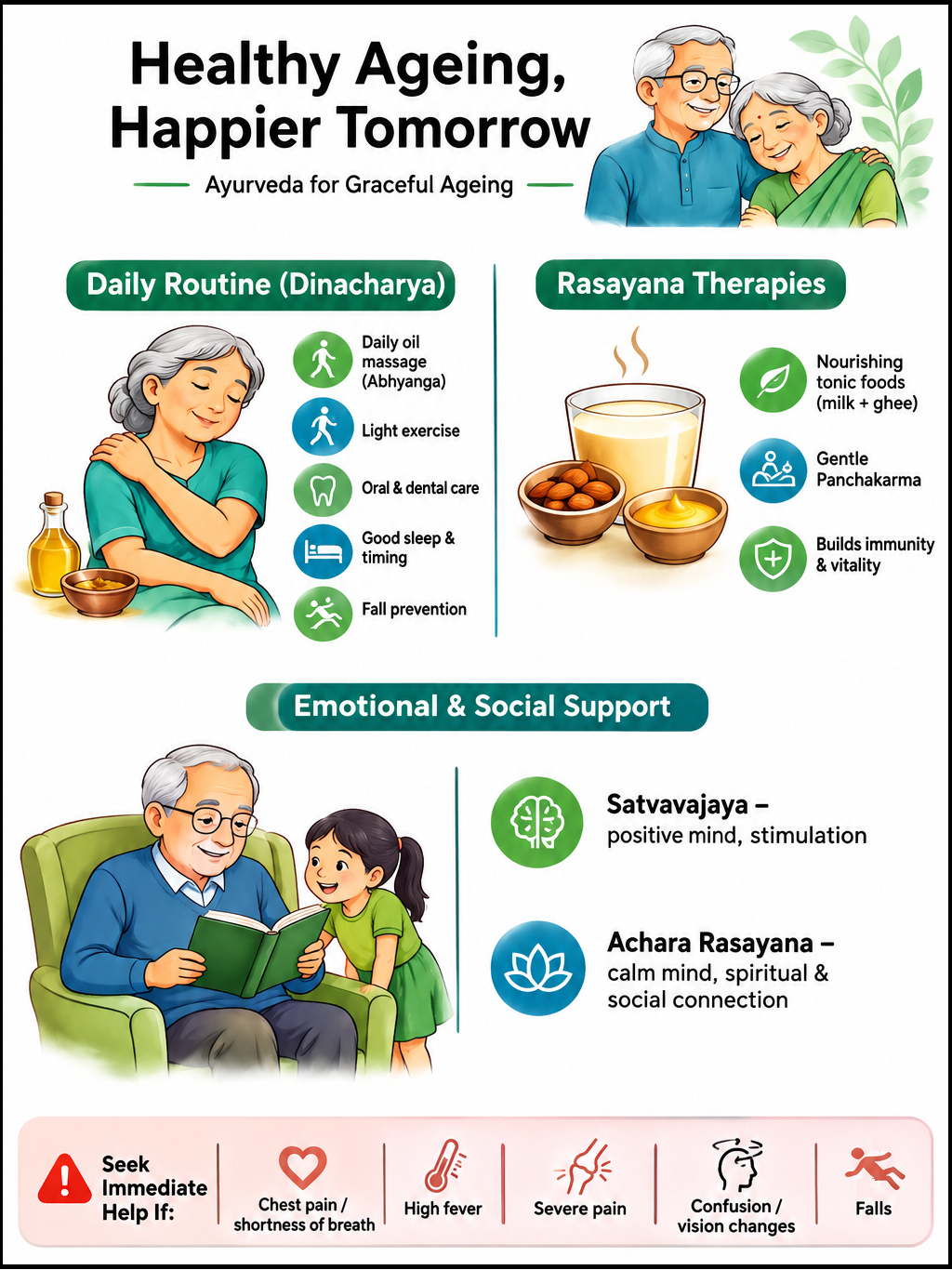
- Daily Oil Massage (Abhyanga): Gently massaging the skin and joints with warm sesame oil is profoundly nurturing. Fifteen minutes of self-massage each morning – especially on the head, neck, shoulders, and limbs – restores the skin’s lipid barrier and soothes tender joints. This practice has been shown to balance the Doshas and enhance well-being, even improving sleep. (If self-massage is difficult, a family member can help or a short professional massage can be arranged.)
- Light Exercise: Promote gentle movement each day as ability allows. A short walk in the morning, a few yoga poses or gentle stretches, or even chair exercises can help keep muscle tone and flexibility in good condition. Research has shown that gentle yoga and exercise improve circulation, reduce stress and depression and help maintain mobility in older people. Even slow walking after meals and simple breathing exercises (pranayam) help clear the mind and aid digestion.
- Oral & Dental Care: Promote good oral hygiene. Ayurveda recommends a nightly oil rinse (gargling warm sesame or coconut oil) to soothe dry mouth and gums. A clean, stimulated mouth also aids digestion by increasing saliva.
- Sleep and Timing: Try to maintain a consistent sleep schedule. Seniors often do best by rising with (or shortly after) sunrise and winding down soon after sunset. A peaceful bedtime ritual – such as reading, light stretching, or warm milk – can help signal to the body that it is time to rest. Avoid heavy activities or meals late at night.
- Fall prevention: Remove loose rugs, add night lights and handrails/grab bars. Define exercise areas clearly. Keep elders mobile, but prevent unsupervised climbing. Remind them to take their medicines and meals on schedule.
By anchoring daily life with these routines, many elders find they sleep better and feel more grounded. Engaging in activities that are in tune with the rhythms of nature will help boost the immune system and vitality in old age. Remaining calm in mind and being moderately active in the body can help bring about happiness and satisfaction in old age.
Rasayana Therapies
Rasayana Therapy is a part of Ayurveda Geriatrics called Jarachikitsa. It consists of therapies and nutrition methods that enhance the tissues (dhatus) and immunity (ojas). The idea behind Rasayana is to prevent deterioration and prolong the span of life. Rasayana approaches can include dietary tonics, herbal adaptogens, and special panchakarma cleanses, chosen appropriately by a qualified practitioner.
- Nourishing Tonic Foods: Many traditional Rasayana remedies are actually nutrient-rich foods or formulations. Classical texts praise daily warm milk with ghee as an ideal anti-ageing tonic. (Simply heat a cup of milk with ½–1 teaspoon of ghee, adding a little jaggery if desired.) This combination nourishes the nervous system, promotes sound sleep and supports cognitive function. Natural sweeteners like honey or herbal jams (jaggery or grape molasses) used in moderation also supply antioxidants and energy for elders. Other favourites include soaked almonds, raisins, or figs as gentle nutrients. These foods help rebuild strength and resilience without straining the digestive system.
- Gentle Panchakarma: Under professional supervision, mild cleansing therapies (Panchakarma) can be very helpful. In practice, the procedure might involve a series of warm-oil treatments – such as Abhyanga, Shirodhara, or herbal steam baths (Swedana) – all of which gently loosen accumulated toxins and stiff joints. Another common therapy is Anuvasana Vasti (oil enema), which nourishes the colon, the “second brain” for immunity. Even simple daily Udvartana (dry herbal powder massage) with a spoon of warm oil can invigorate circulation. Such therapies are chosen to suit each person’s needs; studies show that when Rasayana is preceded by appropriate Panchakarma, its benefits are maximised.
Overall, Rasayana treatments aim to replenish tissue quality. Properly planned Rasayanas “help prevent or delay the ageing process” and keep the body and mind “healthy and fit.” By gently bolstering digestion and organs, these therapies can improve memory, vision and stamina over time. (Importantly, always consult an experienced Ayurveda physician before starting any herbal regimen, since elderly individuals may have special health considerations.)
Emotional and Social Support
Loneliness and stress often accompany ageing, and Ayurveda recognises that mental well-being is inseparable from physical health. Studies of elderly populations note that feelings of neglect, anxiety or depression are unfortunately common. To counter these issues, carers should incorporate Ayurveda insights on nurturing the mind:
- Satvavajaya: It is a therapy wherein positive thoughts, counselling and activities are used to improve mind health. It involves keeping senior people intellectually and emotionally stimulated. Reading aloud, talking about good memories, listening to soothing music or playing light games can stimulate the mind and make them happy. Respecting them, paying attention to their stories and involving elderly people in family decisions will help to reduce anxiety.
- Achara Rasayana: It is about virtuous living to gain longevity, creating a calm and sympathetic environment at home where senior people practise pranayamas and meditation, which are said to create balance in the mind according to Ayurveda. It may also involve spiritual or community participation. Senior people who have religious or community involvement usually feel more purposeful and hopeful. Therefore, building strong social connections – whether with families, friends or communities – becomes a non-pharmacological therapy. An evening prayer, a daily practice of gratitude and walking with grandchildren and talking to them are great ways of creating Rasayanas for the heart.
Sudden chest pain, shortness of breath, high fever, severe pain, confusion, vision changes, and falls are alarming signs in an older person. Get help also if an elder is not improving with home care (e.g. pain or stiffness lasts weeks despite lifestyle steps). Chronic conditions (diabetes, hypertension) mean regular doctor visits to change medicines and any new diet or Ayurveda plans safely.
By providing love, respect and gentle encouragement, caregivers apply Ayurveda medicine of awareness as much as any herbal remedy. Keeping ageing parents emotionally secure and socially connected is truly a rejuvenation in itself.