Introduction
For many families, the transition from nappies to dry nights is a huge developmental milestone. But for plenty of children, the path to controlling their bladders at night is a little longer. Bedwetting (also medically known as nocturnal enuresis) is the involuntary urination that occurs while sleeping at an age when a child is expected to stay dry. It may be difficult for both the parents and the child, but one must always remember that it is just part of development, not a consequence of poor parenting or a rebellious child.
Nocturnal enuresis is known as ‘Shayyamutra’ in Ayurveda, which is the combination of the terms ‘Shayya’ meaning bed, and ‘Mutra’ which means urine. The Ayurveda understanding of bedwetting is that it is not really a sign but rather a complex of digestive, neurological, and emotional factors. In this blog, we will talk about the different causes of bedwetting and how an effective Ayurveda treatment approach, along with simple home remedies, can help kids have dry nights.

What Parents Should Know About Bedwetting Children
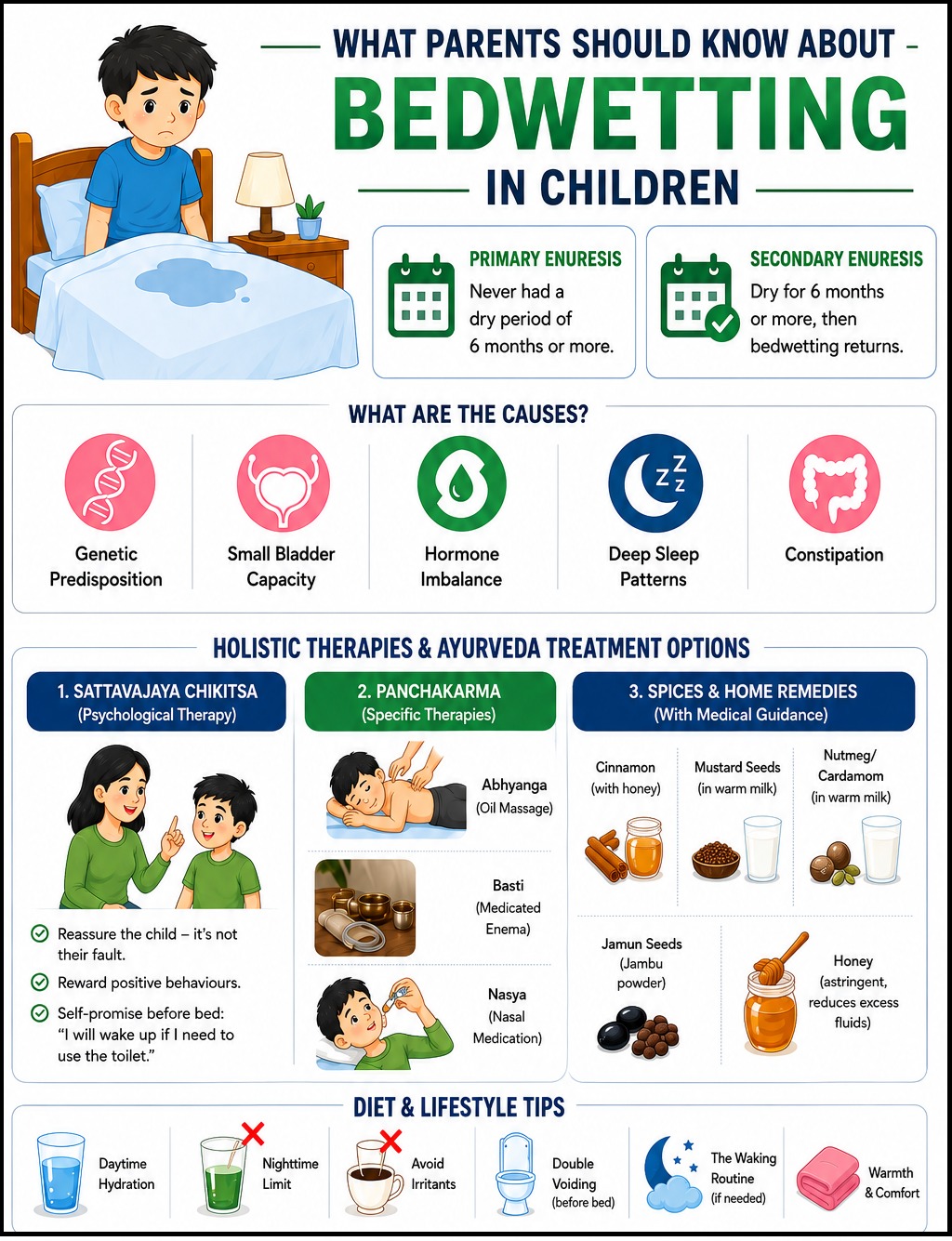
Most children achieve daytime bladder control by age three, with nighttime control following shortly after. But still, around 15% of children are bedwetting at age five. The condition is usually classified into two types:
- Primary Enuresis: The child has never had a dry period lasting six months or longer.
- Secondary Enuresis: The child has been dry for at least 6 months but begins to wet the bed again, often due to stress, illness, or major life changes.
What are the causes?
Modern medicine recognises several factors that can contribute to bedwetting:
1. Genetic Predisposition: Genetics plays a huge role. If one parent wets the bed, the child has a 45 per cent chance of doing the same. If both parents did, the risk jumps to 77 per cent.
2. Small bladder capacity: Some children just have bladders that are not big enough to hold the amount of urine produced overnight.
3. Hormone imbalance: There is a hormone called vasopressin (or antidiuretic hormone) that normally tells the kidneys to make less urine at night. Some children do not produce enough of this hormone while sleeping.
4. Deep Sleep Patterns: Many “deep sleepers” don’t respond when their bladder sends a signal to the brain that it’s full.
5. Constipation: a frequently overlooked cause. A full rectum can push on the bladder, decreasing its volume and causing it to empty prematurely.
The Ayurveda View on Bedwetting
Ayurveda teaches that the body is made up of a balance of three energies called Vata, Pitta and Kapha. The main reason for nocturnal enuresis is the imbalance of Vata (the energy of movement) and Kapha (the energy of stability and fluids).
Specifically, the sub-type of Vata that moves downwards, called Apana Vayu, is in charge of controlling the flow of urine and stool and is thought to be weakened, leading to loss of control over the bladder muscles. Additionally, too much Kapha or Tamas (mental heaviness) can induce a “deep sleep” state, in which the child is unable to recognise the sensory signals of a full bladder.
Another unique insight of Ayurveda is the role of Krimi (intestinal worms). Ancient texts have suggested worms can irritate the system and cause reflex urination during sleep. Deworming is therefore usually the first step in an Ayurveda treatment plan.
Psychological Effects on Children
The effects of chronic bedwetting are often more emotional than physical. Children may feel very guilty and ashamed and have a “blow to their confidence”. They may miss social occasions like sleepovers or school camps, for fear of being discovered. Studies show that successful treatment of nocturnal enuresis improves a child’s self-esteem and academic performance significantly. Punishment is not recommended, as strong reactions can build up long-term feelings of failure and anxiety.
Holistic Therapies & Ayurveda Treatment Options
Ayurveda adopts a multi-pronged approach for the treatment of nocturnal enuresis, which includes physical therapies, internal support and psychological counselling.
1. Sattvavajaya Chikitsa (Psychological therapy)
Counselling is crucial because the most important factor in physiological control is the mind (Manas). This means:
- Helping the child understand they are not alone and it’s not their fault.
- Instead of just dry nights, use positive reinforcement and rewards for “agreed behaviours” (such as drinking enough during the day or helping to change the sheets).
- The child is encouraged to make a “self-promise” before going to bed: “I will wake up if I need to use the toilet.”
2. Panchakarma (Specific Therapies)
In stubborn cases, specific Ayurveda therapies may be applied to strengthen the system.
- Abhyanga (Oil Massage): Massaging the lower abdomen and pelvic area with warm sesame or medicated oils pacifies Vata and strengthens the bladder muscles.
- Matra Basti (Medicated Enema): Small amounts of medicated ghee or oils are administered rectally to directly balance the Apana Vayu and correct constipation.
- Nasya (Nasal Application): Medicated drops through the nose are viewed as a “gateway to the brain” to help stimulate the neurotransmitters responsible for bladder-brain communication.
3. Spices and Home Remedies:
The following are some things found at home that may be useful for the health of your bladder:
- Cinnamon: You can add some powder of cinnamon with a bit of honey to your kid’s daily routine just before going to bed.
- Mustard Seeds: One teaspoon of mustard seeds can be soaked in warm milk and taken before sleeping.
- Nutmeg / Cardamom: These can be added to warm milk to provide relaxation.
- Jamun Seeds (Jambu): The powdered seeds of the Jamun fruit are known as Mutra-sangrahaniya in Ayurveda, which means they help in naturally restraining excessive urination.
- Honey – It is an “astringent” and helps to reduce excess fluids in the body.
These remedies should be followed after consulting a qualified physician.
Significant Changes to Your Diet and Lifestyle
Sometimes correcting the child’s routine is as important as any Ayurveda treatment.
- Daytime hydration: Ensure that the child drinks 6-8 glasses of water-based drinks during the day to ensure that the bladder “practices” holding urine.
- Nighttime Limit: Stop drinking liquids around 90 minutes to 2 hours before bedtime.
- Avoid irritants: Avoid caffeine (found in tea, coffee and some sodas), fizzy drinks and overly spicy or acidic foods in the evening; these can irritate the bladder.
- Double Voiding: Ask the child to “pee”, then jump or dance around for a minute, and then try to “pee” again just before getting into bed. This ensures that the bladder is completely emptied.
- The Waking Routine: Parents may decide to wake the child once during the night to use the toilet. For the procedure to be effective in “training”, the child must be fully awake during the process.
- Warmth: Make sure the child is warm and comfortable in bed, as cold can cause the need to urinate.