Introduction
Fatty liver has become remarkably common today—and not just among people who are overweight or consume alcohol. Increasingly, it is being detected in people who otherwise feel perfectly well, often during a routine ultrasound or health check-up.
Why is this happening? Our lifestyles have changed significantly. Long hours of sitting, reduced physical activity, frequent eating out, refined carbohydrates, sugary drinks, excess portions, irregular meal timings, poor sleep and chronic stress can all affect the way the body handles glucose and fat. Conditions such as insulin resistance, obesity, diabetes and high cholesterol further increase the risk.
The liver often gives very few warning signs in the early stages. This is why fatty liver should not be dismissed as “just fat in the liver”. It can be an early indicator of broader metabolic imbalance.
What was earlier called Non-Alcoholic Fatty Liver Disease (NAFLD) is now commonly termed Metabolic Dysfunction-Associated Steatotic Liver Disease (MASLD).
From an Ayurveda perspective, the liver (Yakrit) is closely connected with digestion, metabolism and transformation. Impaired Agni, disturbances in Meda metabolism, and obstruction in the Srotas may all contribute to metabolic imbalance. Therefore, Ayurveda looks beyond the liver alone and focuses on food, digestion, activity, sleep and the individual’s overall health.
This area is where home remedies for fatty liver Ayurveda play an important role. The emphasis is on simple, sustainable changes that improve metabolic health.

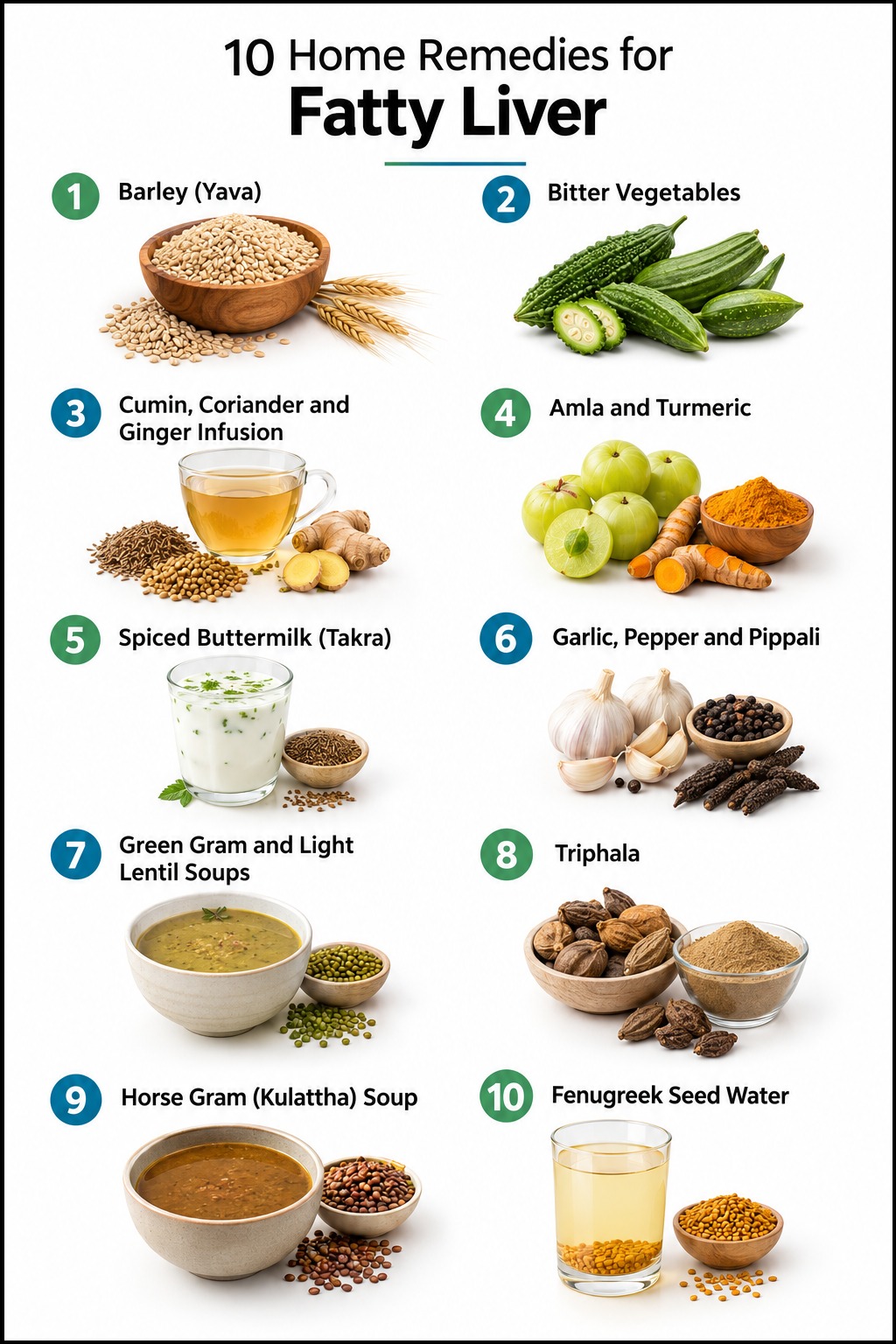
10 Home Remedies for Fatty Liver
1. Barley (Yava)
Barley, or Yava, is traditionally considered light and useful in conditions involving excess Kapha and Meda. It can be included as a grain, porridge or simple preparation.
Replacing highly refined carbohydrates with fibre-rich whole grains, such as barley, can be a practical dietary change for people with fatty liver.
2. Bitter Vegetables
Bitter vegetables such as bitter gourd, ridge gourd and pointed gourd can be included regularly in meals.
Ayurveda traditionally gives importance to the Tikta taste in conditions associated with excess Kapha and Meda. These vegetables are also naturally low in calories and can increase vegetable intake without adding excessive energy.
3. Cumin, Coriander and Ginger Infusion
A simple infusion of cumin, coriander and ginger can be used as an alternative to sweetened beverages.
Boil about ½ teaspoon each of crushed cumin and coriander with a small amount of ginger in two cups of water and reduce it to about one cup. Sip it warm once a day.
Traditionally, these spices are used to support Agni and digestion.
4. Amla and Turmeric
Amla (Indian gooseberry) is known for its antioxidants in Ayurveda, whereas turmeric is known for curcumin, which has been researched in terms of inflammation and metabolism.
As a result of such properties, interest in using turmeric for fatty liver disease has developed. The use of amla and turmeric in your food is quite possible.
There is no need to consume large amounts of these foods. It is better to include these ingredients in the diet rather than take many supplements.
5. Spiced Buttermilk (Takra)
Buttermilk, diluted and spiced with roasted cumin or coriander, can be a light supplement to meals for people who can consume dairy products without problems.
Ayurveda suggests that Takra is beneficial for digestion. However, not everyone can consume it, particularly those with dairy intolerance or certain digestive complaints.
6. Garlic, pepper and Pippali
Garlic, Pippali (long pepper) and pepper are traditionally used for digestive and metabolic support.
Such combinations should not be treated as universal remedies or self-prescribed in fixed doses. Their suitability depends on the individual’s digestion, constitution, bowel pattern and other health conditions.
7. Green Gram and Light Lentil Soups
Green gram (Mudga) is traditionally considered relatively light and easy to digest. Simple soups or Yusha preparations can be a useful alternative to heavy, oily meals.
For fatty liver, the larger principle is important: choose balanced, fibre-rich and satisfying meals without excessive oil, sugar or refined carbohydrates.
8. Triphala
A common question is, is triphala good for fatty liver?
Triphala is traditionally used to support digestion and bowel regularity. Interest in triphala for fatty liver arises from its potential antioxidant and metabolic effects, as seen in emerging research.
The dose and duration should be individualised, especially in those with loose stools or digestive sensitivity.
9. Horse Gram (Kulattha) Soup
Consuming warm soup made from horse gram and lightly spiced with rock salt is beneficial. In classical texts, horse gram exerts a strong fat-scraping action, rekindles metabolic fire (Agni), and helps prevent lipid accumulation in liver tissue.
10. Fenugreek Seed Water
Soaking about one teaspoon of fenugreek seeds overnight and drinking the infused water in the morning is a commonly followed home practice.
Fenugreek has been studied for its potential effects on glucose and lipid metabolism—both relevant to metabolic fatty liver. However, one drink cannot reverse fatty liver by itself. The overall lifestyle pattern matters more.
Ayurveda Herbal Support
Patients often ask about kutki for fatty liver and bhumi amalaki fatty liver.
Kutki (Picrorhiza kurroa) and Bhumi Amalaki have traditionally been used in liver care and both have been studied for potential hepatoprotective and antioxidant effects. However, evidence should be interpreted carefully and these herbs are not suitable for everyone.
Similarly, Arogyavardhini Vati is a classical Ayurveda formulation used in selected liver and metabolic conditions. It should not be treated as a routine “liver detox” tablet or taken without professional guidance.
The choice should depend on the individual’s Agni, Dosha, bowel pattern, associated conditions, laboratory findings and current medicines.
The right medicine for the right person matters more than taking several remedies together.
What Should You Reduce?
For fatty liver, improving the overall diet is usually more important than adding multiple “liver cleansing” remedies.
Reduce:
- Deep-fried and excessively oily foods
- Sugary drinks, packaged juices and frequent sweets
- Refined flour and bakery products
- Ultra-processed snacks
- Excessive portions of refined carbohydrates
- Alcohol
- Frequent late-night meals
- Heavy, calorie-dense foods
Portion size also matters. Even nutritious foods can contribute to excess calorie intake when eaten in large quantities.
Food Timing and Lifestyle Matter
Regular meal timings, a relatively light dinner and avoiding unnecessary late-night eating can support better metabolic health.
More importantly, aim for regular physical activity, adequate sleep and gradual weight management when required. Fatty liver is often part of a larger metabolic picture, so blood sugar, cholesterol, blood pressure and waist circumference also deserve attention.
Conclusion
The rise in fatty liver reflects more than a liver problem—it reflects the way modern lifestyles are affecting metabolic health. Ayurveda approaches this through Agni, Meda, digestion, food, activity and individualised care. Simple habits such as choosing lighter home-cooked meals, increasing vegetables and fibre, using digestive spices and reducing refined foods can form the foundation of management.
Herbs and home remedies should complement, not replace, medical evaluation and monitoring.
The goal is not to cleanse the liver overnight. It is to gradually create a healthier metabolic environment in which the liver can function better.
Early attention, consistent lifestyle changes, and personalised care can significantly help to prevent fatty liver from progressing.