A cough, runny nose or scratchy throat is often one of the first signs that winter has arrived. For most people, a simple cold gets better on its own, but the symptoms can still make a few days uncomfortable, especially when a cough lingers at night or a blocked nose makes it difficult to sleep. This is where simple home care can help. Ayurveda has traditionally used herbs, warm foods, drinks and everyday practices during seasonal changes. But there isn’t one remedy that works for every cough or every person. The nature of the cough, digestion, appetite, age and overall health all matter.
If you’re looking for Ayurvedic home remedies for cough and cold, here are some simple options to consider. They are intended for supportive care during a mild illness, not as a replacement for medical treatment when symptoms are severe or don’t settle.
At a glance
- Warm fluids, adequate rest and simple meals can be useful when you have a mild cold.
- Tulsi, ginger and honey are traditional ingredients, but they are not suitable for everyone.
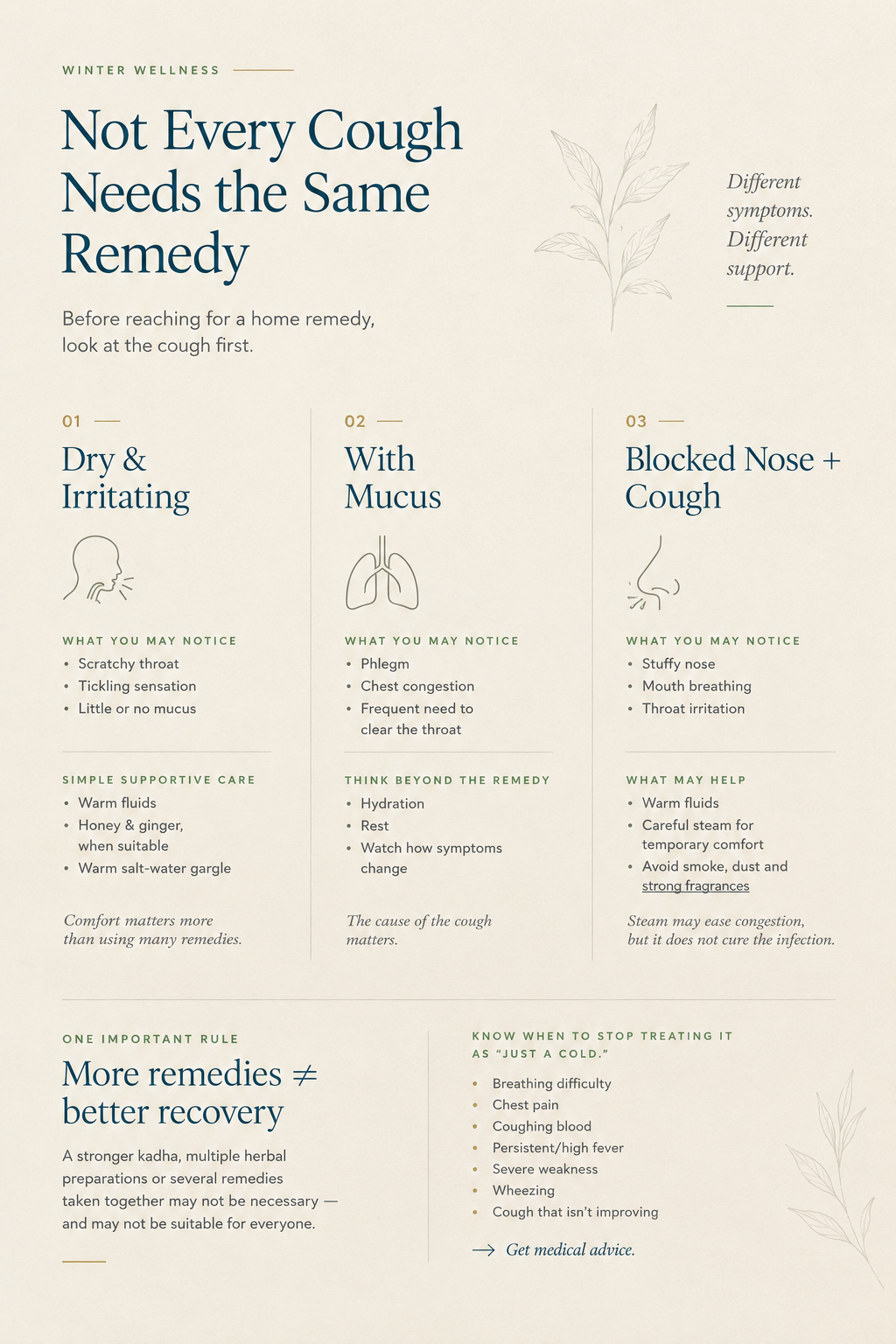
- A dry cough is different from a cough with mucus, so the same remedy may not be appropriate in both situations.
- If a cough persists, keeps coming back or is accompanied by breathing difficulty, it should be evaluated.

1. Start with a simple tulsi drink
Tulsi is probably one of the first herbs that comes to mind when people think about an Ayurvedic home remedy for cold. It has traditionally been used in preparations for respiratory and throat comfort. You don’t need to make an elaboratekadha. A few fresh tulsi leaves gently simmered in water can be enough for a simple warm drink. Some people also add a little ginger if they tolerate it well.
If you’re specifically looking for a tulsi kadha recipe, avoid adding too many ingredients. A stronger or more complicated kadha isn’t necessarily better. Excessive or very frequent intake of concentrated kadha may cause unwanted effects, including severe acidity, increased bleeding risk or liver injury, depending on the ingredients and the amount consumed. Ask the doctor to validate these risks and add any practical advice on how to consume kadha safely.
2. Ginger and honey for a scratchy throat
Ginger and honey are another familiar combination in Indian homes. Ginger is traditionally valued for its warming qualities, while honey is commonly used in preparations intended to soothe an irritated throat. A small amount of fresh ginger can be combined with honey when appropriate. It is worth remembering, though, that the mixture isn’t a remedy for every cough.
For example, a cough that is dry and irritating is not necessarily the same as one producing mucus. A cough that has continued for several weeks also deserves a closer look rather than another spoonful of home preparation. This is where ginger honey Ayurveda searches can sometimes give an overly simple answer. The ingredients may be traditional, but whether they are appropriate depends on the person using them.
Important: It is better to avoid honey for children below one year of age.
3. Keep warm fluids nearby
4. Keep food simple when you're not hungry
It is quite common to lose your appetite when you’re unwell. You don’t have to force yourself to eat a full meal simply because it is mealtime. Choose foods that you normally digest comfortably. A warm soup, a light meal or freshly prepared food may be easier to manage than a heavy meal when your appetite is low.
Ayurveda gives considerable importance to digestion, so this period is also a useful time to pay attention to how food feels rather than following a rigid list of foods that are supposed to be “good for a cold”. If dairy, very spicy food or any other food tends to make you feel uncomfortable when you’re unwell, there is little reason to force yourself to have it just because someone recommended it as a home remedy.
5. Gargle with warm salt water
6. Try steam carefully if your nose is blocked
A blocked nose can make a cold particularly bothersome. Steam inhalation is a common home practice, and the warmth and moisture can provide temporary relief for some people. But there is an important distinction between feeling better for a while and treating the illness itself. Steam doesn’t cure a cold or remove the infection behind it.
Be particularly careful with hot water and steam around children. Burns from steam inhalation are avoidable and can be serious. If you’re struggling to breathe, or nasal symptoms are severe or persistent, don’t keep repeating steam inhalation; instead, get the problem checked.
7. Don't keep adding remedies when one is enough
When a cold lingers for several days, it’s easy to try everything you’ve heard about. One kadha in the morning, another herbal drink later, ginger and honey at night and perhaps an Ayurveda cough preparation in between. That isn’t necessarily a better approach.
More herbs do not automatically mean better results. Some preparations may also be unsuitable alongside certain medicines or health conditions. This is especially true when people search online for an Ayurvedic syrup cough remedy. “Herbal” or “Ayurvedic” does not mean that every preparation is suitable for every person. If you are considering a specific Ayurveda medicine rather than a simple household preparation, speak to a qualified practitioner about whether it is appropriate for you.
One concern with combining several herbal preparations is that different products may contain some of the same ingredients. Taking multiple preparations without checking what they contain can mean consuming more of a particular herb or active ingredient than intended.
8. Pay attention to what's around you
Sometimes the thing making a cough worse isn’t another food or herb. It may be smoke, dust, strong perfume or another irritant in the environment. If you notice that your cough gets worse around smoke or dust, try to avoid the trigger. If cold air tends to make you cough, covering your nose and mouth when outdoors in particularly cold conditions may be helpful. This is a simple part of winter respiratory Ayurveda care that can get lost when the focus is entirely on recipes. Your surroundings, sleep and daily routine can all affect how comfortable you feel while recovering.
9. Give yourself time to recover
10. Know when it isn't just a winter cold
This may be the most important part of managing a cough at home. A cough that is getting worse, keeps returning or lasts longer than expected shouldn’t simply be treated with another home remedy. The same applies if you develop symptoms such as:
- Difficulty breathing
- Chest pain
- Coughing up blood
- Significant or persistent fever
- Severe weakness
- Wheezing or shortness of breath
- A cough that isn’t improving
- Repeated episodes of unexplained cough
These symptoms can occur with conditions that need proper medical assessment. Asthma,bronchitis, pneumonia and other respiratory illnesses should not be assumed to be an ordinary seasonal cold.
People also often ask whether bronchitis home remedies are enough to manage a persistent cough. Home care may provide some comfort, but bronchitis should not automatically be treated like an ordinary cold. If you have a persistent cough along with fever, wheezing, chest discomfort or difficulty breathing, speak to a healthcare professional.
Another common misconception is that every cough needs to be stopped immediately. A cough is a symptom, and understanding why it is happening is important before deciding how to manage it.
A little can go a long way
When you have a winter cough or cold, it is easy to look for the one ingredient that will make everything better. In practice, recovery is often less complicated. A warm drink, food that you can digest comfortably, enough rest and avoiding things that aggravate your symptoms may be all you need while a mild illness runs its course.
Ayurveda offers a range of traditional practices for seasonal health, but that doesn’t mean everyone needs to use every herb or preparation. The more useful question is not “Which remedy is best for a cough?” but “What is appropriate for this person and this cough?” And if the cough doesn’t behave like an ordinary cold, don’t keep treating it at home indefinitely. Getting the right assessment at the right time is also part of good respiratory care.
References