Introduction
There is a high increase in neurological diseases like stroke, dementia, Parkinson’s disease, epilepsy, and migraine in many parts of the globe. The people suffering from such problems find themselves unable to recollect their loved ones, recover their motor function, get seizures under control, and even experience a painless existence. With the ageing of populations and the stressful lifestyles of modern people, the incidence of brain diseases keeps growing. However, there are still a great number of patients who cannot receive adequate diagnosis and treatment due to a lack of brain healthcare.
This is the reason why the theme “Brain Health: Access for All” is so relevant for World Brain Day 2026 (July 22). This slogan teaches us that access to brain health care must not depend on one’s location or income level.
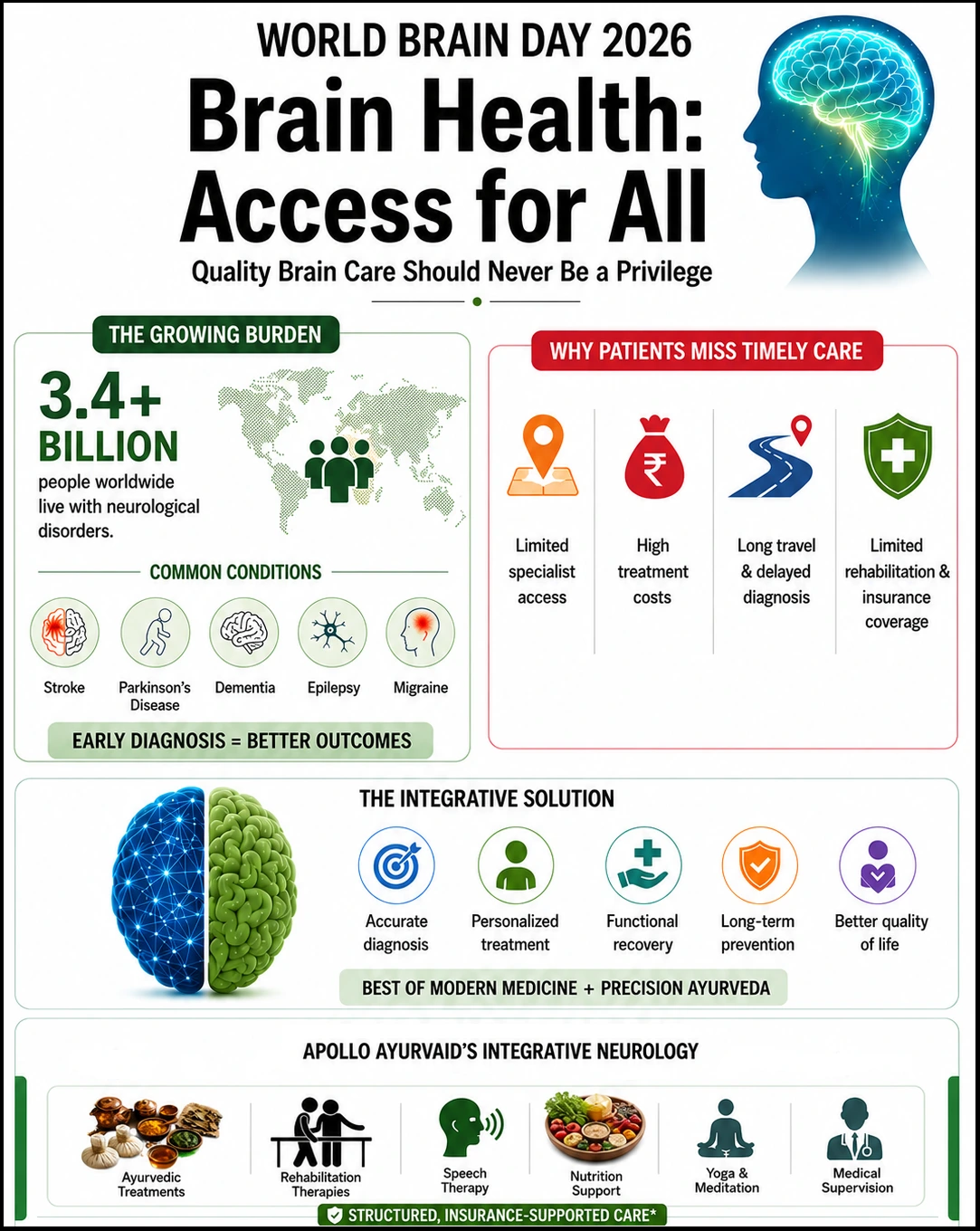
Today, more than 3.4 billion people worldwide live with neurological conditions, making disorders of the brain the leading cause of disability across the globe. Every delay in diagnosis or treatment can mean the loss of precious brain function that may never be fully recovered.
While the solution requires cutting-edge technology, it also requires preventative, affordable and accessible health care. The integration of the best of both worlds, i.e., Ayurveda and modern medicine, provides an example of how this goal can be achieved.

Increasing Care Gap for Neurological Disorders in India
Neurological disorders are on the increase in India. This increasing burden is attributed to an ageing population, changes in lifestyle habits, diabetes, high blood pressure, and chronic stress among others. Unfortunately, access to neurological health care is not keeping up with the problem.
Many patients in rural and semi-urban areas cannot access specialised care. Delayed diagnosis and treatment because of travel distances, lack of availability of appointments, financial constraints, and poor insurance coverage delay diagnoses for months and sometimes even years.
During all this time, the disease progresses. For most patients, the problem is getting timely and affordable treatment. This widening gap highlights why improving brain health access has become a public health priority.
Good Brain Health Should Never Depend on Financial Status
Health is a basic human right, not a privilege reserved for those who can afford specialised care.
When neurological treatment becomes financially inaccessible, families often delay consultations, discontinue medicines, or avoid rehabilitation altogether. Unfortunately, these delays frequently result in greater disability, increased caregiver burden and reduced quality of life.
Early screening, lifestyle interventions, community-based rehabilitation, telemedicine, and integrated healthcare models can make quality neurological care available to a much larger population. Improving brain health access means ensuring that every individual receives the opportunity to protect and preserve brain function before irreversible damage occurs.
Why Integrative Medicine Can Improve Brain Health Access
Modern medicine has transformed neurological diagnosis through advanced imaging, laboratory investigations, emergency care and life-saving interventions.
Ayurveda contributes another equally valuable dimension—personalised prevention, restoration of functional health and long-term lifestyle management.
Rather than replacing one system with another, integrative care combines the strengths of both.
Integration between Ayurveda and modern medicine has been demonstrated by Apollo AyurVAID hospitals, which have made sure that, through collaboration, patients will be provided with comprehensive care. Although modern medicine has been accurate when it comes to the diagnosis of diseases, Ayurveda has ensured that balance is restored in order to increase resistance and tackle functional disturbances.
Collaboration between Ayurveda and modern medicine has even made Ayurveda neurology affordable to many people since it emphasises preventive care, personalised lifestyle advice and treatments that aid in recovery.
Knowledge of individual constitution (Prakriti) and stage of disease (Vikriti) in Ayurveda makes it easy to make personal prescriptions that help optimise physical, mental, and cognitive health throughout life.
Small Daily Habits Can Protect Your Brain
Protecting the brain does not always begin in a hospital. Many effective measures can be taken at home.
According to Ayurveda, the concept of Dinacharya involves a series of steps followed on a daily basis that ensure both mental and physical well-being. The mentioned techniques involve only a negligible amount of investment but can help significantly improve brain health in the long term.
Wake up early
Waking up early helps regulate the functioning of the biological clock of the body, balance hormones, improve the quality of sleep and ensure good mental clarity.
Drink warm water in the morning
Consuming a cup of warm water after waking up helps stimulate the digestive process, metabolism and prepares the body for the activities of the day.
Keep good oral hygiene
Traditional techniques such as tongue cleaning and oil pulling help keep the oral cavity healthy.
Exercise regularly
Daily physical activities will ensure improved blood flow to the brain, decreased stress levels, improved memory and reduced risk of various neurological diseases. Yoga will provide an additional advantage of improved flexibility and emotional well-being.
Practise Abhyanga
Daily massage with warm herbal oil helps relax the nervous system and improve sleep.
Make time for meditation and Pranayama
Mindful breathing and meditation reduce stress hormones, improve concentration, enhance emotional resilience and support healthy brain function.
Eat nutritious and fresh food
Eating fresh, seasonal, non-processed food, which facilitates digestion and nourishes the body and mind is crucial. A nutritious diet is one of the most effective ways to improve brain health over time.
These daily activities prove that access to brain health not only means having a tool but also knowing how to use it every day.
Integrated Approach of Apollo AyurVAID towards Neurological Disorders
At Apollo AyurVAID, the treatment of neurological disorders is not limited by the symptoms. Based on the principles of Precision Ayurveda, every single patient is examined to find out the causes of the disease and develop a treatment plan individually.
Many neurological disorders are connected with the imbalance of Vata Dosha, which controls movement, communication and nervous system functioning.
For stroke survivors, the Integrative Stroke Rehabilitation Programme offered by Apollo AyurVAID makes use of a combination of Panchakarma treatments along with physiotherapy, speech therapy, nutrition counselling and medical supervision to facilitate effective recovery and enhance quality of life.
Nasya therapy is used appropriately when needed for the purpose of improving neurological health as part of a comprehensive approach to treatment.
It is essential to highlight that Apollo AyurVAID strives to make Ayurveda neurology affordable and accessible to everyone through structured treatment protocols and insurance-supported care, enabling more patients to benefit from integrative healthcare without compromising quality.
A Future Where All People Are Provided with Good Brain Health
The call of World Brain Day 2026 can be summarised into two things – that everyone must have brain health access and that none shall be deprived of access because of geographical constraints, limited financial capacity, or unawareness.
Access to better brain health depends on early detection of brain diseases, preventive medicine, low-cost medication, awareness, and cooperation between ancient practices and modern medicine.
On World Brain Day 2026, let’s strive for a future where every person has the chance to secure their brain health. It is not just about the well-being of individuals but also of families and communities.
References