Introduction
If you have fibromyalgia, you may have spent years trying to explain an illness that others cannot see. You may wake up exhausted after a full night’s sleep. Your shoulders ache for no clear reason. Some days, your thoughts feel slow and scattered. For others, even getting through routine tasks can feel overwhelming. People often describe fibromyalgia as losing trust in their body. Plans become difficult to keep. Energy disappears without warning. Pain moves from one area to another. Friends and family often mean well, but few truly understand what living with chronic widespread pain feels like.
This search for answers is what leads many people tofibromyalgia Ayurvedic treatment. Rather than viewing pain, fatigue, poor sleep, digestive disturbances, and emotional stress as separate problems, Ayurveda looks at how they influence one another.
What Is Fibromyalgia?
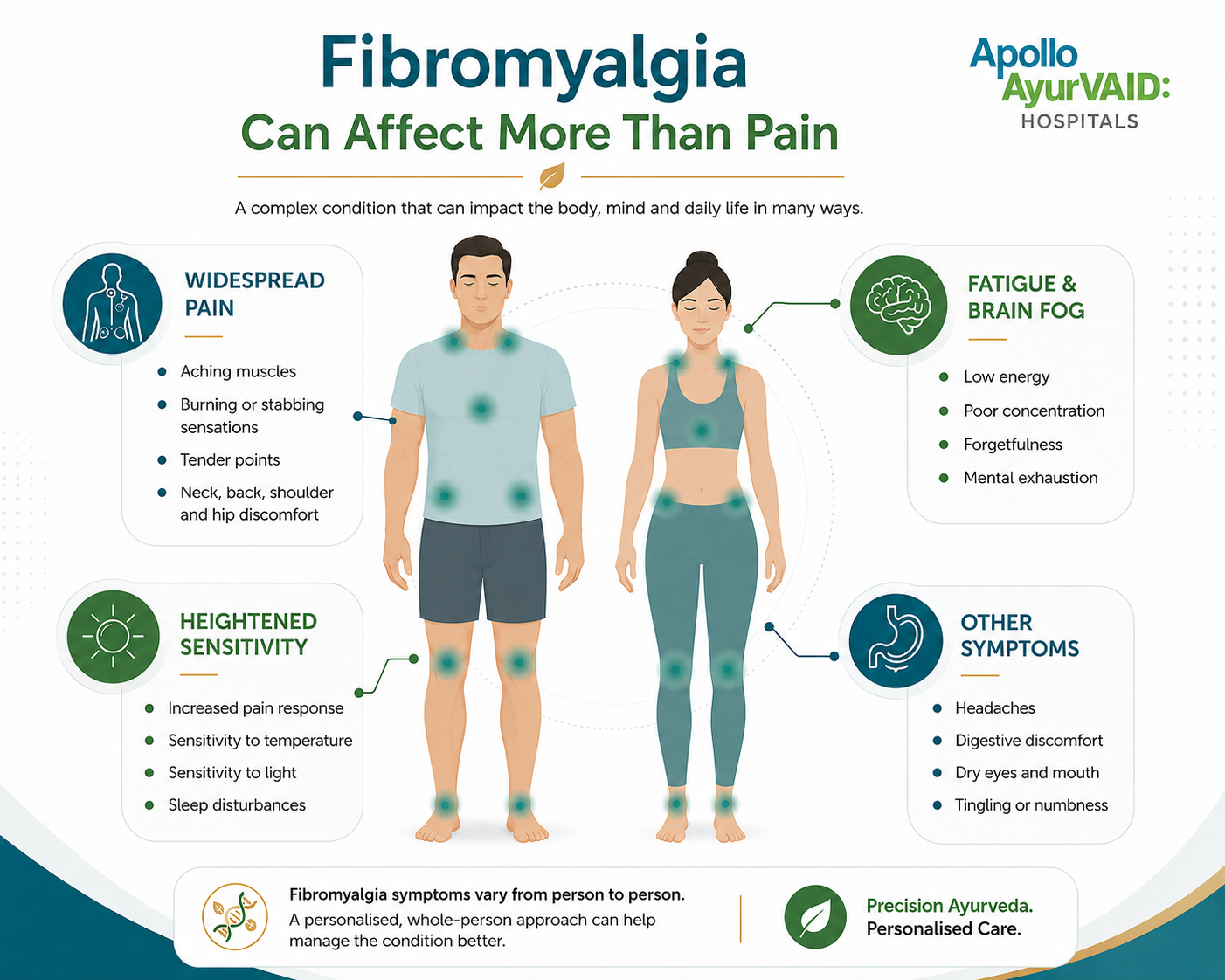
Fibromyalgia is a chronic condition that affects how the body experiences and processes pain. While pain is usually the symptom that brings people to a doctor, it is rarely the only challenge they face.
Many people remember when they could get through a busy day and feel better by the next morning. With fibromyalgia, that sense of predictability often disappears. You may wake up feeling sore for no obvious reason. A short shopping trip can leave you feeling as though you’ve done far more than you actually have. There are days when the body simply refuses to cooperate, no matter how much you want it to. Because the symptoms don’t always follow a clear pattern, people often spend a long time trying to make sense of what is happening. They wonder whether they are overworking, not sleeping enough, or dealing with stress. Some are told that everything looks normal. Others begin to doubt their experience.
One of the things that makes fibromyalgia so confusing is that the pain often feels bigger than what is happening on the surface. There may be no obvious injury, no swollen joint, no clear explanation for why the body hurts the way it does. Current understanding suggests that the nervous system becomes unusually sensitive, almost as if the body’s pain alarm is stuck on a higher setting than it should be.
Getting a diagnosis can bring unexpected emotions. Relief is usually part of it. After months—or sometimes years—of wondering what’s wrong, there is finally a name for what you’ve been experiencing. At the same time, many people look back and think about all the appointments, the unanswered questions, and the periods when they felt unheard or misunderstood. It’s not uncommon for that relief to arrive alongside frustration.

Ayurveda Understanding of Fibromyalgia
Although fibromyalgia is a modern diagnosis, its presentation closely resembles what Ayurveda describes as Mamsagatavata, involving bothMamsa Dhatu and Vata Dosha.
The muscles lose their nourishment and strength, while aggravated Vata increases sensitivity throughout the system. As a result, pain becomes more widespread, and even minor physical or emotional stressors can trigger a flare-up. This is why fibromyalgia is not viewed as a condition affecting only the muscles. The nervous system, digestion, energy levels, and emotional health are often part of the same picture.
Understanding this pattern is important because treatment is aimed not only at reducing pain but also at restoring stability, rebuilding strength, and helping the body recover more efficiently.
Why Fibromyalgia Affects Women More Often
Fibromyalgia affects women far more frequently than men. There is no single explanation for this. Life stages such as menstruation, pregnancy, postpartum recovery, andmenopause place unique demands on the body.
Many women with fibromyalgia have spent years caring for others while ignoring their health. They push through fatigue. They keep going despite poor sleep. They continue working, parenting, caregiving, and managing households even when their bodies are asking for rest. Eventually, the system becomes overwhelmed. Ayurveda places great importance onOjas—the body’s reserve of vitality and resilience. When sleep deprivation, chronic stress, emotional burden, and physical exhaustion continue for years, Ojas can become depleted. Many fibromyalgia patients describe this perfectly without realising it. They often say, “I feel like I’ve run out of energy completely.” That feeling of depletion is something Ayurveda has recognised for centuries.
The Fibromyalgia-Pain-Fatigue-Brain Fog Triad
Pain is usually the symptom that gets the most attention, but many patients will tell you that fatigue and brain fog can be equally difficult. The pain may move around the body. One day, it is the shoulders. One day, it is the hips or lower back. Some patients wake up feeling as though they have done intense physical work despite resting the previous day.
Ayurveda often views this through the lens of depleted tissue nourishment and disturbed Vata.Brain fog creates another layer of frustration. Many people struggle to find words, remember appointments, or focus on tasks they once completed easily. This combination of pain, exhaustion, and cognitive difficulty can make people feel as though they are losing control over their bodies. This is one reason why chronic fatigue and pain Ayurveda management focuses on the whole person rather than a single symptom.
Ayurveda Treatment Protocol
The goal of fibromyalgia Ayurveda management is not simply to chase pain from one area of the body to another. The focus is calming the nervous system, nourishing tissues, improving sleep, and helping the body recover its resilience.
Digestive Correction (Deepana & Pachana)
Digestive complaints often sit in the background of fibromyalgia. Bloating, constipation, irregular appetite, and post-meal heaviness are complaints many patients mention during consultation. Ayurveda generally addresses digestion early in the treatment plan. Deepana and Pachana therapies are used when there are signs that digestive function needs support before other interventions are started.
Purification Therapies (Panchakarma)
Depending on the patient, Panchakarma may form part of the treatment plan.
- Abhyanga (Oleation)
A warm medicated oil massage. Patients who feel constantly stiff or sore often find it particularly comforting. Oils are selected according to the individual’s needs.
- Swedana (Sudation)
Usually given after Abhyanga. Gentle heat is used to reduce stiffness and improve ease of movement.
- Vasti (Medicated Enema)
Vasti is frequently used in Vata-dominant disorders. In fibromyalgia, it may be considered when symptoms have become chronic or recurrent. The medicines and schedules vary considerably from one patient to another.
- Virechana (Purgation)
Not every patient requires Virechana. When advised, it is performed only after appropriate preparation and clinical evaluation.
- Shirodhara
Warm medicated oil or herbal liquid is poured in a continuous stream over the forehead for a fixed period. It is commonly used when sleep disturbance, mental restlessness, or stress are prominent concerns.
- Nasya
Nasya involves the use of medicated oil through the nasal passages under supervision. It may be included when brain fog is part of the picture.
Internal Herbal Supplements (Samana Chikitsa)
Herbal medicines are selected individually. Ashwagandha is commonly prescribed when fatigue, poor recovery, and stress appear together. Brahmi may be considered for patients who complain of forgetfulness or difficulty focusing. Shatavari is often used when there is a sense of long-standing depletion. Bala may be added when weakness and low stamina become more noticeable.
The exact prescription depends on the person’s constitution, symptoms, and medical history.
Diet & Lifestyle Adjustments (Ahara & Vihara)
Most dietary advice is fairly practical. Warm homemade meals are often encouraged, while cold foods and packaged snacks are kept to a minimum. Foods such as moong dal, khichdi, soups, cooked vegetables, seasonal fruits, soaked almonds, and small amounts of ghee are commonly included.
Meal timings often come up during consultations. Some people realise they have not eaten properly all day until fatigue hits them in the evening. Others get busy, miss lunch, and then feel unusually tired or uncomfortable a few hours later. Not everyone notices the same triggers, but long gaps between meals tend to be discouraged. Regular eating habits are generally encouraged as part of the overall treatment plan.
Lifestyle recommendations are often simple: maintain regular sleep timings, avoid overexertion, and allow enough time for recovery. On days when symptoms feel better, there is often a tendency to do more than usual. Many patients only realise later that this usually leads to increased fatigue or pain the following day, so pacing tends to work better in the long run. Slow yoga, stretching, breathing practices, and short walks are often more sustainable than intense exercise routines. Simple practices like Child’s Pose, Cat-Cow Stretch, and gentle breathing exercises may help support flexibility and relaxation without overwhelming the body. The goal is not athletic performance. The goal is to maintain movement without triggering additional pain.
Apollo AyurVAID Approach: Precision Ayurveda for Fibromyalgia
At Apollo AyurVAID, fibromyalgia is approached as a complex chronic condition rather than a single symptom to be managed. While two people may carry the same diagnosis, their day-to-day experience can be very different. One person may mainly struggle with widespread pain, while another may experience more fatigue, poor sleep, digestive disturbances, or persistent brain fog.
This is where precision Ayurveda becomes important. Treatment is not based solely on the diagnosis but on a detailed understanding of the individual’s symptom pattern, dosha involvement, tissue health, medical history, and overall functional well-being. The aim is to understand why symptoms are occurring, what is sustaining them, and which factors may be preventing recovery.
Apollo AyurVAID follows an evidence-based approach that combines classical Ayurveda assessment with contemporary clinical understanding. Medicines, therapies, dietary recommendations, and lifestyle interventions are carefully tailored to each individual rather than applied uniformly.
Conclusion
References