- AyurVAID Pharmacy
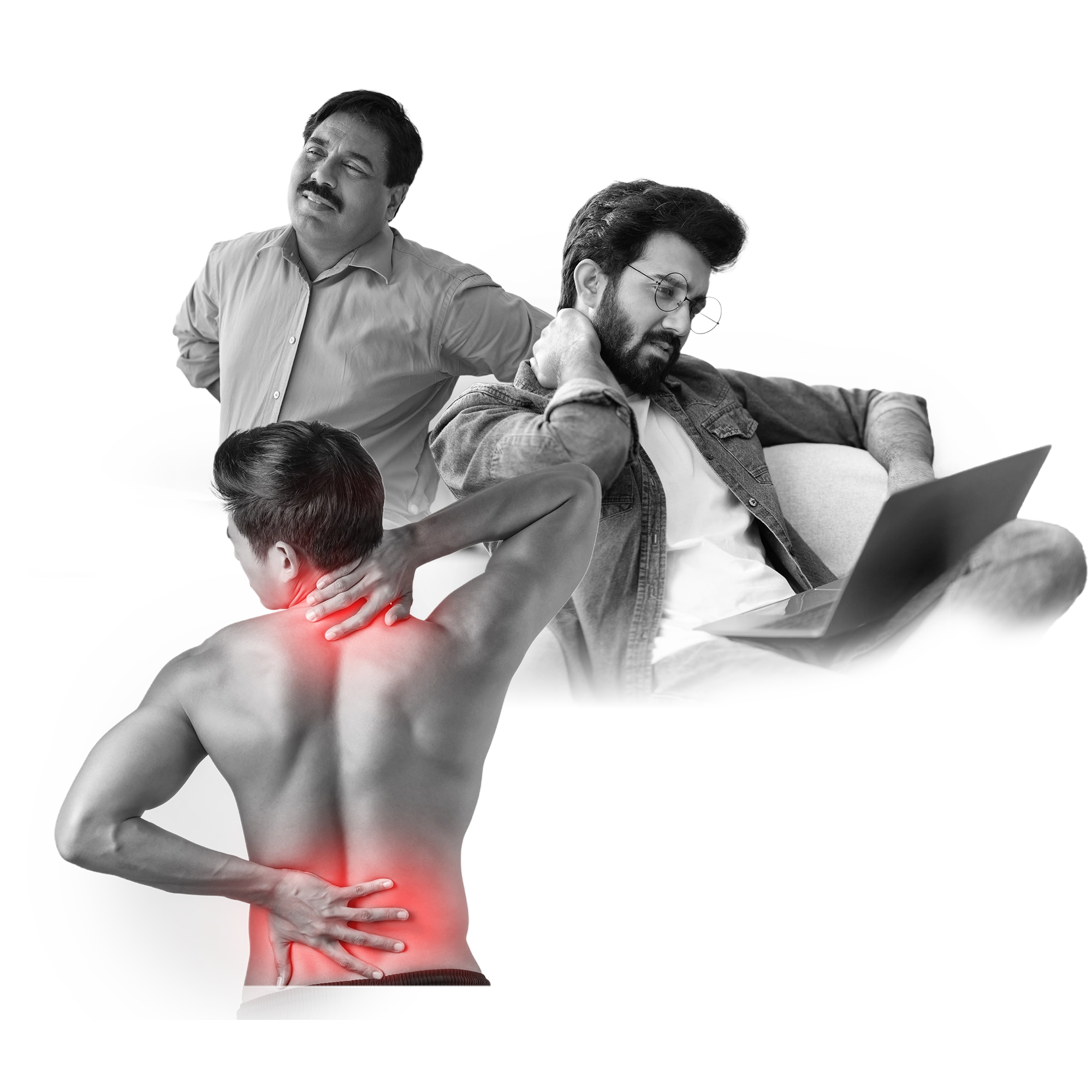
Pain is one of the most common reasons people seek medical care. It can appear in many different ways and in different parts of the body, depending on what is driving it. In the beginning, you often see symptoms limited to a particular area, which may appear only after prolonged sitting, physical work, repetitive strain, or increased activity. Rest, temporary activity modification, non-steroidal anti-inflammatory drugs (NSAIDs), topical analgesic applications, and similar short-term measures are commonly used at this stage and are often sufficient when local inflammation or tissue irritation is present.
But the pattern does not always remain the same.
The occasional pain may begin recurring more frequently, stiffness after inactivity becomes more apparent, and restrictions in movement gradually become easier to notice. Stiffness after periods of inactivity starts becoming more noticeable, and compensatory movement patterns may begin developing as surrounding structures take additional strain. Sleep may become disturbed because maintaining one position for long periods feels uncomfortable.
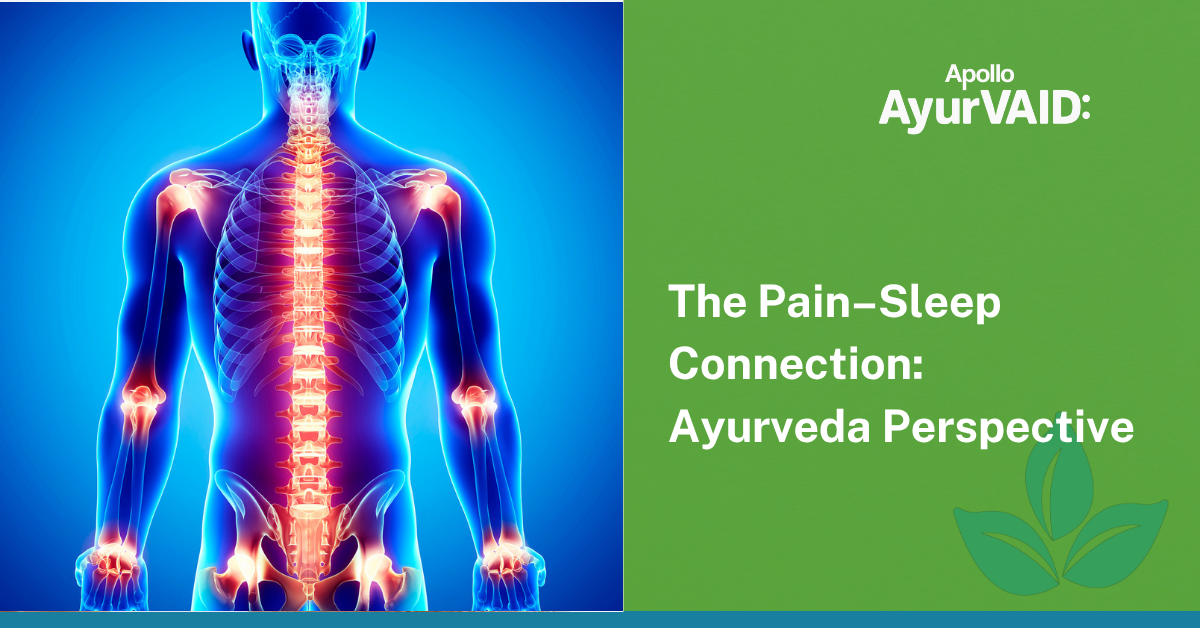
Persistent pain is rarely linked to a single factor alone. Joint or spine changes, posture, nerve involvement, sleep, stress, and other health conditions may all influence how symptoms behave. It is also not unusual to see a difference between what appears on imaging and what a person experiences. Some individuals report significant pain despite minimal findings on scans, while others with more visible structural changes may have relatively fewer symptoms. For this reason, pain assessment extends beyond identifying where it hurts.
At Apollo AyurVAID, evaluation includes structural, functional, and metabolic factors together with a detailed Precision Ayurveda assessment of Dosha status, Agni, Ama, Dhatu involvement, Srotas disturbance, and the stage of Samprapti or pathogenesis to understand the root cause that may be sustaining the condition.
Ayurveda-based pain management is commonly considered in:
In these situations, assessment is usually not limited only to the painful area. Broader functional and systemic factors influencing persistence and recurrence of pain are also evaluated during treatment planning.
There are clear situations where Ayurveda alone is not the right first step.
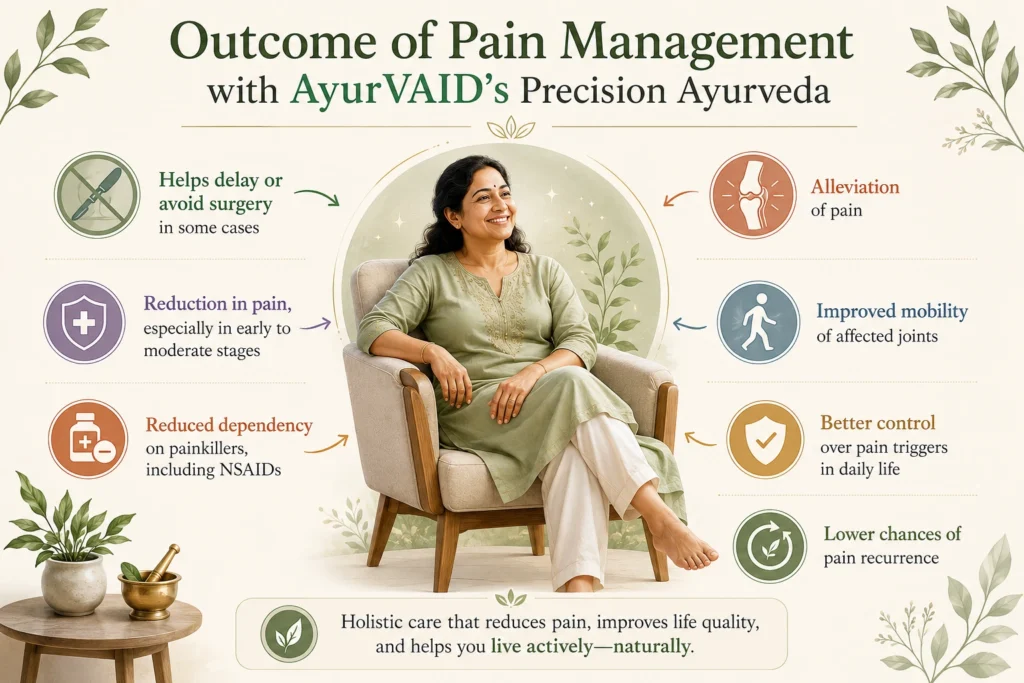
Conventional treatment mainly focuses on symptom relief and improving function. Pain relief medicines such as NSAIDs, muscle relaxants, and medications for neuropathic pain are commonly used. Physiotherapy is also advised often to improve mobility, strengthen muscles, and support functional recovery. In advanced conditions, surgery may sometimes be required for structural correction, nerve decompression, or joint replacement depending on severity.
In long-standing pain conditions, prolonged use of NSAIDs and other analgesics may lead to side effects such as gastric irritation, sedation, or reduced response. Surgical treatment, while useful in selected structural conditions, involves recovery time, rehabilitation, and cost. In many patients, underlying contributors such as posture, lifestyle, stress, or metabolic imbalance may still continue to influence pain persistence.
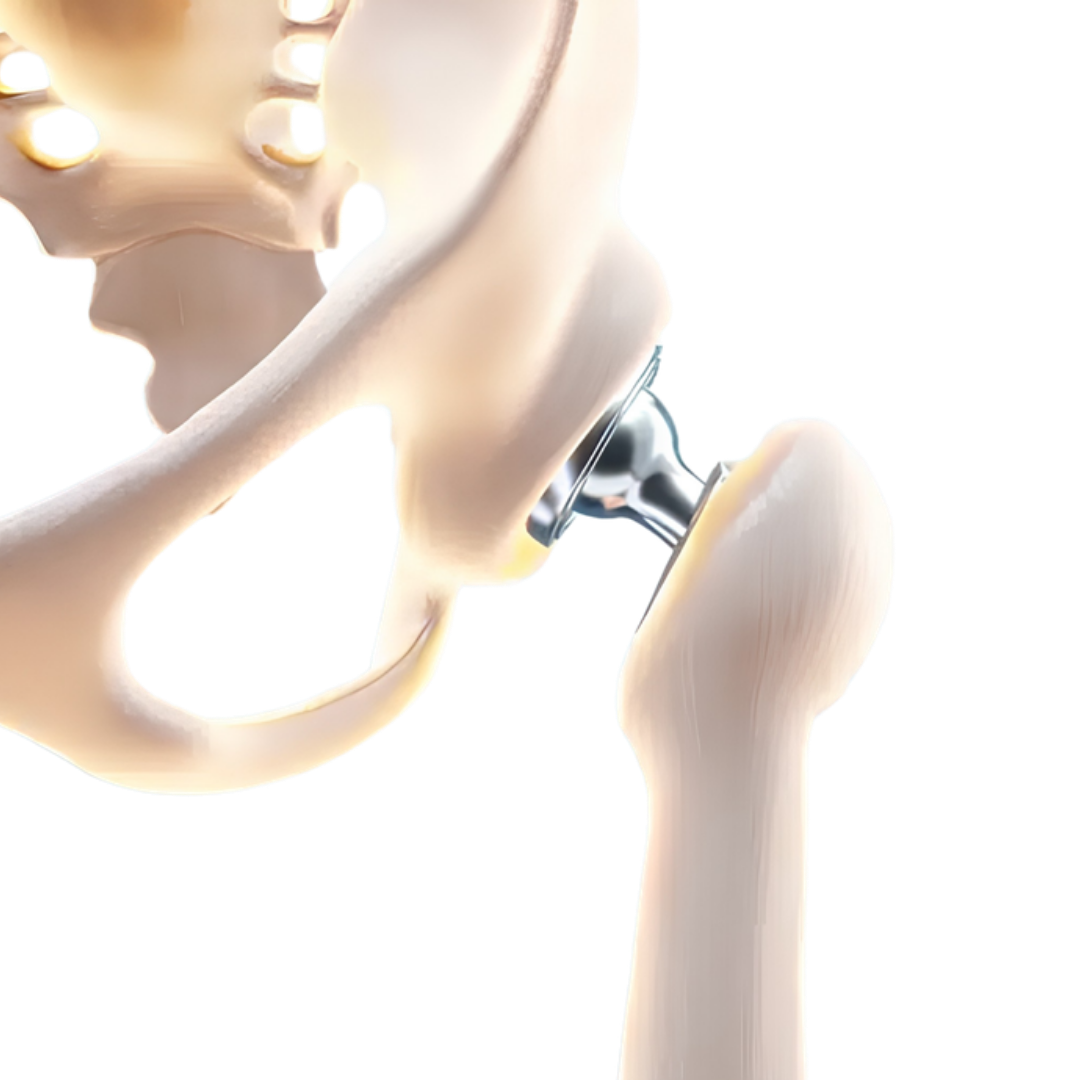
Conventional medicine does play an important role in pain control and structural management. Alongside this, Ayurveda-based care can be used in an integrative manner to address functional imbalance, tissue-level dysfunction, and factors associated with recurrence and chronicity. Along with symptomatic relief, patients undergoing AyurVAID’s integrative approach may experience gradual improvement in the following areas:
Pain doesn’t behave in the same way for everyone. In some people, it appears suddenly, in others it comes and goes, and in many it stays for long periods. The way it behaves over time often tells us more than the pain itself.
Based on duration and pattern
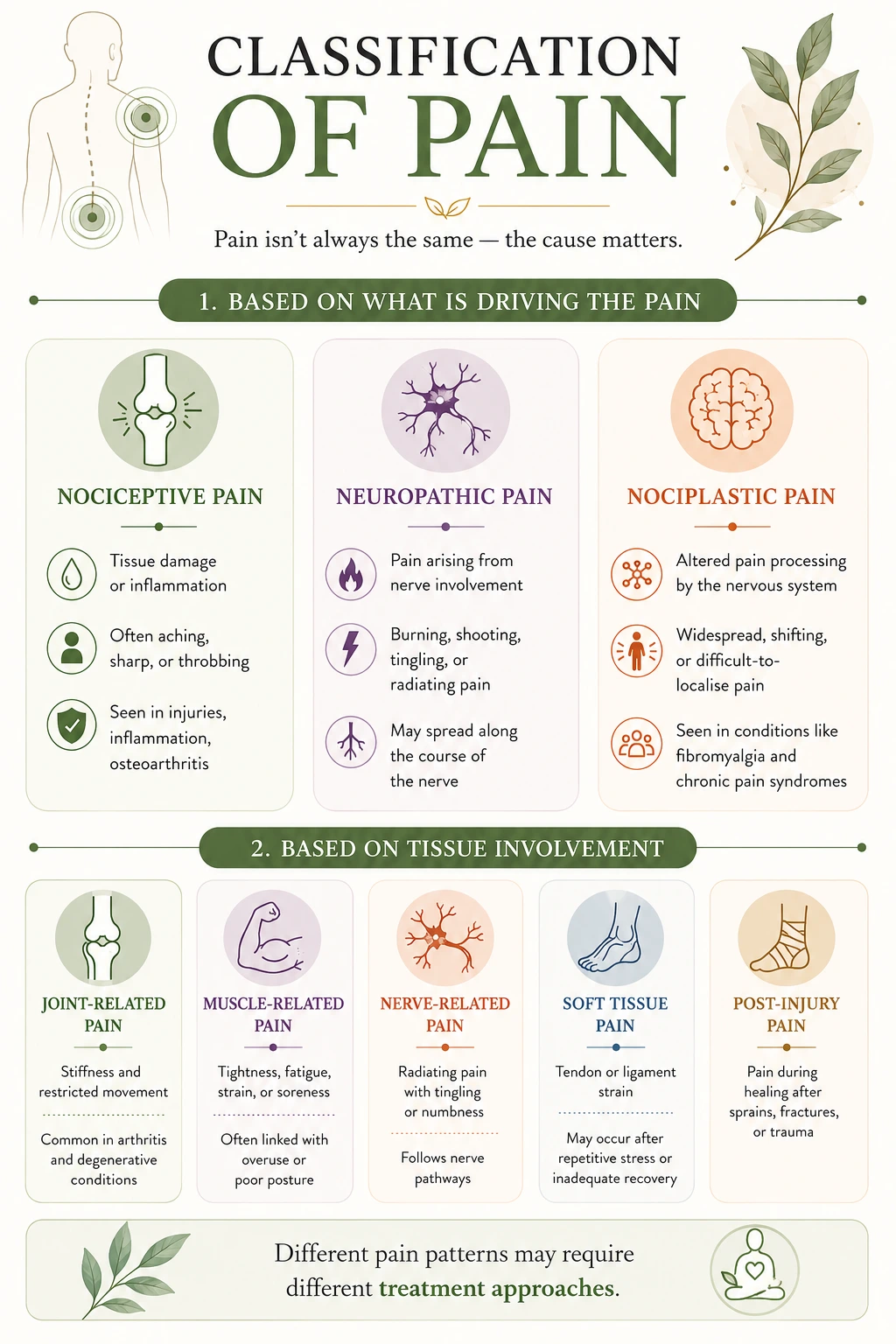
Based on what is driving the pain
Pain can also be understood by where it is coming from in the body.
Based on tissue involvement
Pain can also be described based on the structure involved.
Degenerative pain develops slowly over time due to wear and tear changes, such as osteoarthritis or spondylosis.
Mixed pain is very common in chronic conditions, where more than one mechanism is present together.
Pain is a symptom across multiple clinical conditions.
In addition, pain may also be associated with immune system-related and autoimmune conditions such as rheumatoid arthritis and seronegative arthritis. Neurodegenerative conditions can also come with pain. This is often linked to nerve involvement, changes in the way a person moves, or extra strain building up in muscles and joints over time. Acute injuries such as sprains or certain fracture-related conditions can also present with pain.
In Ayurveda, pain is referred to as ‘Vedana’. Interestingly, classical texts such as the Amarakosha describe Vedana in a much wider sense than just pain. It also includes sensation, feeling, perception, and even the way the body responds to a stimulus (Samvedo Vedana). This broader view becomes important when understanding how Ayurveda looks at pain.
Pain is not treated as a single uniform experience in Ayurveda. Different types of sensations are understood in different ways depending on which Dosha is involved and which tissues are affected. For example, sharp radiating pain, burning sensation, heaviness with stiffness, numbness, or tingling are all interpreted differently rather than being grouped. Classical texts also use several terms while describing pain-like experiences. Some commonly referenced ones include:
Shoola is described in classical language as “shankuvat sphutan vedana”, meaning a piercing type of pain similar to being struck by a sharp object. Clinically, this description often resembles the patterns seen in nerve-related pain, radiating pain, spasms, sciatica, or colicky pain.
One important concept used in Ayurveda pain management is Vedanasthapana. It is often translated simply as pain relief, but the original meaning is a little broader. “Vedana” refers to sensation, while “Sthapana” means stabilising or bringing things back into balance.
So Vedanasthapana is not just about reducing pain. In some situations, it also becomes relevant when sensation itself has gone a bit off. It may involve helping restore normal feeling when it is reduced or altered.
This is especially relevant in things like numbness, tingling, neuropathy, burning sensations, or reduced touch perception.
Classical Ayurveda also describes conditions such as Supti, Pada Supti, Kara Supti, and Suptangata, where sensation is reduced, distorted, or simply does not feel the way it should.
In these cases, the focus is broader than pain control alone. It also includes improving circulation, supporting nerve function, balancing aggravated Vata, improving movement, and supporting overall recovery.
One of the most practical parts of Ayurveda is how it links pain patterns with Dosha imbalance.
Vata Type Pain (Vataja Shoola)
Vata-related pain is very commonly seen in clinical practice today. It is usually described as:
This pattern is closely linked with nerve irritation, degeneration, dryness, overuse, ageing, or long-standing strain. Conditions such as sciatica, cervical or lumbar spondylosis, disc-related issues, osteoarthritis, and chronic back pain often show this pattern.
Patients often describe it in very simple terms, like “the pain keeps moving” or “it shoots down the leg.” It may feel worse after travel, stress, poor sleep, or exposure to cold. These are typical Vata aggravating patterns.
Modern lifestyle tends to push Vata out of balance. Irregular meals, long sitting hours, constant screen use, poor sleep, stress, and lack of recovery all accumulate over time. This is one reason chronic pain conditions are becoming so common.
Pitta Type Pain (Pittaja Shoola)
Pitta-related pain is more inflammatory in nature. It usually comes with heat, burning, redness, swelling, or a sense of irritation in the area.
It is often seen in inflammatory arthritis, acute tendon inflammation, autoimmune flare-ups, and other active inflammatory conditions.
Patients usually describe it as burning, hot, throbbing, or intense pain. It tends to worsen with heat, emotional stress, irregular eating patterns, or foods that aggravate digestion.
Kapha Type Pain (Kaphaja Shoola)
Kapha-related pain feels different again. It is typically dull, heavy, and slow. Movement feels restricted, and stiffness is more prominent, especially in the morning. People often describe heaviness, sluggish movement, swelling, or a “blocked” feeling in the joints.
It is commonly linked with sedentary habits, weight gain, poor circulation, inactivity, or early degenerative changes. Unlike Vata pain, this type often improves gradually once the body starts moving and warms up.
1. Whole-Person Health Assessment
Conducted by our specially trained doctors, this assessment includes an in-depth evaluation of present and past complaints, Nidana Panchaka (causative factors), and disease pathways using clinical methods such as Ashta Sthana Pariksha (8-fold examination), Dasha Vidha Pariksha (10 factors), and Srota Pariksha. Relevant blood tests (such as CBC, CRP, ESR, Vitamin D, Vitamin B12, thyroid function tests, and blood sugar levels) and imaging studies (such as X-rays, ultrasound, CT scans, and MRI) are used in their thorough evaluation to understand inflammatory, metabolic, neurological, and structural contributors to pain.
2. Clinical Pain Mapping (Disease Tree Approach)
A comprehensive disease tree, from root cause to all signs and symptoms, is derived from causative factors, imbalances in doshas, involved sub-systems, and progression. This helps map pain not only at the site of presentation but also in terms of underlying functional, neurological, inflammatory, and structural contributors.
3. Personalised Protocol-Based Care Plan
Based on the disease tree and assessments, we create a personalised protocol-based treatment for mobility improvement, pain and inflammation reduction, and effective reversal of disease pathogenesis. The treatment plan involves classical Ayurveda medicines, therapies, and functional rehabilitation, along with diet and lifestyle changes, in a personalised manner. It tracks various health parameters to focus on correcting mobility and reducing symptoms such as pain and inflammation.
4. Disease Monitoring and Outcomes Tracking
Relevant validated pain and functional assessment scales such as the Visual Analogue Scale (VAS), Numeric Rating Scale (NRS), and other condition-specific functional outcome measures are used to monitor treatment response, functional improvement, and disease progression.
The Apollo AyurVAID’s Precision Ayurveda approach is based on a whole-person model, where the root cause of the condition is addressed along with localised care. The focus is on identifying and removing the cause of the pain.
Phase 1: Anti-inflammatory Care
The initial phase focuses on anti-inflammatory treatment to reduce swelling and inflammation and relax the muscles in the affected area.
Phase 2: Recovery and Nourishment
Once inflammation settles, the focus shifts to nourishment, tissue recovery, and strengthening.
Inflammatory pain management and degenerative pain management are different, and treatment is planned accordingly after proper assessment.
Integrated Treatment Framework
Pain management is delivered through a combination of:
In selected cases, deeper therapeutic procedures are included based on clinical assessment. Panchakarma therapies such as Matra Basti, Kashaya Basti, Nasya, and Virechana are included based on patient condition and symptom profile to achieve long-term results.
Physiotherapy Integration
In conditions such as degenerative arthritis, a physiotherapy component is included. A physiotherapist performs an additional level of assessment and initiates a structured rehabilitation programme.
Dietary correction is considered supportive in chronic inflammatory and metabolic pain patterns.
Role of Diet and Lifestyle
Diet and lifestyle changes are included where they appear to be contributing to the condition. In chronic inflammatory and autoimmune-related pain patterns, food habits sometimes influence inflammation, stiffness, digestion, and even day-to-day fluctuations in symptoms.
People with persistent pain also commonly experience irregular sleep, prolonged sitting, low physical activity, and ongoing stress. In many patients, these patterns gradually build up over time and start to affect recovery, although they are not very noticeable initially. Some people also find that symptoms feel worse after poor sleep, long travel, skipped meals, or continuous sitting during work hours. These patterns are considered during treatment planning.
AyurVAID follows a structured, protocol-driven approach to ensure effective treatment and sustainable recovery. To ensure effective treatment and track progress, baseline values are taken using:
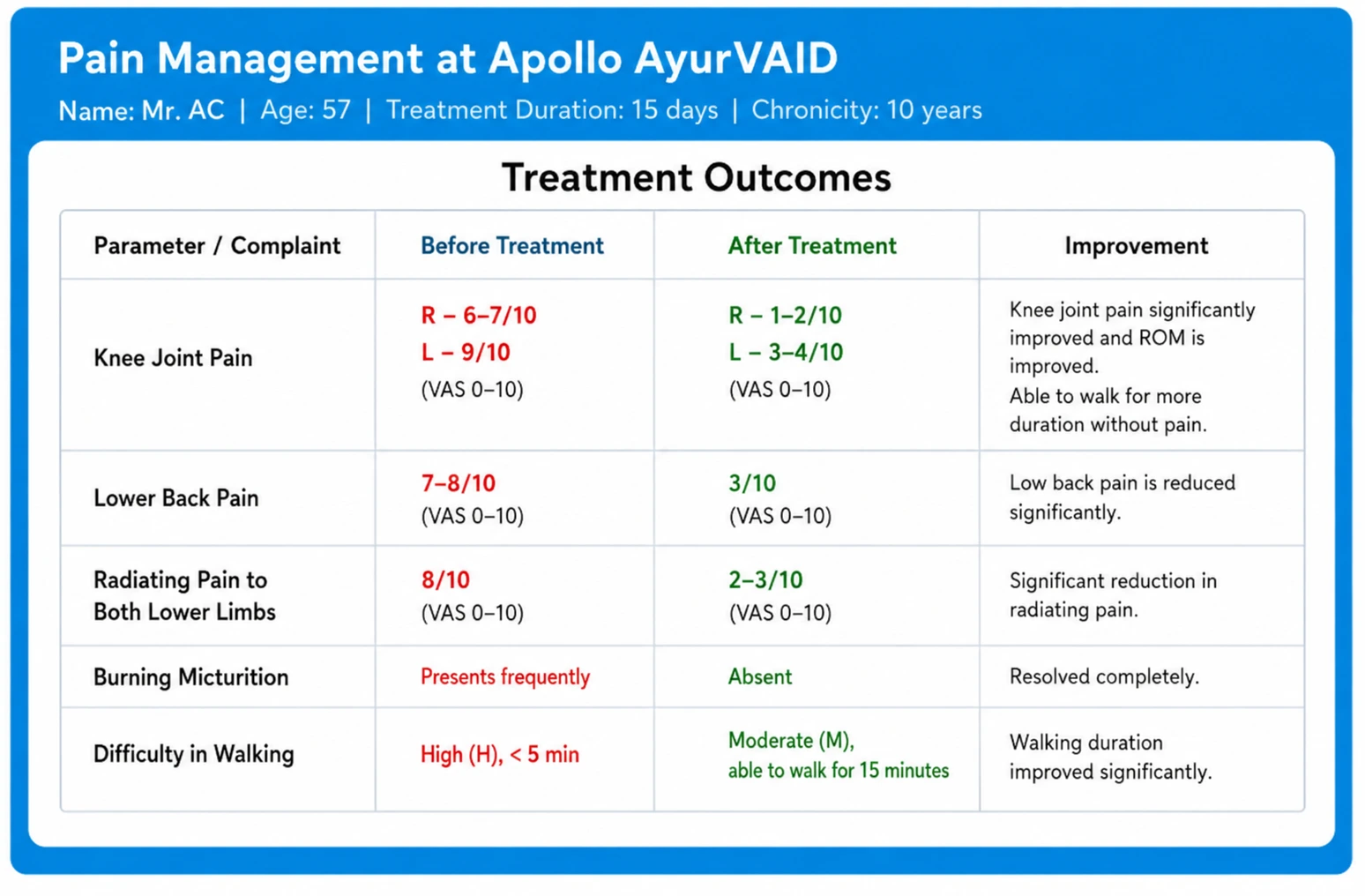
Case 1: Chronic Knee and Low Back Pain with Radiating Pain
case Summary: A 57-year-old woman with long-standing bilateral knee pain, low back pain, and radiating pain to both legs underwent integrative pain management at AyurVAID for chronic osteoarthritis and associated degenerative changes. At admission, pain severity was high and significantly affecting walking, standing, sleep, and daily activities.
Following a structured Precision Ayurveda treatment programme combined with physiotherapy, she showed marked improvement in knee pain, low back pain, radiating pain, mobility, and walking tolerance. Stiffness reduced gradually, sleep quality improved, and day-to-day activities became easier to perform. Clinical outcome scales also showed significant improvement by the time of discharge.
Case 2: Chronic Knee and Low Back Pain with Radiating Leg Pain
case Summary: A 57-year-old woman presented to AyurVAID with severe bilateral knee pain, chronic low back pain, and radiating pain to both legs for nearly 10 years. The pain was affecting walking, standing, sleep, and routine daily activities.
Following a structured Precision Ayurveda treatment programme along with physiotherapy, there was a significant reduction in pain, improvement in mobility, better walking tolerance, and reduced stiffness. The patient was able to perform daily activities more comfortably by the end of treatment.
As someone battling Ankylosing Spondylitis, I was struggling with severe morning stiffness and a chronic lack of energy. After treatment, my overall mobility improved significantly. The transition from being physically restricted to now performing my daily routine with ease has been nothing short of life-changing.
Mr. A. Roy, Patient in New Delhi.

As we work hard to improve our services, your feedback is important to us. Please take a moment to help us serve you better.
The information provided in this blog is for general informational purposes only and is not intended as a substitute for professional medical advice, diagnosis, or treatment. Always seek the advice of your physician, Ayurvedic practitioner, or other qualified healthcare provider with any questions you may have regarding a medical condition or treatment.
Subscribe to our hospital newsletter for the latest health tips, updates on services, patient stories, and community events. Sign up today and stay informed!





Popular Searches: DiseasesTreatmentsDoctorsHospitalsWhole person careRefer a patientInsurance