Introduction
In today’s fast-paced world, many men move through life under constant pressure, performance expectations and responsibility. Over time, it can lead a man to feel physically and emotionally drained and unable to recover the way that he once did.
As we celebrate International Men’s Health Week 2026 (June 15-June 21), we must have an honest conversation about this emerging problem. Men are often expected to stay strong, keep going and quietly tolerate stress. But the body remembers every bit of strain. When the load becomes too heavy for too long, the result is not weakness — it is depletion.
From the Ayurveda perspective, stress burnout is understood not as a single problem but as an imbalance affecting the mind, digestion, nervous system and vital energy.
Understanding Burnout in Men
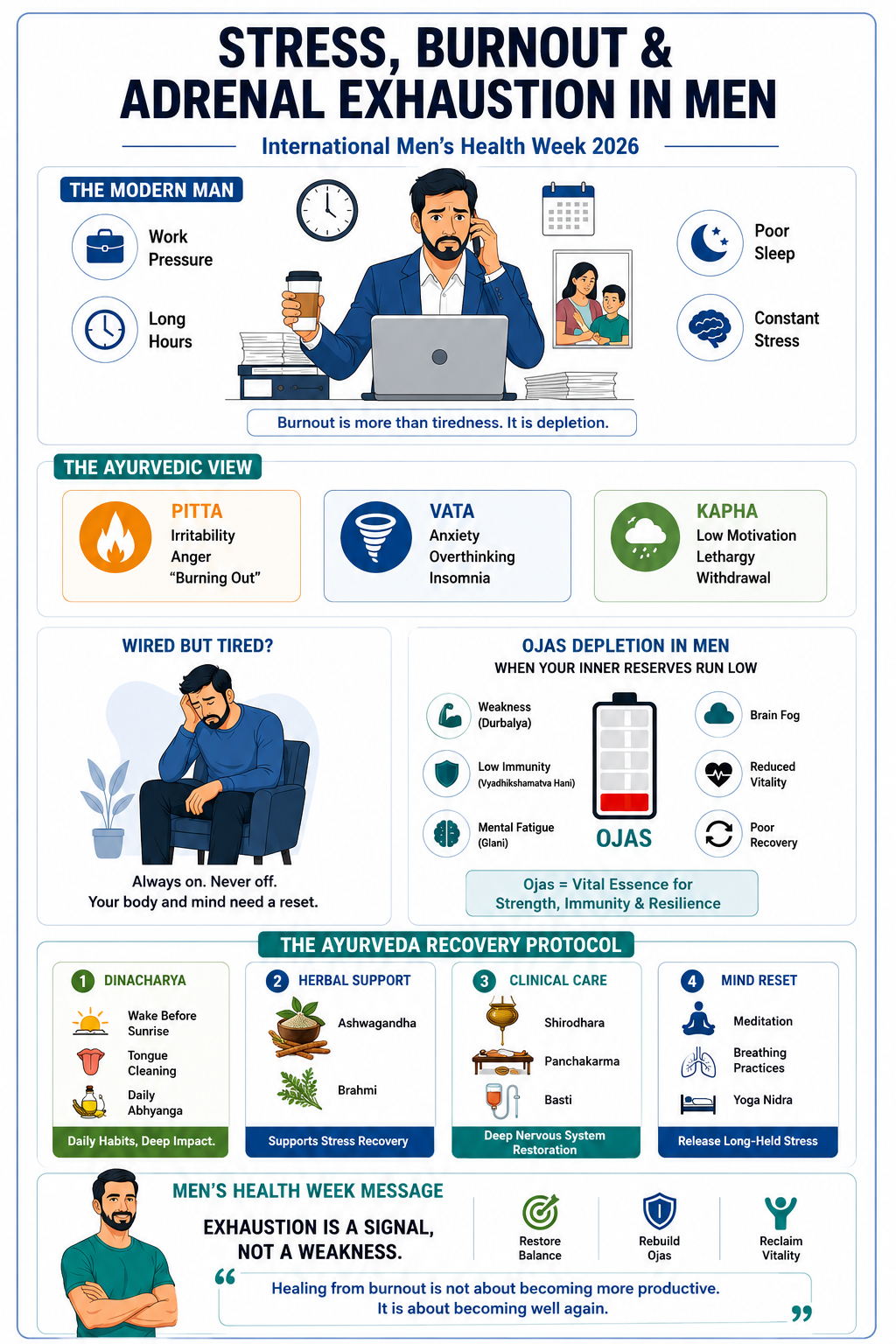
Burnout is more than tiredness. It is a state in which energy, clarity, motivation, and resilience begin to decline. In Ayurveda, the condition often reflects a combination of aggravated Vata, Pitta and sometimes Kapha, depending on the individual.
Men in high-pressure environments often experience Pitta imbalance, which manifests as irritability, anger, inflammation and a literal sensation of “burning out”. This differs from Vata-type burnout (anxiety and insomnia) or Kapha-type burnout (lethargy and emotional withdrawal). These patterns are signs that the system is under strain.
From a classical perspective, the habitual negligence of bodily cues has been referred to as “Prajnaparadha” or the “sin of the intellect.” This tendency involves knowing the importance of rest, balance and nourishment yet neglecting them.
Over time, this disruptsAgni, weakens digestion and allows Ama(toxins) to accumulate. The result is not just physical fatigue but reduced mental strength and lowered tolerance to stress.

The Modern Reality of Adrenal Exhaustion
Many men today describe symptoms such as low energy, poor sleep, reduced motivation, irritability and a sense of being “wired but tired”. This is often referred to in common language as adrenal fatigue.
While conventional medicine uses the term ‘adrenal insufficiency’ only for specific medical conditions, Adrenal fatigue looks at the broader picture of chronic stress and nervous system depletion. In functional terms, the condition often overlaps with HPA axis dysregulation — a stress response system that first becomes overactive and later begins to feel exhausted.
From an Ayurveda lens, this is closely linked with aggravated Vata and progressive tissue depletion or Dhatu Kshaya. The person may still be functioning outwardly, but inwardly, reserves are running low.
Ojas Depletion in Men and the Loss of Inner Strength
One of the most important concepts in male recovery isojas depletion. In men’s health today, Ojas (vital essence) offers a very meaningful way to understand why so many men feel drained, irritated, or “burnt out” despite appearing strong on the outside. Modern life often pushes men into long work hours, poor sleep, skipped meals, constant overthinking, and emotional suppression — all of which gradually weaken Agni (digestive fire) and reduce the formation of Ojas.
When Ojas declines, the effects are not limited to low energy. A man may notice Durbalya (weakness and exhaustion), reduced Vyadhikshamatva (immunity), Glani (mental fatigue), brain fog, low motivation, poor recovery, and even Shukra kshaya (reproductive depletion). In simple terms, he may still be functioning, but he no longer feels resilient, clear or deeply well.
From this perspective, many of the stress-related concerns seen in men today are not just about workload — they reflect a deeper depletion of the body’s reserve. Ayurveda addresses this through Rasayana Chikitsa (rejuvenation therapy), which helps rebuild strength, restore balance, and support long-term vitality. Herbs such as Ashwagandha (rejuvenating adaptogen), along with proper sleep, nourishing food and a steady routine, can play an important role in recovery.
Male Burnout – Ayurvedic Treatment Approach
Recovery begins with one simple shift: moving the body and mind away from survival mode and back toward restoration. The most effective male burnout Ayurvedic treatment is not one single therapy but a thoughtful combination of routine, nourishment, herbal support and deeper rejuvenation.
How to Manage Stress According to Ayurveda?
The starting point of learning how to manage stress according to Ayurveda is Dinacharya or a regular daily routine.
Some basic routines that can be very helpful include:
- Wake up at least an hour before sunrise for a balanced circadian rhythm
- Cleaning the tongue to eliminate coating and improve digestion.
- Abhyanga therapy using warm oils for releasing tension, stimulating blood flow and balancing Vata
Small things can have big impacts on how your body feels overall.
Ashwagandha for Male Stress
One of the most commonly used rejuvenative herbs in Ayurveda is Ashwagandha, which is used to manage stress in men. Ashwagandha is renowned for its relaxing properties and its capability of rejuvenating individuals exhausted by fatigue.
It is a powerful adaptogenic agent that assists in maintaining the state of equilibrium by greatly reducing serum cortisol. It has particularly proved beneficial for male individuals through improved muscle strength, levels of testosterone, physical recovery and reduction in anxiety and stress-related brain fog.
Another helpful herb is Brahmi for people who have problems concentrating and overthinking. These herbs work best when they are chosen according to the individual’s constitution and current state of imbalance after consulting a qualified physician.
Clinical Care
In more significant cases, Ayurvedic treatment for burnout may include therapies such as Shirodhara, Basti, and other Panchakarma-based approaches, depending on the person’s needs.
Shirodhara is often deeply soothing for those with disturbed sleep, anxiety or mental exhaustion. Basti may be considered when tissue depletion is more pronounced. Panchakarma, when appropriately indicated and supervised, can help reset the system and support deeper recovery.
These therapies should always be personalised. Burnout is not treated the same way in every person.
Sadvritta and Mental Ease
A true Ayurvedic treatment for burnout also includes mental discipline, emotional steadiness, and supportive conduct.
Sadvritta — the practice of right living — reminds us to build a life that does not constantly deplete us. Simple practices such as mindful breathing, meditation, Shavasana, and Yoga Nidra can help the nervous system release long-held tension.
Conclusion
This International Men’s Health Week 2026, the message for men is simple – exhaustion is not something to carry silently. Fatigue, irritability, poor sleep, low drive and emotional flatness are not signs to ignore. They have to be addressed.
Through Ayurveda, we can understand these symptoms with more compassion and more depth. We can recognise that the body may struggle to keep up with long-term stress. Through care that supports ojas depletion in men, we can begin to restore strength, clarity, and inner stability.
Healing from burnout is not about becoming more productive. It is about becoming well again.
References